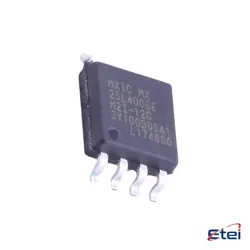
Imagens apenas para referência
10M25SCE144C8G
+Lista de MateriaisIC FPGA 101 I/O 144EQFP
-
FabricanteAltera
-
Peça do Fabricante #10M25SCE144C8G
-
Ficha Técnica 10M25SCE144C8G DataSheet
-
Em Estoque4779
365 Garantia de Qualidade em 1 dia
7*24 Garantia de serviço em 24 horas
90-Garantia de pós-venda em 1 dia
Garantia de Produto Genuíno
Especificações
| Atributo | Valor |
| Series | MAX® 10 |
| PartStatus | Active |
| DigiKeyProgrammable | Not Verified |
| TotalRAMBits | 691200 |
| NumberofI/O | 101 |
| Voltage-Supply | 2.85V ~ 3.465V |
| MountingType | Surface Mount |
| OperatingTemperature | 0°C ~ 85°C (TJ) |
| Package/Case | 144-LQFP Exposed Pad |
| SupplierDevicePackage | 144-EQFP (20x20) |
| NumberofLogicElements/Cells | 25000 |
| NumberofLABs/CLBs | 1563 |
Visão Geral
Description
Key specifications include a 144-pin package, 8 Mbits of embedded memory, and support for various I/O standards, facilitating connectivity with other components. The device is programmed using the Intel Quartus Prime software, which provides a comprehensive development environment for design, simulation, and debugging.
Its applications span numerous fields, including consumer electronics, automotive, and industrial control systems. The combination of low power consumption, flexibility, and built-in features makes the 10M25SCE144C8G ideal for engineers looking to integrate FPGAs into their designs efficiently.
Equivalent
1. Lattice Semiconductor iCE40 series - such as iCE40LP4K.
2. Xilinx Artix-7 - like the XC7A15T.
3. Microchip (formerly Atmel) ATAK series - like the AT40K family.
These alternatives vary in features and specifications, so it's important to compare datasheets for specific requirements.
Features
1. Logic Density: Offers a balance of performance and cost-effectiveness with 25K LEs for various applications.
2. On-chip Memory: Includes several dedicated RAM blocks and support for distributed memory, allowing for efficient data processing.
3. I/O Flexibility: Supports multiple I/O standards, enabling compatibility with various peripherals and interfaces.
4. Integrated ADC: Features an integrated analog-to-digital converter, which is useful for mixed-signal applications.
5. Low Power Consumption: Designed for low power operation, making it suitable for battery-operated and energy-efficient applications.
6. Single Supply Voltage: Operates on a single 3.3V power supply, simplifying design and reducing power management complexity.
7. In-System Programmability: Supports in-system configuration for easy updates and modifications in the field.
This FPGA is ideal for applications in automotive, industrial, and consumer electronics, providing flexibility and performance in compact designs.
Pinout
Key functions of the pins include:
- Dedicated I/O Pins: These can be used for general-purpose I/O operations.
- Power Supply Pins: For VCC (core voltage) and GND (ground).
- Configuration Pins: Used for configuring the FPGA upon startup.
- Clock Input Pins: For receiving external clock signals.
- Special Function Pins: These may include pins for JTAG, reset, and other control signals.
The versatility of the pin functions allows the 10M25SCE144C8G to be applied in various applications such as communications, automotive, and industrial control systems.
Manufacturer
The 10M25SCE144C8G is part of Intel's MAX 10 FPGA (Field-Programmable Gate Array) series, which are versatile devices used in a variety of applications, from industrial automation to automotive systems. This specific FPGA is notable for its low power consumption, built-in flash memory, and flexibility, making it suitable for a wide range of designs and applications.
As a company, Intel focuses on providing high-performance computing solutions, with a commitment to research and development, aiming to drive technological progress across different sectors, including data centers, artificial intelligence, and Internet of Things (IoT) devices.
Application
1. Digital Signal Processing: For audio, video, and image processing tasks.
2. Industrial Automation: Used in control systems and robotics for real-time processing.
3. Communications: In networking equipment for protocol processing and signal modulation.
4. Automotive: For sensor processing and control applications in vehicles.
5. Consumer Electronics: In smart devices for customization and functionality enhancement.
6. Embedded Systems: For prototyping and implementing complex algorithms in a compact form.
These applications leverage its programmable nature and integrated features like ADCs.