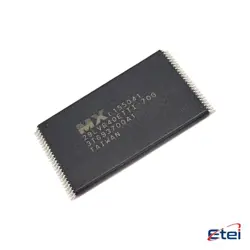
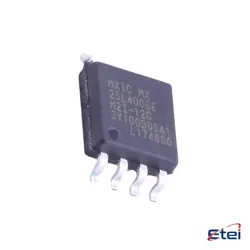
Imagens apenas para referência
24FC512T-I/SN
+Lista de MateriaisIC EEPROM 512KBIT I2C 1MHZ 8SOIC
-
FabricanteTecnologia Microchip
-
Peça do Fabricante #24FC512T-I/SN
-
Ficha Técnica 24FC512T-I/SN DataSheet
-
Pacote SOIC-8
-
Em Estoque1965
365 Garantia de Qualidade em 1 dia
7*24 Garantia de serviço em 24 horas
90-Garantia de pós-venda em 1 dia
Garantia de Produto Genuíno
Especificações
| Atributo | Valor |
| Package | Tape & Reel (TR),Cut Tape (CT) |
| ProductStatus | Active |
| MemoryType | Non-Volatile |
| MemoryFormat | EEPROM |
| Technology | EEPROM |
| MemorySize | 512Kb (64K x 8) |
| MemoryInterface | I²C |
| ClockFrequency | 1 MHz |
| WriteCycleTime-WordPage | 5ms |
| AccessTime | 400 ns |
| Voltage-Supply | 1.7V ~ 5.5V |
| OperatingTemperature | -40°C ~ 85°C (TA) |
| MountingType | Surface Mount |
| Package/Case | 8-SOIC (0.154, 3.90mm Width) |
Visão Geral
Description
It features a wide operating voltage range from 1.7V to 5.5V, making it compatible with both modern low-voltage and traditional systems. The chip supports a maximum clock frequency of 400 kHz in standard mode and up to 1 MHz in fast mode, enabling quick data access. Additionally, the 24FC512T-I/SN includes built-in write-protection features and an endurance rating of up to 1 million write/erase cycles, ensuring data reliability over time.
Its small 8-pin SOIC package makes it easy to integrate into space-constrained designs. This EEPROM is commonly used in consumer electronics, industrial systems, and other applications that require reliable data storage with a simple interface.
Equivalent
1. Atmel/Microchip AT24C512C
2. STMicroelectronics M24M01
3. ON Semiconductor CAT24C512
4. ROHM BR24G512
Ensure compatibility in terms of memory size, voltage, interface, and package when considering these alternatives. Always review datasheets to confirm suitability for your specific application.
Features
1. Capacity: 512 Kbits (64K x 8), allowing for substantial data storage.
2. Interface: I2C (Inter-Integrated Circuit) compatible, supporting standard, fast, and fast-plus modes with data transfer rates up to 1 MHz.
3. Voltage Range: Operates over a wide voltage range from 1.7V to 5.5V.
4. Low Power Consumption: Features low standby and active current requirements for energy efficiency.
5. Write Protection: Includes block write protection for safeguarding data integrity during write operations.
6. Endurance: Robust write endurance of over 1 million cycles, ensuring longevity in applications.
7. Data Retention: Provides data retention for more than 200 years.
8. Package: Available in an 8-lead SOIC package, making it suitable for space-constrained applications.
9. Temperature Range: Designed to operate within an industrial temperature range of -40°C to +85°C.
These features make the 24FC512T-I/SN ideal for applications requiring reliable and efficient data storage in a compact form factor.
Pinout
1. A0, A1, A2 (Pins 1, 2, 3): Device address inputs. These pins are used to set the I²C slave address, allowing up to 8 devices on the same bus.
2. VSS (Pin 4): Ground.
3. SDA (Pin 5): Serial Data. This pin is used for both data input and output in the I²C communication protocol.
4. SCL (Pin 6): Serial Clock. This pin is used to synchronize data transfer between the device and the controller in the I²C protocol.
5. WP (Pin 7): Write-Protect. When this pin is connected to VCC, the entire memory array is write-protected.
6. VCC (Pin 8): Power Supply.
The device operates with a power supply range of 1.7V to 5.5V and supports a data transfer rate of up to 1 MHz. It is used in applications requiring non-volatile storage and supports a standard I²C interface for communication.
Manufacturer
Application
1. Consumer Electronics: Used for storing configuration settings and user preferences.
2. Industrial Control Systems: For data logging and storing calibration data.
3. Medical Devices: To retain patient history and device settings.
4. Automotive Electronics: Utilized for storing non-volatile data like diagnostic information and user settings.
5. Communications Equipment: To save configuration parameters and firmware updates.
6. IoT Devices: For data retention in low-power applications.
7. Computer Peripherals: To keep firmware and configuration data.
Its versatility and low power consumption make it suitable for a wide range of applications requiring reliable non-volatile storage.