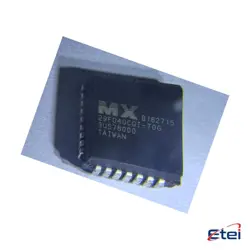
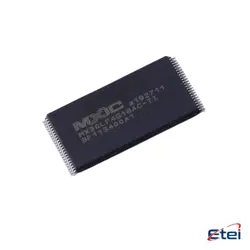
Imagens apenas para referência
24LC02BT-I/SN
+Lista de MateriaisIC EEPROM 2KBIT I2C 400KHZ 8SOIC
-
FabricanteTecnologia Microchip
-
Peça do Fabricante #24LC02BT-I/SN
-
Ficha Técnica 24LC02BT-I/SN DataSheet
-
Pacote SOIC-8
-
Em Estoque4292
365 Garantia de Qualidade em 1 dia
7*24 Garantia de serviço em 24 horas
90-Garantia de pós-venda em 1 dia
Garantia de Produto Genuíno
Especificações
| Atributo | Valor |
| Package / Case | Tape & Reel (TR),Cut Tape (CT) |
| Part Status | Active |
| Memory Type | Non-Volatile |
| Memory Format | EEPROM |
| Technology | EEPROM |
| Memory Size | 2Kb (256 x 8) |
| Memory Interface | I²C |
| Clock Frequency | 400 kHz |
| Write Cycle Time - Word Page | 5ms |
| Access Time | 900 ns |
| Voltage - Supply | 2.5V ~ 5.5V |
| Operating Temperature | -40°C ~ 85°C (TA) |
| Mounting Type | Surface Mount |
Visão Geral
Description
Key features include a low operating current, high reliability, and endurance of over one million write cycles per bit with data retention of over 200 years. It supports byte-level and page-level write operations, with a page size of 8 bytes, allowing for efficient data writing. The device also has built-in write protection to prevent accidental data corruption.
The 24LC02BT-I/SN is available in an 8-lead SOIC package, making it compact and easy to integrate into electronic circuits. It is widely used in applications like consumer electronics, industrial control systems, and communication devices where small-scale data storage is required.
Equivalent
1. AT24C02 by Microchip Technology
2. 24C02 by STMicroelectronics
3. CAT24C02 by ON Semiconductor
4. BR24C02 series by Rohm
5. FM24C02 by Fairchild Semiconductor
These equivalents have similar specifications, including memory size, I2C interface, and operational voltage range. Always verify pin compatibility and electrical characteristics before substitution.
Features
1. I2C Interface: It supports a two-wire I2C bus, requiring only two lines for communication, making it suitable for applications with limited pin availability.
2. Voltage Range: Operates over a wide voltage range from 1.7V to 5.5V, providing flexibility for different applications.
3. Data Retention: Offers over 200 years of data retention, ensuring long-term reliability and stability of stored data.
4. Endurance: Guarantees 1,000,000 erase/write cycles per byte, which is suitable for applications requiring frequent updates.
5. Low Power Consumption: Features low active and standby current, making it ideal for battery-powered devices.
6. Operational Temperature Range: Rated for industrial temperature ranges from -40°C to +85°C, suitable for various environmental conditions.
7. Page Write Capability: Supports up to 8-byte page writes, enhancing write efficiency.
8. Small Package: Available in an 8-lead SOIC package, which is compact for space-constrained applications.
These features make the 24LC02BT-I/SN suitable for applications such as data logging, configuration storage, and consumer electronics.
Pinout
1. A0, A1, A2 (Pins 1, 2, 3): These are device address inputs used for multiple device selection in a single bus system.
2. VSS (Pin 4): Ground reference for the power supply.
3. SDA (Pin 5): Serial Data Line used for bi-directional data transfer.
4. SCL (Pin 6): Serial Clock Line used to synchronize data transfer to and from the memory device.
5. WP (Pin 7): Write Protect input; when connected to VCC, it disables all write operations.
6. VCC (Pin 8): Supply voltage input.
The 24LC02BT-I/SN communicates via the I2C bus protocol, which requires only two wires for communication, making it suitable for applications where low pin count and simplicity are desired.
Manufacturer
Application
1. Consumer Electronics: Storing user settings and calibration data.
2. Automotive: Retaining configuration settings in modules.
3. Industrial Equipment: Logging operational data and parameters.
4. Medical Devices: Preserving device configurations and patient data.
5. Computing: Supporting BIOS settings and configuration data.
6. Telecommunications: Keeping network and device configurations.
7. Home Appliances: Saving user preferences and control information.
These applications benefit from the chip's low-power operation, reliable data retention, and compatibility with I2C communication protocols.