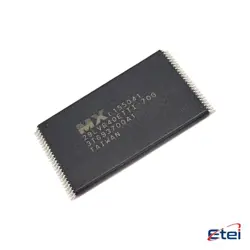
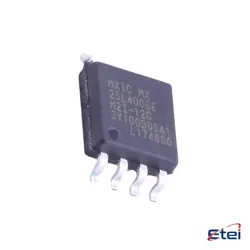
Imagens apenas para referência
25LC040T-I/SN
+Lista de MateriaisIC EEPROM 4KBIT SPI 2MHZ 8SOIC
-
FabricanteTecnologia Microchip
-
Peça do Fabricante #25LC040T-I/SN
-
Ficha Técnica 25LC040T-I/SN DataSheet
-
Em Estoque8073
365 Garantia de Qualidade em 1 dia
7*24 Garantia de serviço em 24 horas
90-Garantia de pós-venda em 1 dia
Garantia de Produto Genuíno
Especificações
| Atributo | Valor |
| PartStatus | Active |
| DigiKeyProgrammable | Verified |
| MemoryType | Non-Volatile |
| MemoryFormat | EEPROM |
| Technology | EEPROM |
| MemorySize | 4Kbit |
| MemoryOrganization | 512 x 8 |
| MemoryInterface | SPI |
| ClockFrequency | 2 MHz |
| WriteCycleTime-Word,Page | 5ms |
| Voltage-Supply | 2.5V ~ 5.5V |
| OperatingTemperature | -40°C ~ 85°C (TA) |
| MountingType | Surface Mount |
| Package/Case | 8-SOIC (0.154", 3.90mm Width) |
| SupplierDevicePackage | 8-SOIC |
| BaseProductNumber | 25LC040 |
Visão Geral
Description
This EEPROM communicates via a Serial Peripheral Interface (SPI), allowing for fast data transfer rates, typically up to 20 MHz. The 25LC040T-I/SN provides multiple functionalities, including byte and page programming, as well as the ability to read and write data. It also includes features like hardware write protection and a low-power standby mode, enhancing its efficiency in battery-operated devices.
The chip is available in various packages, including SOIC and TSSOP, facilitating integration into different circuit designs. Overall, the 25LC040T-I/SN is a reliable choice for applications requiring non-volatile memory storage with fast access speeds.
Equivalent
Features
1. Memory Organization: 512 K x 8 bits.
2. Interface: SPI (Serial Peripheral Interface) for easy integration.
3. Operating Voltage: Typically operates at 2.5V to 5.5V, supporting a wide range of applications.
4. Speed: Data transfer rates of up to 10 MHz for quick read/write operations.
5. Endurance: Capable of withstand up to 1,000,000 write cycles per memory location.
6. Data Retention: Retains data for over 100 years, ensuring reliability.
7. Write Protection: Available hardware write protection feature for enhanced data security.
8. Power Consumption: Low power consumption during operation and standby modes, making it energy efficient.
9. Temperature Range: Operating temperature range of -40°C to +85°C, suitable for industrial applications.
These features make the 25LC040T-I/SN suitable for a variety of applications, including consumer electronics, automotive, and industrial systems.
Pinout
1. VSS (Pin 1): Ground connection.
2. VCC (Pin 2): Power supply connection (commonly +2.5V to +5.5V).
3. SO (Pin 3): Serial Data Output; used to send data from the EEPROM.
4. SI (Pin 4): Serial Data Input; used to receive data to the EEPROM.
5. SCK (Pin 5): Serial Clock; provides timing for data transfer.
6. CS (Pin 6): Chip Select; enables or disables the device for communication.
7. HOLD (Pin 7): Hold; pauses the serial communication when asserted.
8. WP (Pin 8): Write Protect; prevents write operations when asserted.
The 25LC040T-I/SN offers 4 Kbits of storage and operates using a SPI (Serial Peripheral Interface) protocol for communication.
Manufacturer
Microchip is known for its focus on innovation and customer support, offering development tools and a robust ecosystem for engineers and developers. The 25LC040T-I/SN specifically is a serial EEPROM (Electrically Erasable Programmable Read-Only Memory) that features a 4 Kbit memory size and operates via a Serial Peripheral Interface (SPI), making it suitable for applications that require non-volatile data storage. The company emphasizes reliability and long-term sustainability in its products, catering to both small-scale and large-scale production needs.
Application
1. Consumer Electronics: Storing configuration settings and calibration data in devices like TVs, home appliances, and gaming consoles.
2. Industrial Automation: Retaining critical parameters and firmware in PLCs and sensor devices.
3. Automotive: Storing settings, logs, and calibration data in automotive control systems.
4. Telecommunications: Keeping network configurations and firmware in routers and switches.
5. Medical Devices: Storing patient data, device configurations, and calibration parameters.
These applications benefit from its reliability, non-volatility, and low power consumption.