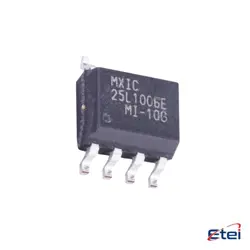
Imagens apenas para referência
25LC256-I/P
+Lista de MateriaisIC EEPROM 256KBIT SPI 10MHZ 8DIP
-
FabricanteTecnologia Microchip
-
Peça do Fabricante #25LC256-I/P
-
Ficha Técnica 25LC256-I/P DataSheet
-
Pacote PDIP-8
-
Em Estoque3466
365 Garantia de Qualidade em 1 dia
7*24 Garantia de serviço em 24 horas
90-Garantia de pós-venda em 1 dia
Garantia de Produto Genuíno
Especificações
| Atributo | Valor |
| Package | Tube |
| ProductStatus | Active |
| MemoryType | Non-Volatile |
| MemoryFormat | EEPROM |
| Technology | EEPROM |
| MemorySize | 256Kb (32K x 8) |
| MemoryInterface | SPI |
| ClockFrequency | 10 MHz |
| WriteCycleTime-WordPage | 5ms |
| Voltage-Supply | 2.5V ~ 5.5V |
| OperatingTemperature | -40°C ~ 85°C (TA) |
| MountingType | Through Hole |
| Package/Case | 8-DIP (0.300, 7.62mm) |
Visão Geral
Description
Key features include:
1. High Endurance and Data Retention: The device offers over 1 million erase/write cycles and data retention of more than 200 years, ensuring long-term reliability.
2. Page Write Capability: It supports page writing, with each page able to store 64 bytes of data.
3. Low Power Consumption: It is designed for low power operation, making it suitable for battery-powered applications.
4. Flexible Addressing: The 25LC256-I/P allows for flexible memory addressing, which simplifies data management and storage.
5. Wide Temperature Range: It operates effectively in a temperature range from -40°C to 85°C.
The 25LC256-I/P is commonly used in applications requiring non-volatile storage, such as configurations, logging, and calibration data.
Equivalent
1. AT25256 from Microchip/Atmel
2. M95256 from STMicroelectronics
3. 25AA256 from Microchip
4. CAT25256 from ON Semiconductor
5. 93LC56B from Microchip (note potential differences)
These equivalents may have slight variations in voltage levels, temperature ranges, and package types, so always check the specific datasheets to ensure compatibility with your application.
Features
1. Wide Voltage Range: Operates from 2.5V to 5.5V, making it versatile for various applications.
2. Low Power Consumption: Features low active read and standby current.
3. Write Protection: Includes a write-protect pin and software write protection for memory data security.
4. Endurance and Retention: Guarantees 1,000,000 erase/write cycles per byte and data retention for over 200 years.
5. Sequential Read: Supports sequential read operations, which allow efficient data access.
6. Page Write Capability: Allows writing up to 64 bytes in a single operation, improving write efficiency.
7. Small Form Factor: Available in PDIP, SOIC, and other package types for flexible design integration.
These features make the 25LC256-I/P ideal for use in embedded systems, data logging, and other applications requiring reliable storage solutions.
Pinout
1. CS (Chip Select): Activates the device when set to low.
2. SO (Serial Out): Outputs data from the EEPROM to the microcontroller.
3. WP (Write-Protect): Used to disable write operations to the memory array when set to high.
4. VSS: Ground reference for the device.
5. SI (Serial In): Inputs commands and data to the EEPROM from the microcontroller.
6. SCK (Serial Clock): Provides the clock signal for SPI communication.
7. HOLD: Pauses the serial communication without deselecting the device.
8. VCC: Power supply pin for the device.
This EEPROM is used for applications that require non-volatile storage with a simple interface, and it supports block write protection and sequential read.
Manufacturer
Application
1. Consumer Electronics: For storing user settings and configurations.
2. Industrial Equipment: Used for data logging and calibration information.
3. Automotive Systems: Stores firmware and diagnostic data.
4. Medical Devices: Keeps essential operational parameters and patient records.
5. Communication Systems: Used for storing network configurations.
6. Embedded Systems: Ideal for firmware storage and non-volatile memory applications.
7. IoT Devices: Retains sensor data and operational logs.
8. Computers and Peripherals: Used for BIOS storage and system settings.
Its compatibility with SPI interfaces makes it versatile for many applications requiring reliable, non-volatile memory.