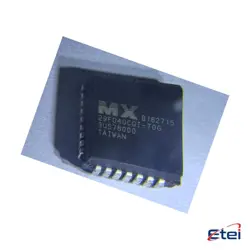
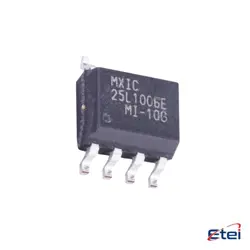
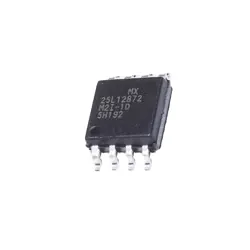
Imagens apenas para referência
25LC256-I/SN
+Lista de MateriaisIC EEPROM 256KBIT SPI 8SOIC
-
FabricanteTecnologia Microchip
-
Peça do Fabricante #25LC256-I/SN
-
Ficha Técnica 25LC256-I/SN DataSheet
-
Pacote 8-SOIC
-
Em Estoque5126
365 Garantia de Qualidade em 1 dia
7*24 Garantia de serviço em 24 horas
90-Garantia de pós-venda em 1 dia
Garantia de Produto Genuíno
Especificações
| Atributo | Valor |
| Package | Tube |
| ProductStatus | Active |
| MemoryType | Non-Volatile |
| MemoryFormat | EEPROM |
| Technology | EEPROM |
| MemorySize | 256Kb (32K x 8) |
| MemoryInterface | SPI |
| ClockFrequency | 10 MHz |
| WriteCycleTime-WordPage | 5ms |
| Voltage-Supply | 2.5V ~ 5.5V |
| OperatingTemperature | -40°C ~ 85°C (TA) |
| MountingType | Surface Mount |
| Package/Case | 8-SOIC (0.154, 3.90mm Width) |
Visão Geral
Description
The 25LC256 features a low-power CMOS technology, offering both low standby and active currents. It supports write protection via a write-disable instruction and a write-protect pin, enhancing data security. The device also includes a data retention capability of over 200 years and endurance of 1,000,000 erase/write cycles, ensuring reliability for long-term data storage. The chip comes in an 8-pin SOIC package, making it easy to integrate into standard circuit designs. It is designed to operate in environments with temperatures ranging from -40°C to +85°C.
Equivalent
1. AT25256 from Atmel/Microchip
2. M95256 from STMicroelectronics
3. 25AA256 from Microchip
4. CAT25256 from ON Semiconductor
5. 93LC256 from Microchip (with a Microwire interface)
These alternatives offer similar storage capacity and SPI interface, but you should verify pin compatibility and specific operating conditions for a perfect match.
Features
1. Memory Capacity: 256 Kbit (32 Kbytes), organized as 32,768 x 8 bits.
2. Interface: SPI (Serial Peripheral Interface) with clock speeds up to 10 MHz.
3. Voltage Range: Operates from 2.5V to 5.5V, making it suitable for various applications.
4. Endurance: More than 1,000,000 write cycles per cell.
5. Data Retention: Greater than 200 years.
6. Write Protection: Features block write protection and a write disable instruction to protect data from being overwritten.
7. Page Write Capability: Supports a page write of up to 64 bytes.
8. Low Power Consumption: Offers low power standby and operating modes, which is ideal for battery-powered devices.
9. Temperature Range: Industrial operating temperature range from -40°C to +85°C.
10. Package: Available in an 8-pin SOIC package, providing a compact form factor for integration into various designs.
These features make the 25LC256-I/SN suitable for non-volatile memory storage in a variety of consumer, industrial, and automotive applications.
Pinout
Pin Count and Functions:
1. VCC (1): Power supply input.
2. SO (Serial Output, 2): Outputs data from the EEPROM to the microcontroller.
3. WP (Write Protect, 3): Disables writing to the status register if held low.
4. GND (4): Ground connection.
5. SI (Serial Input, 5): Inputs data from the microcontroller to the EEPROM.
6. SCK (Serial Clock, 6): Clock input that synchronizes data transmission.
7. CS (Chip Select, 7): Activates the device when low, enabling access to the SO and SI pins.
8. HOLD (8): Pauses serial communication without resetting the clock.
The 25LC256 supports byte-level and page-level write operations and is compatible with most microcontroller SPI interfaces.
Manufacturer
Microchip's emphasis on innovation, reliability, and quality helps them serve a broad range of industries, offering solutions that enhance performance, functionality, and efficiency of electronic devices. With headquarters in Chandler, Arizona, and operations worldwide, Microchip Technology is recognized for its customer-centric approach and commitment to delivering cost-effective, high-performance semiconductor solutions.
Application
1. Data Logging: Used in devices that require recording and storing data over time.
2. Configuration Storage: Retains device settings and configurations for electronics like routers and industrial equipment.
3. Firmware Storage: Holds firmware for embedded systems, ensuring they retain functionality after power cycles.
4. Consumer Electronics: Used in TVs, cameras, and home appliances for settings and calibration data.
5. Automotive Systems: Stores diagnostic logs and configuration settings in modern vehicles.
6. Medical Devices: Retains critical data and operational settings.
7. Industrial Automation: Stores parameters and logs for maintenance and troubleshooting.
Its high endurance and reliability make it suitable for various applications needing persistent memory storage.