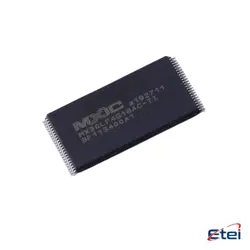
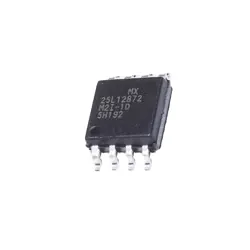
Imagens apenas para referência
5M570ZT144C5N
+Lista de MateriaisIC CPLD 440MC 9NS 144TQFP
-
FabricanteIntel
-
Peça do Fabricante #5M570ZT144C5N
-
Pacote TQFP-144
-
Em Estoque1348
365 Garantia de Qualidade em 1 dia
7*24 Garantia de serviço em 24 horas
90-Garantia de pós-venda em 1 dia
Garantia de Produto Genuíno
Especificações
| Atributo | Valor |
| Package / Case | Tray |
| Series | MAX® V |
| Part Status | Active |
| Programmable Type | In System Programmable |
| Delay Timetpd(1)Max | 9 ns |
| Voltage Supply - Internal | 1.71V ~ 1.89V |
| Number of Logic Elements/Blocks | 570 |
| Number of Macrocells | 440 |
| Number of I/O | 114 |
| Operating Temperature | 0°C ~ 85°C (TJ) |
| Mounting Type | Surface Mount |
Visão Geral
Description
MAX V CPLDs are known for providing more density and I/O resources compared to previous generations, and they include features such as an internal oscillator, user flash memory, and power-down modes, making them suitable for a variety of applications such as I/O expansion, interface bridging, power-up sequencing, and control logic. They also support in-system programming via JTAG, allowing for easy updates and modifications post-deployment. These characteristics make the 5M570ZT144C5N a versatile choice for designers looking to implement flexible logic solutions in embedded systems.
Equivalent
Features
1. Logic Elements: It contains 570 logic elements, which determine its capacity to implement complex logic functions.
2. I/O Pins: The device has 114 user I/O pins, allowing it to interface with other components in a system.
3. Operating Voltage: It operates at a core voltage of 3.3V, with I/O standards supporting 3.3V, 2.5V, 1.8V, 1.5V, and 1.2V.
4. Package: The component is available in a TQFP-144 package, which is compact and suitable for various applications.
5. Non-volatile: It offers instant-on capability due to its non-volatile architecture, retaining configuration data without the need for external memory.
6. Low Power Consumption: The MAX V series is known for low static power consumption and efficient logic implementation.
7. Applications: Suitable for a range of applications, including portable devices, consumer electronics, and automotive systems due to its versatility and performance.
These features make the 5M570ZT144C5N a reliable choice for low-to-medium complexity logic designs.
Pinout
Key features include:
- 570 Logic Elements (LEs): Providing flexible logic resources for various applications.
- 144-Pin Count: Offering a high number of I/O pins for connectivity.
- Non-Volatile: Retains its configuration data without needing an external configuration device.
- Low Power Consumption: Designed for efficient power usage, making it suitable for portable and battery-operated devices.
- Embedded Memory Blocks: For implementing memory-intensive functions.
- High-Speed Interfacing: Capable of operating at fast clock frequencies, suitable for applications requiring quick data processing.
This device is typically used in applications such as communication systems, consumer electronics, and industrial automation.
Manufacturer
Originally, the MAX V series was developed by Altera Corporation, which Intel acquired in 2015. Altera was well-known for its programmable logic devices, including FPGAs, CPLDs (complex programmable logic devices), and ASICs (application-specific integrated circuits). Post-acquisition, these products have been integrated into Intel's broader portfolio, allowing them to expand their offerings in the data center and Internet of Things (IoT) markets.
Intel Corporation is primarily recognized as one of the world's largest semiconductor chip manufacturers, playing a pivotal role in advancing computing technology. It serves a wide range of industries, including personal computing, data centers, automotive, industrial, and more, by providing cutting-edge hardware and software solutions.
Application
1. Interface Bridging: Facilitating communication between different protocols or systems.
2. I/O Expansion: Providing additional input/output capabilities for microcontrollers.
3. Control Logic: Implementing custom control functions in embedded systems.
4. Signal Processing: Handling tasks in digital signal processing applications.
5. Glue Logic: Integrating disparate components within electronic systems.
Its versatility makes it suitable for use in consumer electronics, industrial automation, telecommunications, and automotive systems.