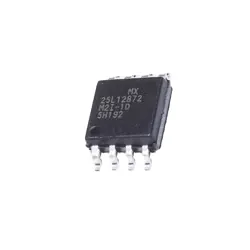
Imagens apenas para referência
ABS10
+Lista de MateriaisRECT BRIDGE 1000V 1A ABS
-
FabricanteYangzhou Yangjie Electronic Technology Co., Ltd.
-
Peça do Fabricante #ABS10
-
Pacote SO-DIL-4
-
Em Estoque3826
365 Garantia de Qualidade em 1 dia
7*24 Garantia de serviço em 24 horas
90-Garantia de pós-venda em 1 dia
Garantia de Produto Genuíno
Especificações
| Atributo | Valor |
| Package / Case | Tape & Reel (TR),Cut Tape (CT) |
| Part Status | Active |
| Diode Type | Single Phase |
| Technology | Standard |
| Voltage - Peak Reverse(Max) | 1 kV |
| Current - Average Rectified(Io) | 1 A |
| Voltage - Forward (Vf) (Max) @ If | 950 mV @ 500 mA |
| Current - Reverse Leakage @ Vr | 5 µA @ 1000 V |
| Operating Temperature | -55°C ~ 150°C (TJ) |
| Mounting Type | Surface Mount |
Visão Geral
Description
A typical ABS system uses wheel speed sensors to determine if one or more wheels are trying to lock up during braking. If a potential lock-up is detected, ABS modulates the brake pressure to the affected wheel(s), typically via a system of hydraulic valves, to maintain optimal braking force. This allows the driver to maintain control over steering while applying maximum braking force. ABS technology has evolved over time to integrate with other vehicle safety systems, such as electronic stability control (ESC) and traction control systems (TCS), providing comprehensive safety solutions.
Equivalent
Features
1. Wheel Speed Sensors: Continuously monitor the speed of each wheel, providing crucial data to prevent wheel lock-up during braking.
2. Electronic Control Unit (ECU): Processes data from the wheel speed sensors and modulates braking pressure to maintain traction and control.
3. Hydraulic Modulator: Adjusts braking pressure at each wheel based on ECU signals to optimize braking performance.
4. Enhanced Stability: Prevents skidding and maintains steering control during emergency braking by preventing wheel lock-up.
5. Shorter Stopping Distances: Allows for shorter stopping distances on dry and slippery surfaces by maximizing tire traction.
6. Integration with Other Systems: Often works in conjunction with traction control and electronic stability control systems for comprehensive vehicle safety.
7. Self-Diagnostic Capabilities: Monitors system health and alerts the driver to any malfunctions through dashboard indicators.
These features work together to improve vehicle safety by maintaining optimal braking performance under various driving conditions.
Pinout
1. AC Input Pin 1: Connected to one AC line.
2. AC Input Pin 2: Connected to the other AC line.
3. Positive Output Pin (+): Provides the positive DC voltage.
4. Negative Output Pin (-): Provides the negative DC voltage.
The rectifier is encapsulated in a small, surface-mount package, making it suitable for compact circuit designs. It is rated for a maximum reverse voltage of around 1000V and a forward current of 1A. The ABS10 is popular due to its efficiency and reliability in converting AC to DC in power supply circuits.
Manufacturer
Application
1. Consumer Electronics: Used in devices like smartphones, tablets, and wearables for clock generation and timing accuracy.
2. Telecommunications: Essential in network equipment for precise timing and frequency control.
3. Industrial Automation: Employed in control systems and instrumentation for reliable timing.
4. Automotive Electronics: Used in infotainment systems and advanced driver-assistance systems (ADAS).
5. Computing: Integral to desktops, laptops, and servers for accurate data processing timing.
These oscillators support high-frequency stability and low power consumption, making them ideal for modern electronic applications.