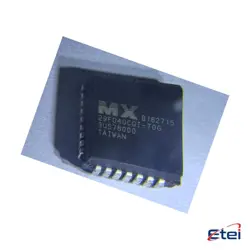
Imagens apenas para referência
AD5248BRMZ2.5-RL7
+Lista de MateriaisIC DGT POT 2.5KOHM 256TAP 10MSOP
-
FabricanteAnalog Devices Inc.
-
Peça do Fabricante #AD5248BRMZ2.5-RL7
-
Em Estoque6389
365 Garantia de Qualidade em 1 dia
7*24 Garantia de serviço em 24 horas
90-Garantia de pós-venda em 1 dia
Garantia de Produto Genuíno
Especificações
| Atributo | Valor |
| Part Status | Active |
| Base Product Number | AD5248 |
| Digi Key Programmable | Not Verified |
| Taper | Linear |
| Configuration | Rheostat |
| Number of Circuits | 2 |
| Number of Taps | 256 |
| Resistance (Ohms) | 2.5k |
| Interface | I2C |
| Memory Type | Volatile |
| Voltage - Supply | 2.7V ~ 5.5V |
| Features | Selectable Address |
| Tolerance | -20%, +55% |
| Temperature Coefficient (Typ) | 35ppm/°C |
| Mounting Type | Surface Mount |
| Supplier Device Package | 10-MSOP |
| Package / Case | 10-TFSOP, 10-MSOP (0.118", 3.00mm Width) |
| Operating Temperature | -40°C ~ 125°C |
| Resistance - Wiper (Ohms) (Typ) | 160 |
| Packaging | Cut Tape (CT), Tape & Reel (TR) |
Visão Geral
Description
The AD5248BRMZ2.5-RL7 is a dual-channel, 256-position digital potentiometer from Analog Devices. It features a dual, non-volatile memory structure with a linear taper, making it suitable for applications in audio, signal processing, and control systems.
Key specifications include a supply voltage range of 2.7V to 5.5V, a resistance value of 2.5 kΩ, and a digital interface compatible with I2C protocol, enabling easy integration with microcontrollers and digital systems. The device offers a low power consumption and fast response time, making it ideal for battery-operated devices.
The AD5248 also supports various configurations for setting wiper positions and memory storage, enhancing flexibility in design. With its compact 8-lead MSOP package, it is well-suited for applications where space is constrained. Overall, the AD5248BRMZ2.5-RL7 is an efficient choice for implementing adjustable resistance functionalities in modern electronic designs.
Key specifications include a supply voltage range of 2.7V to 5.5V, a resistance value of 2.5 kΩ, and a digital interface compatible with I2C protocol, enabling easy integration with microcontrollers and digital systems. The device offers a low power consumption and fast response time, making it ideal for battery-operated devices.
The AD5248 also supports various configurations for setting wiper positions and memory storage, enhancing flexibility in design. With its compact 8-lead MSOP package, it is well-suited for applications where space is constrained. Overall, the AD5248BRMZ2.5-RL7 is an efficient choice for implementing adjustable resistance functionalities in modern electronic designs.
Equivalent
The AD5248BRMZ2.5-RL7 is a digital potentiometer from Analog Devices. Equivalent products include the MCP4131 from Microchip, the DS1803 from Maxim Integrated, and the PT10LV from Vishay. These alternatives offer similar functionality in digital potentiometers, but ensure to check specific features such as resistance values, interface types, and package options to find the best match for your application.
Features
The AD5248BRMZ2.5-RL7 is a digital potentiometer featuring the following key specifications:
1. Dual-Channel: It has two independent potentiometer channels, providing flexibility in applications.
2. Resolution: 8-bit resolution, allowing for 256 distinct settings per channel.
3. Interface: Operates via a serial interface (SPI), ensuring easy integration with microcontrollers.
4. Supply Voltage: Operates from a supply voltage of 2.7V to 5.5V, making it suitable for low-voltage applications.
5. Memory: Non-volatile memory retains settings when powered off, ensuring consistent performance.
6. Temperature Range: Operates within a temperature range of -40°C to +125°C, accommodating harsh environments.
7. Low Power: Designed for low power consumption, enhancing battery life in portable devices.
8. Taper Options: Provides linear and logarithmic taper options, suitable for various applications.
These features make the AD5248BRMZ2.5-RL7 ideal for applications in consumer electronics, automotive, and industrial controls where precise resistance adjustment is required.
1. Dual-Channel: It has two independent potentiometer channels, providing flexibility in applications.
2. Resolution: 8-bit resolution, allowing for 256 distinct settings per channel.
3. Interface: Operates via a serial interface (SPI), ensuring easy integration with microcontrollers.
4. Supply Voltage: Operates from a supply voltage of 2.7V to 5.5V, making it suitable for low-voltage applications.
5. Memory: Non-volatile memory retains settings when powered off, ensuring consistent performance.
6. Temperature Range: Operates within a temperature range of -40°C to +125°C, accommodating harsh environments.
7. Low Power: Designed for low power consumption, enhancing battery life in portable devices.
8. Taper Options: Provides linear and logarithmic taper options, suitable for various applications.
These features make the AD5248BRMZ2.5-RL7 ideal for applications in consumer electronics, automotive, and industrial controls where precise resistance adjustment is required.
Pinout
The AD5248BRMZ2.5-RL7 is a digital potentiometer with a pin count of 16. It features an integrated 256-position resistor and is designed for applications requiring programmable resistance. The primary functions include:
- Digital Interface: It utilizes a 2-wire I2C-compatible interface for easy communication and control.
- Variable Resistance: The potentiometer allows for dynamic adjustment of resistance values, enabling precise control in applications such as audio processing, adjustable gain circuits, and sensor calibration.
- Non-volatile Memory: It includes an option for storing settings, retaining configurations even after power loss.
- Power Supply: Operates typically at a supply voltage of 2.5V, hence the 2.5 in the part number.
In summary, the AD5248BRMZ2.5-RL7 is a versatile digital potentiometer with a 16-pin configuration, tailored for applications needing adjustable resistance with digital control.
- Digital Interface: It utilizes a 2-wire I2C-compatible interface for easy communication and control.
- Variable Resistance: The potentiometer allows for dynamic adjustment of resistance values, enabling precise control in applications such as audio processing, adjustable gain circuits, and sensor calibration.
- Non-volatile Memory: It includes an option for storing settings, retaining configurations even after power loss.
- Power Supply: Operates typically at a supply voltage of 2.5V, hence the 2.5 in the part number.
In summary, the AD5248BRMZ2.5-RL7 is a versatile digital potentiometer with a 16-pin configuration, tailored for applications needing adjustable resistance with digital control.
Manufacturer
The AD5248BRMZ2.5-RL7 is manufactured by Analog Devices, Inc. (ADI). Analog Devices is a multinational company headquartered in Norwood, Massachusetts, specializing in designing and manufacturing a wide range of high-performance analog, mixed-signal, and digital signal processing integrated circuits (ICs).
Founded in 1965, ADI primarily serves the industrial, automotive, communications, and consumer markets. Their product portfolio includes amplifiers, data converters, sensors, and reference designs, which are essential for various applications such as signal processing, data acquisition, and control systems. The company is renowned for its commitment to innovation and quality, making it a key player in the semiconductor industry.
The AD5248 is a digital potentiometer, used in applications requiring variable resistance or programmable gain, reflecting ADI’s focus on providing solutions for complex electronic design challenges.
Founded in 1965, ADI primarily serves the industrial, automotive, communications, and consumer markets. Their product portfolio includes amplifiers, data converters, sensors, and reference designs, which are essential for various applications such as signal processing, data acquisition, and control systems. The company is renowned for its commitment to innovation and quality, making it a key player in the semiconductor industry.
The AD5248 is a digital potentiometer, used in applications requiring variable resistance or programmable gain, reflecting ADI’s focus on providing solutions for complex electronic design challenges.
Application
The AD5248BRMZ2.5-RL7 is a programmable digital potentiometer used in various applications, including:
1. Audio Systems: Volume control and tone adjustment.
2. Sensor Calibration: Adjusting sensor output levels.
3. Embedded Systems: Variable gain amplifiers and offset adjustments.
4. Industrial Automation: Process control and feedback systems.
5. Consumer Electronics: Brightness and contrast control in displays.
6. Medical Devices: Signal conditioning in diagnostic equipment.
Its digital interface and precision make it suitable for applications requiring variable resistance in a compact form factor.
1. Audio Systems: Volume control and tone adjustment.
2. Sensor Calibration: Adjusting sensor output levels.
3. Embedded Systems: Variable gain amplifiers and offset adjustments.
4. Industrial Automation: Process control and feedback systems.
5. Consumer Electronics: Brightness and contrast control in displays.
6. Medical Devices: Signal conditioning in diagnostic equipment.
Its digital interface and precision make it suitable for applications requiring variable resistance in a compact form factor.
Package
The AD5248BRMZ2.5-RL7 is packaged in a 14-lead TSSOP (Thin Shrink Small Outline Package). This type of package is commonly used for integrated circuits due to its compact size and ease of mounting on PCBs.