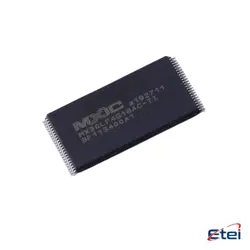
Imagens apenas para referência
AD8226ARMZ-R7
+Lista de MateriaisIC INST AMP 1 CIRCUIT 8MSOP
-
FabricanteAnalog Devices Inc.
-
Peça do Fabricante #AD8226ARMZ-R7
-
Ficha Técnica AD8226ARMZ-R7 DataSheet
-
Pacote MSOP-8
-
Em Estoque1976
365 Garantia de Qualidade em 1 dia
7*24 Garantia de serviço em 24 horas
90-Garantia de pós-venda em 1 dia
Garantia de Produto Genuíno
Especificações
| Atributo | Valor |
| Package / Case | Tape & Reel (TR),Cut Tape (CT) |
| Part Status | Active |
| Amplifier Type | Instrumentation |
| Number of Circuits | 1 |
| Output Type | Rail-to-Rail |
| Slew Rate | 0.6V/µs |
| -3 dB Bandwidth | 1.5 MHz |
| Current - Input Bias | 20 nA |
| Voltage - Input Offset | 100 µV |
| Supply Current | 350µA |
| Current - Output / Channel | 13 mA |
| Voltage - Supply Span(Min) | 2.2 V |
| Voltage - Supply Span(Max) | 36 V |
| Operating Temperature | -40°C ~ 125°C |
| Mounting Type | Surface Mount |
Visão Geral
Description
Key characteristics include its wide operating voltage range, low power consumption, and adjustable gain through external resistors, allowing for flexibility in design. The amplifier is available in an 8-lead MSOP package, which is compact and suitable for space-constrained applications.
The AD8226ARMZ-R7 offers excellent performance with its low offset voltage, low noise, and high bandwidth. It operates effectively over a broad temperature range, making it reliable under varying environmental conditions. This part number specifically denotes a version that is packaged on a reel, typically for automated assembly processes.
Equivalent
1. INA126 from Texas Instruments – Known for low power and high accuracy.
2. MAX4198 from Maxim Integrated – Offers low power consumption and high precision.
3. LT1167 from Analog Devices – Provides low power and high performance.
4. MCP6N11 from Microchip Technology – Features low power and high accuracy.
These alternatives offer similar functionalities and can be suitable replacements depending on specific application requirements.
Features
1. Wide Supply Range: Operates on a single supply of 2.7V to 36V or dual supplies of ±1.35V to ±18V.
2. Excellent Accuracy: Provides low offset voltage (50 μV max) and low offset drift (0.6 μV/°C max).
3. High CMRR: Offers a common-mode rejection ratio of 80 dB at DC, ensuring precise amplification of differential signals.
4. Low Input Bias Current: Features low input bias current of 2 nA, suitable for high-impedance sensor interfacing.
5. Gain Flexibility: Gain can be set from 1 to 1000 with a single resistor, allowing for application-specific customization.
6. Low Power Consumption: Consumes only 1 mA of supply current, making it suitable for battery-powered applications.
7. Small Package: Available in an 8-lead MSOP package, ideal for space-constrained designs.
These features make the AD8226ARMZ-R7 suitable for precision signal conditioning, sensor interfacing, and medical instrumentation applications.
Pinout
1. Pin 1 (RG1): Gain setting pin 1. Used in conjunction with RG2 to set the gain of the amplifier.
2. Pin 2 (–IN): Inverting input. Connects to the negative side of the differential input signal.
3. Pin 3 (+IN): Non-inverting input. Connects to the positive side of the differential input signal.
4. Pin 4 (V-): Negative power supply voltage.
5. Pin 5 (REF): Reference voltage pin. Used to establish a reference level for the output signal.
6. Pin 6 (VOUT): Output voltage. Provides the amplified differential signal.
7. Pin 7 (V+): Positive power supply voltage.
8. Pin 8 (RG2): Gain setting pin 2. Used along with RG1 to set the gain of the amplifier.
The AD8226 is known for providing high precision, low power consumption, and good common-mode rejection, making it suitable for sensor signal conditioning and other precision applications.
Manufacturer
Application
1. Medical Instrumentation: Used in ECG and other bio-signal monitoring systems due to its low power consumption and high precision.
2. Industrial Process Controls: Suitable for sensor signal conditioning in automation and control systems.
3. Weigh Scales: Amplifies low-level signals from load cells.
4. Data Acquisition Systems: Provides precise amplification of analog signals before digitization.
5. Test and Measurement Equipment: Used in precision instruments requiring stable and accurate performance.
Its wide supply voltage range and high common-mode rejection make it versatile for various applications.