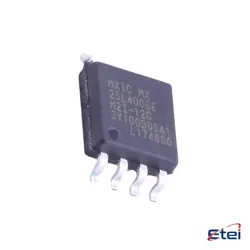
Imagens apenas para referência
AD822ANZ
+Lista de MateriaisIC OPAMP GP 2 CIRCUIT 8DIP
-
FabricanteAnalog Devices Inc.
-
Peça do Fabricante #AD822ANZ
-
Pacote PDIP-8
-
Em Estoque2955
365 Garantia de Qualidade em 1 dia
7*24 Garantia de serviço em 24 horas
90-Garantia de pós-venda em 1 dia
Garantia de Produto Genuíno
Especificações
| Atributo | Valor |
| Package | Tube |
| ProductStatus | Active |
| AmplifierType | General Purpose |
| NumberofCircuits | 2 |
| OutputType | Rail-to-Rail |
| SlewRate | 3V/µs |
| GainBandwidthProduct | 1.9 MHz |
| -3dbBandwidth | 1.9 MHz |
| Current-InputBias | 2 pA |
| Voltage-InputOffset | 400 µV |
| Current-Supply | 1.24mA |
| Current-Output/Channel | 20 mA |
| Voltage-SupplySpan(Min) | 5 V |
| Voltage-SupplySpan(Max) | 30 V |
| OperatingTemperature | -40°C ~ 85°C |
| MountingType | Through Hole |
| Package/Case | 8-DIP (0.300, 7.62mm) |
Visão Geral
Description
One of the key attributes of the AD822ANZ is its high common-mode rejection ratio (CMRR), which ensures accurate signal amplification even in the presence of noise or interference. It also exhibits low offset voltage and drift, contributing to its precision in critical applications like medical instrumentation, data acquisition, and industrial process controls.
The device is housed in an 8-pin DIP package, making it straightforward to integrate into circuit designs. Its robust performance and reliability make the AD822ANZ a popular choice for engineers looking for a precise and adaptable instrumentation amplifier.
Equivalent
1. INA128 by Texas Instruments
2. MAX4194 by Maxim Integrated
3. LT1167 by Analog Devices (formerly by Linear Technology)
4. MCP6N11 by Microchip Technology
These alternatives offer similar functionality but may have variations in specifications, so it's essential to review the datasheets to ensure compatibility with your application.
Features
1. High Accuracy: It offers low offset voltage and low drift over temperature, ensuring precise measurements.
2. Wide Supply Range: Operates on dual supplies from ±2.3 V to ±18 V or a single supply from 2.3 V to 36 V, providing flexibility in various applications.
3. Gain Configurability: The gain can be easily set with a single external resistor, accommodating a wide range of input signals.
4. Excellent CMRR: High Common-Mode Rejection Ratio (CMRR) minimizes interference from common-mode signals.
5. Low Power Consumption: Efficient power usage makes it suitable for battery-operated devices.
6. Low Noise: Ensures signal integrity with minimal noise interference.
7. Small Package: Available in an 8-pin package, facilitating integration into compact designs.
8. Input Protection: Features internal input protection, enhancing durability and reliability.
These features make the AD822ANZ ideal for applications like sensor signal conditioning, medical instrumentation, and data acquisition systems.
Pinout
1. Pin 1 (RG): Gain Resistor. Connect external resistor to set gain.
2. Pin 2 (V- or -Vs): Negative Power Supply. Connect to the negative voltage supply.
3. Pin 3 (Vin-): Inverting Input. Connect to the negative input signal.
4. Pin 4 (Vin+): Non-Inverting Input. Connect to the positive input signal.
5. Pin 5 (REF): Reference. Used to set the output reference level.
6. Pin 6 (Vout): Output. Provides the amplified output signal.
7. Pin 7 (V+ or +Vs): Positive Power Supply. Connect to the positive voltage supply.
8. Pin 8 (RG): Gain Resistor. Connect external resistor to set gain.
The AD822ANZ is known for its high input impedance, low offset voltage, and low noise, making it suitable for precision applications like sensor interfacing and data acquisition.
Manufacturer
Application
1. Medical Instrumentation: For amplifying low-level biological signals such as ECG or EEG.
2. Industrial Process Controls: Used in data acquisition systems to monitor and control processes.
3. Strain Gauge and Load Cell Amplification: Enhancing signals from sensors used in weighing systems.
4. Temperature Measurements: Amplifying signals from thermocouples and RTDs.
5. Test and Measurement Equipment: Used in precision test systems for reliable data capture.
6. Seismic and Geological Monitoring: Amplifying weak signals from seismic sensors.
Overall, it excels in applications demanding high gain accuracy and low noise.