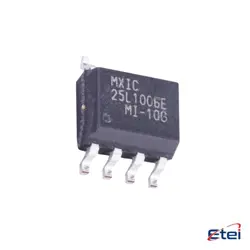
Imagens apenas para referência
ADC081C021CIMK
+Lista de Materiais-
FabricanteTexas Instruments
-
Peça do Fabricante #ADC081C021CIMK
-
Em Estoque15249
365 Garantia de Qualidade em 1 dia
7*24 Garantia de serviço em 24 horas
90-Garantia de pós-venda em 1 dia
Garantia de Produto Genuíno
Especificações
| Atributo | Valor |
| EURoHS | Not Compliant |
| ECCN(US) | EAR99 |
| PartStatus | Unconfirmed |
| Automotive | No |
| PPAP | No |
| Mounting | Surface Mount |
| PackageHeight | 1(Max) |
| PackageWidth | 1.75(Max) |
| PackageLength | 3.05(Max) |
| PCBchanged | 6 |
| StandardPackageName | SOT |
| SupplierPackage | TSOT-23 |
| PinCount | 6 |
| LeadShape | Gull-wing |
| SVHC | Yes |
| SVHCExceedsThreshold | Yes |
| ConverterType | General Purpose |
| Architecture | SAR |
| Resolution | 8bit |
| NumberofADCs | 1 |
| NumberofInputChannels | 1 |
| SamplingRate | 188.9ksps |
| DigitalInterfaceType | Serial (2-Wire, I2C) |
| InputType | Voltage |
| InputSignalType | Single-Ended |
| VoltageReference | Supply |
| PolarityofInputVoltage | Unipolar |
| VoltageSupplySource | Single |
| InputVoltage | 5.5V |
| IntegralNonlinearityError | ±0.25LSB |
| FullScaleError | ±0.4LSB |
| SignaltoNoiseRatio | 49.8dB(Typ) |
| NoMissingCodes(bit) | 8 |
| SampleandHold | Yes |
| Single-EndedInput | Yes |
| MinimumOperatingTemperature(°C) | -40 |
| MaximumOperatingTemperature(°C) | 105 |
| Packaging | Tape and Reel |
| SupplierTemperatureGrade | Industrial |
Visão Geral
Description
The ADC081C021CIMK is an 8-bit Analog-to-Digital Converter (ADC) with an I2C-compatible interface. It is designed for low-power, high-precision applications, converting analog voltage signals into digital data. The device operates with a supply voltage range of 2.7V to 5.5V, making it suitable for battery-powered and portable devices.
Key features include single-ended input, a maximum sampling rate of 188.9 kSPS, and an inherent ±1 LSB differential non-linearity (DNL) accuracy. The ADC081C021CIMK also supports a wide operational temperature range and offers a shutdown mode for power saving.
Its I2C interface allows easy integration with microcontrollers, supporting up to 400 kHz Fast Mode communication, enabling efficient data transfer. The small MSOP-8 package makes it ideal for space-constrained applications, such as sensor interfacing, portable instrumentation, and data acquisition systems.
Overall, the ADC081C021CIMK delivers a balance of performance, power efficiency, and ease of use, making it a versatile choice for various analog-to-digital conversion needs.
Key features include single-ended input, a maximum sampling rate of 188.9 kSPS, and an inherent ±1 LSB differential non-linearity (DNL) accuracy. The ADC081C021CIMK also supports a wide operational temperature range and offers a shutdown mode for power saving.
Its I2C interface allows easy integration with microcontrollers, supporting up to 400 kHz Fast Mode communication, enabling efficient data transfer. The small MSOP-8 package makes it ideal for space-constrained applications, such as sensor interfacing, portable instrumentation, and data acquisition systems.
Overall, the ADC081C021CIMK delivers a balance of performance, power efficiency, and ease of use, making it a versatile choice for various analog-to-digital conversion needs.
Equivalent
The ADC081C021CIMK is an 8-bit analog-to-digital converter (ADC) with I2C interface. Equivalent products include:
1. MCP3021 from Microchip - 10-bit ADC with I2C interface.
2. ADS7828 from Texas Instruments - 12-bit ADC with I2C interface.
3. PCF8591 from NXP - 8-bit ADC with I2C interface.
4. LTC2309 from Analog Devices - 12-bit ADC with I2C interface.
Ensure compatibility in terms of bit resolution, supply voltage, and interface requirements when selecting equivalents.
1. MCP3021 from Microchip - 10-bit ADC with I2C interface.
2. ADS7828 from Texas Instruments - 12-bit ADC with I2C interface.
3. PCF8591 from NXP - 8-bit ADC with I2C interface.
4. LTC2309 from Analog Devices - 12-bit ADC with I2C interface.
Ensure compatibility in terms of bit resolution, supply voltage, and interface requirements when selecting equivalents.
Features
The ADC081C021CIMK is an 8-bit analog-to-digital converter (ADC) with the following features:
1. Resolution: 8-bit, providing 256 discrete levels of analog input.
2. Interface: I²C-compatible interface, allowing easy communication with microcontrollers and other devices.
3. Data Rate: It supports up to 188.9 ksps (kilo-samples per second).
4. Operating Voltage: Operates on a supply voltage ranging from 2.7V to 5.5V.
5. Input Range: Typically designed for single-ended input.
6. Low Power Consumption: Features low power usage, making it suitable for battery-powered applications.
7. Temperature Range: Operates efficiently over an extended temperature range, typically from -40°C to +125°C.
8. Package: Available in a compact SOT-23-6 package, facilitating use in space-constrained applications.
9. Additional Features: Includes an internal oscillator, automatic power-down mode for energy efficiency, and a built-in multiplexer for input channel selection.
These features make the ADC081C021CIMK ideal for various applications, including portable devices, sensor interfacing, and data acquisition systems.
1. Resolution: 8-bit, providing 256 discrete levels of analog input.
2. Interface: I²C-compatible interface, allowing easy communication with microcontrollers and other devices.
3. Data Rate: It supports up to 188.9 ksps (kilo-samples per second).
4. Operating Voltage: Operates on a supply voltage ranging from 2.7V to 5.5V.
5. Input Range: Typically designed for single-ended input.
6. Low Power Consumption: Features low power usage, making it suitable for battery-powered applications.
7. Temperature Range: Operates efficiently over an extended temperature range, typically from -40°C to +125°C.
8. Package: Available in a compact SOT-23-6 package, facilitating use in space-constrained applications.
9. Additional Features: Includes an internal oscillator, automatic power-down mode for energy efficiency, and a built-in multiplexer for input channel selection.
These features make the ADC081C021CIMK ideal for various applications, including portable devices, sensor interfacing, and data acquisition systems.
Pinout
The ADC081C021CIMK is an 8-bit analog-to-digital converter (ADC) with an I2C-compatible interface, produced by Texas Instruments. It typically comes in an 8-pin package. The primary function of this device is to convert an analog input signal into a digital output, using a resolution of 8 bits, suitable for low-power and compact applications.
Key pins and their functions include:
1. VDD: Power supply pin.
2. GND: Ground connection.
3. SCL: Serial clock line for I2C communication.
4. SDA: Serial data line for I2C communication.
5. A0 and A1: Address pins for I2C, allowing the configuration of the device's I2C address.
6. VIN: Analog input voltage to be converted.
7. ALERT/READY: Interrupt output or conversion ready status.
These pins support the device's operation within an I2C network, allowing the ADC to communicate with microcontrollers and other digital systems efficiently.
Key pins and their functions include:
1. VDD: Power supply pin.
2. GND: Ground connection.
3. SCL: Serial clock line for I2C communication.
4. SDA: Serial data line for I2C communication.
5. A0 and A1: Address pins for I2C, allowing the configuration of the device's I2C address.
6. VIN: Analog input voltage to be converted.
7. ALERT/READY: Interrupt output or conversion ready status.
These pins support the device's operation within an I2C network, allowing the ADC to communicate with microcontrollers and other digital systems efficiently.
Manufacturer
The ADC081C021CIMK is manufactured by Texas Instruments (TI). Texas Instruments is an American technology company that designs and manufactures semiconductors and various integrated circuits, which it sells to electronics designers and manufacturers globally. The company operates in several segments, including analog electronics, embedded processors, and digital light processing (DLP), among others. TI is well-known for its contributions to the development and innovation of semiconductor technology, making it one of the leading companies in the industry. Their products are used in a wide range of applications, from consumer electronics to industrial equipment.
Application
The ADC081C021CIMK is an 8-bit analog-to-digital converter commonly used in various applications. Its typical use cases include battery management systems, where it monitors voltage levels; sensor interfacing, for converting analog sensor outputs into digital signals; and portable devices, offering low power consumption. It's also applicable in data acquisition systems, allowing for the digitization of analog signals for further processing. Additionally, it can be utilized in industrial automation for monitoring and control tasks. Its small package size and I2C interface make it suitable for space-constrained applications and easy integration into microcontroller-based systems.
Package
The ADC081C021CIMK is an analog-to-digital converter (ADC) that comes in a SOT-23 package type. Specifically, it is a surface-mount, small-outline transistor package with 6 pins, designed for compact applications.