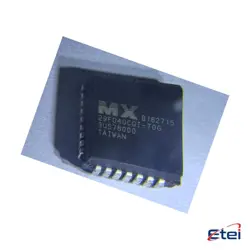
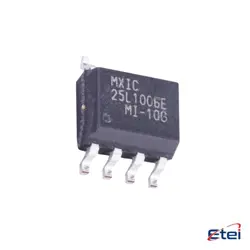
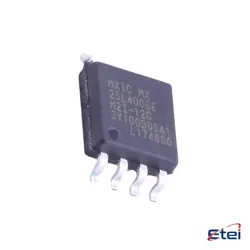
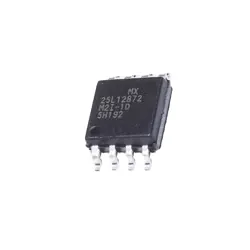
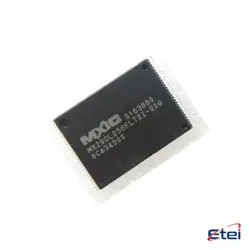
Imagens apenas para referência
ADM485AR
+Lista de MateriaisIC TRANSCEIVER HALF 1/1 8SOIC
-
FabricanteAnalog Devices Inc.
-
Peça do Fabricante #ADM485AR
-
Ficha Técnica ADM485AR DataSheet
-
Pacote SOIC-8
-
Em Estoque6742
365 Garantia de Qualidade em 1 dia
7*24 Garantia de serviço em 24 horas
90-Garantia de pós-venda em 1 dia
Garantia de Produto Genuíno
Especificações
| Atributo | Valor |
| Package | Tube,Tube |
| ProductStatus | Obsolete |
| Type | Transceiver |
| Protocol | RS422, RS485 |
| NumberofDrivers/Receivers | 1/1 |
| Duplex | Half |
| ReceiverHysteresis | 70 mV |
| DataRate | 5Mbps |
| Voltage-Supply | 4.75V ~ 5.25V |
| OperatingTemperature | -40°C ~ 85°C |
| MountingType | Surface Mount |
| Package/Case | 8-SOIC (0.154, 3.90mm Width) |
Visão Geral
Description
Key features of the ADM485AR include a wide supply voltage range typically from 4.5V to 5.5V, as well as high data rates up to 5 Mbps. It offers a low power consumption mode and includes thermal shutdown protection to prevent damage from overheating. The device also supports slew rate limiting, which minimizes electromagnetic interference, allowing for reliable operation in electrically noisy environments.
The ADM485AR ensures reliable data integrity with its fail-safe receiver inputs that guarantee a known output state when the inputs are open or shorted. Its compact design, coupled with high performance and reliability, makes it a preferred choice for engineers designing communication systems requiring RS-485 protocols.
Equivalent
1. MAX485 from Maxim Integrated
2. SN75176A from Texas Instruments
3. SP485 from Exar
4. LTC485 from Analog Devices (formerly Linear Technology)
5. DS485 from Dallas Semiconductor
These alternatives offer similar functionalities, such as half-duplex communication, low power consumption, and compatibility with RS-485/RS-422 standards. Always check specific datasheets for detailed compatibility.
Features
1. Data Rate: Supports data transmission rates of up to 5 Mbps, making it suitable for high-speed communication applications.
2. Low Power Consumption: Operates with reduced power usage, making it ideal for power-sensitive applications.
3. Wide Supply Range: Functions effectively with a supply voltage range from 4.5 V to 5.5 V.
4. Driver and Receiver Enable: Equipped with driver and receiver enable pins that allow for precise control of the data flow.
5. Thermal Shutdown: Features an integrated thermal shutdown function to protect the device against overheating.
6. Short-Circuit Protection: Ensures safety and reliability through built-in short-circuit protection mechanisms.
7. Fail-Safe Receiver: Incorporates a fail-safe receiver design to ensure a known output state when the bus is idle or open.
8. Robust Design: Built to withstand electrostatic discharge (ESD) and other electrical disturbances, enhancing durability.
These features make the ADM485AR suitable for industrial, commercial, and consumer applications where robust and efficient data communication is required.
Pinout
1. Pin 1 - RO (Receiver Output): Outputs the received data.
2. Pin 2 - RE (Receiver Enable): Active low input to enable the receiver.
3. Pin 3 - DE (Driver Enable): Active high input to enable the driver.
4. Pin 4 - DI (Driver Input): Accepts the data input for transmission.
5. Pin 5 - GND (Ground): Common ground reference for the circuit.
6. Pin 6 - A/Y (Non-Inverting Driver Output/Receiver Input): Differential output from the driver or input to the receiver.
7. Pin 7 - B/Z (Inverting Driver Output/Receiver Input): Complementary to Pin 6, providing balanced signaling.
8. Pin 8 - VCC (Supply Voltage): Powers the device, typically at 5V.
These pins collectively enable the ADM485AR to function effectively for differential signaling in communication systems.
Manufacturer
Application
1. Industrial Automation: Facilitates communication in programmable logic controllers (PLCs) and distributed control systems (DCS).
2. Building Management Systems: Used in HVAC control, security systems, and smart lighting.
3. Telecommunications: Supports data transmission in network infrastructure and base stations.
4. Data Acquisition Systems: Connects sensors and data loggers for real-time monitoring.
5. Embedded Systems: Enables serial communication in microcontroller-based projects.
6. Energy Management: Utilized in smart grid and utility monitoring systems.
The device's robust communication capabilities make it ideal for environments requiring reliable data transmission over long distances.