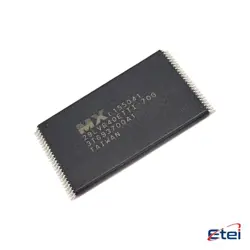
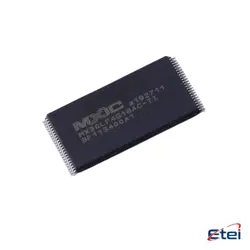
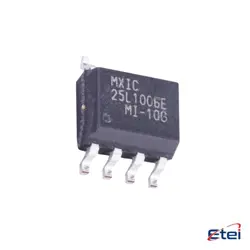
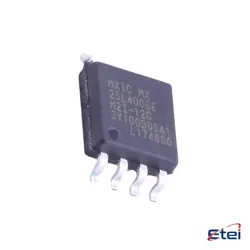
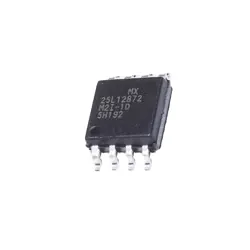
Imagens apenas para referência
AS4C256M16D3LC-12BIN
+Lista de MateriaisIC DRAM 4GBIT PARALLEL 96FBGA
-
FabricanteAlliance Memory, Inc.
-
Peça do Fabricante #AS4C256M16D3LC-12BIN
-
Ficha Técnica AS4C256M16D3LC-12BIN DataSheet
-
Pacote 96-TFBGA
-
Em Estoque2604
365 Garantia de Qualidade em 1 dia
7*24 Garantia de serviço em 24 horas
90-Garantia de pós-venda em 1 dia
Garantia de Produto Genuíno
Especificações
| Atributo | Valor |
| Package | Tray |
| ProductStatus | Active |
| MemoryType | Volatile |
| MemoryFormat | DRAM |
| Technology | SDRAM - DDR3L |
| MemorySize | 4Gb (256M x 16) |
| MemoryInterface | Parallel |
| ClockFrequency | 800 MHz |
| WriteCycleTime-WordPage | 15ns |
| AccessTime | 20 ns |
| Voltage-Supply | 1.283V ~ 1.45V |
| OperatingTemperature | -40°C ~ 95°C (TC) |
| MountingType | Surface Mount |
| Package/Case | 96-TFBGA |
Visão Geral
Description
The module supports a clock speed of 800 MHz (DDR3-1600), with a CAS latency of CL11, providing a balance of speed and latency for various applications. The 12BIN marking indicates specific binning for performance consistency. It comes in a standard 78-ball FBGA package, facilitating easy integration into compatible systems.
This memory module is ideal for use in servers, desktops, and embedded systems that require reliable memory performance. Its design adheres to JEDEC standards, ensuring broad compatibility across different platforms. The AS4C256M16D3LC-12BIN is engineered to deliver robust performance, meeting the demands of modern computing environments while maintaining cost-effectiveness.
Equivalent
1. Micron: MT41K256M16TW-107:P
2. Samsung: K4B4G1646E-BYK0
3. SK Hynix: H5TC4G63AFR-PBA
4. Nanya: NT5CC256M16CP-DI
These chips typically feature similar capacities, voltage, and performance specifications, suitable for equivalent applications.
Features
1. Density and Organization: It has a density of 4Gb (gigabits) and is organized as 256M x 16 bits.
2. Speed and Timing: Operates at a frequency of 1600 Mbps with a CAS latency of 11 cycles.
3. Voltage: Designed for low-voltage operation at 1.35V, supporting energy-efficient performance, with backward compatibility to 1.5V systems.
4. Compatibility: Compliant with the JEDEC DDR3L standard, ensuring broad compatibility with various systems.
5. Packaging: Available in a 96-ball FBGA (Fine Ball Grid Array) package which is compact and suitable for high-density applications.
6. Temperature Range: Supports a standard temperature range of 0°C to 95°C, making it suitable for consumer and industrial applications.
This memory chip is typically used in applications demanding high-speed, efficient memory solutions, such as computers, networking equipment, and industrial machines.
Pinout
Pin Count:
The 96-ball FBGA package has 96 pins (or balls).
Function:
The AS4C256M16D3LC-12BIN is a 4Gb (Gigabit) DDR3 SDRAM device organized as 256M x 16 bits. It is designed for high-performance memory applications, providing a high-speed data transfer rate. Key functions include:
- Data Storage: Temporarily stores data for quick access by the CPU, improving system speed and efficiency.
- High-Speed Operation: Supports high data transfer rates (up to 1600 Mbps per pin).
- Low Voltage Operation: Operates at a low voltage of 1.35V, contributing to reduced power consumption.
- Error Correction (ECC): Supports ECC functionalities in some configurations to ensure data integrity.
This memory is typically used in applications requiring high bandwidth and low latency, such as computing, networking, and graphics.
Manufacturer
Application
1. Consumer Electronics: Used in devices such as televisions, gaming consoles, and set-top boxes for fast data handling.
2. Computing: Integrated in laptops, desktops, and servers to enhance memory capacity and performance.
3. Networking Equipment: Utilized in routers, switches, and other networking devices for improved data throughput.
4. Telecommunications: Supports infrastructure equipment like base stations for robust data transmission.
5. Industrial Systems: Applied in automation and control systems for reliable and efficient data processing.
These applications benefit from the memory chip’s balance of performance and power efficiency.