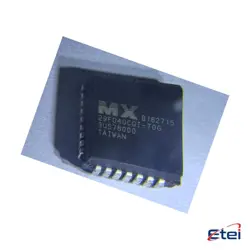
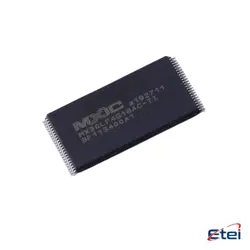
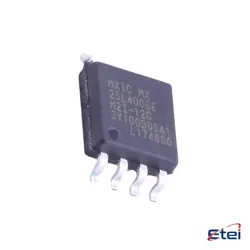
Imagens apenas para referência
ATSAMD20G18A-MN
+Lista de MateriaisIC MCU 32BIT 256KB FLASH 48QFN
-
FabricanteAtmel
-
Peça do Fabricante #ATSAMD20G18A-MN
-
Ficha Técnica ATSAMD20G18A-MN DataSheet
-
Pacote VQFN-48
-
Em Estoque1810
365 Garantia de Qualidade em 1 dia
7*24 Garantia de serviço em 24 horas
90-Garantia de pós-venda em 1 dia
Garantia de Produto Genuíno
Especificações
| Atributo | Valor |
| Package | Bulk |
| Series | SAM D20G |
| ProductStatus | Active |
| CoreProcessor | ARM® Cortex®-M0+ |
| CoreSize | 32-Bit Single-Core |
| Speed | 48MHz |
| Connectivity | I²C, SPI, UART/USART |
| Peripherals | Brown-out Detect/Reset, POR, WDT |
| NumberofI/O | 38 |
| ProgramMemorySize | 256KB (256K x 8) |
| ProgramMemoryType | FLASH |
| RAMSize | 32K x 8 |
| Voltage-Supply(Vcc/Vdd) | 1.62V ~ 3.6V |
| DataConverters | A/D 14x12b; D/A 1x10b |
| OscillatorType | Internal |
| OperatingTemperature | -40°C ~ 105°C (TA) |
| MountingType | Surface Mount |
| Package/Case | 48-VFQFN Exposed Pad |
Visão Geral
Description
Key features include multiple communication interfaces such as USART, I2C, and SPI, allowing for versatile connectivity options. The microcontroller also offers a 12-channel, 12-bit ADC, which supports precise analog-to-digital conversion. It has a flexible clock system, advanced power management, and a range of timers, enhancing functionality and energy efficiency.
The ATSAMD20G18A-MN is suitable for applications in consumer electronics, industrial automation, and IoT devices. Its compact size and robust feature set make it a versatile choice for embedded systems developers looking for reliable performance in a small footprint.
Equivalent
1. ATSAMD21G18A: Offers additional features like USB support.
2. STM32F0 Series: From STMicroelectronics, similar ARM Cortex-M0 based microcontrollers.
3. NXP's LPC11U3x Series: ARM Cortex-M0+ microcontrollers.
4. TI's MSP430 Series: While a different architecture (16-bit), it can be an alternative depending on application needs.
Always consider specific application requirements, peripherals, and processing power when choosing equivalents.
Features
The microcontroller offers a 12-channel 12-bit ADC, a 10-bit DAC, and up to five 16-bit Timer/Counters. It operates on a 1.62V to 3.63V supply voltage, optimizing it for low-power applications. Additional features include an event system for inter-peripheral communication, a peripheral touch controller for capacitive touch applications, and advanced clock management features.
The ATSAMD20G18A-MN comes in a 48-pin QFN package, making it suitable for compact designs. It's designed for a variety of applications, such as consumer electronics, home automation, and industrial control, where efficient performance and low power usage are essential.
Pinout
1. CPU and Performance: It features a 32-bit ARM Cortex-M0+ processor, providing efficient processing for embedded applications.
2. Memory: It has 256 KB of Flash memory and 32 KB of SRAM.
3. Peripherals: Includes multiple serial communication interfaces such as USART, SPI, and I2C. It also has timers, PWM channels, ADC, and DAC for various control and sensing applications.
4. GPIO: Provides numerous general-purpose input/output pins configurable for different functions.
5. Power Management: Offers features like sleep modes to reduce power consumption in embedded systems.
6. I/O Functionality: Flexible I/O multiplexing allows pins to be configured for different functions according to application requirements.
The combination of these features makes the ATSAMD20G18A-MN suitable for a wide range of applications in consumer electronics, industrial automation, and IoT devices.
Manufacturer
Application
1. Consumer Electronics: Utilized in devices like home appliances and personal gadgets for efficient control and connectivity.
2. Industrial Automation: Employed in systems requiring precise control and low-power operation, such as sensors and motor controllers.
3. Internet of Things (IoT): Serves as the core for IoT devices, offering connectivity and low-power features for smart home and wearable tech.
4. Automotive: Used in non-critical automotive applications for control and monitoring.
5. Healthcare Devices: Integrated into portable medical devices for reliable processing and power efficiency.
These applications leverage the microcontroller's low power consumption, robust processing capabilities, and versatile interfacing options.