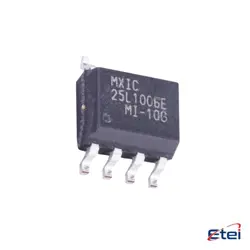
Imagens apenas para referência
AZ1117H-ADJTRE1
+Lista de MateriaisIC REG LINEAR POS ADJ 1A SOT223
-
FabricanteDiodes Incorporated
-
Peça do Fabricante #AZ1117H-ADJTRE1
-
Pacote SOT-223-3
-
Em Estoque4427
365 Garantia de Qualidade em 1 dia
7*24 Garantia de serviço em 24 horas
90-Garantia de pós-venda em 1 dia
Garantia de Produto Genuíno
Especificações
| Atributo | Valor |
| Package | Tape & Reel (TR),Cut Tape (CT) |
| Series | AZ1117 |
| ProductStatus | Active |
| OutputConfiguration | Positive |
| OutputType | Adjustable |
| NumberofRegulators | 1 |
| Voltage-Input(Max) | 15V |
| Voltage-Output(Min/Fixed) | 1.25V |
| Voltage-Output(Max) | 13.75V |
| VoltageDropout(Max) | 1.25V @ 1A |
| Current-Output | 1A |
| Current-Quiescent(Iq) | 10 mA |
| PSRR | 75dB (120Hz) |
| ProtectionFeatures | Thermal Shutdown |
| OperatingTemperature | -40°C ~ 125°C (TJ) |
| MountingType | Surface Mount |
| Package/Case | TO-261-4, TO-261AA |
Visão Geral
Description
The "ADJ" in its designation indicates that it has an adjustable output, allowing users to set the desired output voltage via external resistors. It also includes built-in features such as thermal protection and current limiting to enhance reliability and prevent damage under fault conditions. The AZ1117H-ADJTRE1 is packaged in a small form factor, making it suitable for space-constrained applications. This makes it ideal for use in consumer electronics, industrial equipment, and communication devices where efficient power regulation is required.
Equivalent
1. LM1117 series by Texas Instruments
2. MIC29300 series by Microchip Technology
3. LD1117 series by STMicroelectronics
4. LT1117 series by Analog Devices
5. AMS1117 series by Advanced Monolithic Systems
These products have similar voltage and current output specifications and can serve as substitutes in compatible applications. Always check specific datasheets for compatibility.
Features
1. Adjustable Output Voltage: Allows the output to be set from 1.25V up to 13.8V using an external resistor divider.
2. Low Dropout Voltage: Typically around 1.2V at full load, which enhances efficiency especially at lower output voltages.
3. Current Capability: Can deliver up to 1A of output current, suitable for various power management uses.
4. Thermal Protection: Includes built-in thermal overload protection to prevent overheating.
5. Short-Circuit Protection: Protects the device and load during fault conditions.
6. Stability: Requires minimal external components for stable operation, often just a couple of capacitors.
7. Package Type: Commonly available in TO-252, which provides excellent thermal performance.
These features make the AZ1117H-ADJTRE1 suitable for applications such as powering microcontrollers, logic circuits, and other sensitive electronic components requiring stable voltage regulation.
Pinout
1. Pin 1 (Adjust/Ground): This pin is used for adjusting the output voltage. It can be connected to a resistor network to set the desired output voltage.
2. Pin 2 (Output): This is the regulated output voltage pin. The voltage is adjustable based on the configuration with the adjust pin.
3. Pin 3 (Input): This pin is where the unregulated input voltage is supplied. It should be higher than the desired output voltage for proper operation.
These regulators are commonly used for providing stable voltage supplies in various electronic circuits.
Manufacturer
Application
1. Consumer Electronics: Used in devices such as smartphones, tablets, and portable media players for stable power supply.
2. Telecommunications: Provides reliable voltage regulation in networking equipment and communication devices.
3. Industrial Equipment: Used in control systems, sensors, and other industrial electronics requiring precise voltage management.
4. Embedded Systems: Ensures stable operation in microcontrollers and other embedded components.
5. Computing Devices: Used in desktops, laptops, and servers for efficient power management.
Its adjustable output and low dropout voltage make it versatile for different electronic applications requiring efficient power regulation.