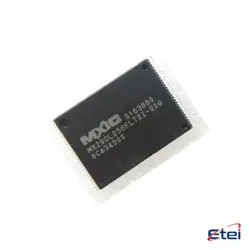
Imagens apenas para referência
CD4052BPWR
+Lista de MateriaisIC MUX/DEMUX DUAL 4X1 16TSSOP
-
FabricanteTexas Instruments
-
Peça do Fabricante #CD4052BPWR
-
Pacote TSSOP-16
-
Em Estoque7037
365 Garantia de Qualidade em 1 dia
7*24 Garantia de serviço em 24 horas
90-Garantia de pós-venda em 1 dia
Garantia de Produto Genuíno
Especificações
| Atributo | Valor |
| Package / Case | Tape & Reel (TR),Cut Tape (CT) |
| Part Status | Active |
| Switch Circuit | SP4T |
| Multiplexer / Demultiplexer Circuit | 4:1 |
| Number of Circuits | 2 |
| On - State Resistance(Max) | 240Ohm |
| Channel - to - Channel Matching(ΔRon) | 5Ohm |
| Voltage - Supply, Single (V+) | 3V ~ 20V |
| Voltage - Supply, Dual (V±) | ±2.5V ~ 9V |
| -3 dB Bandwidth | 25MHz |
| Channel Capacitance(CS(off)CD(off)) | 0.2pF, 18pF |
| Current - Leakage(IS(off))(Max) | 100nA |
| Crosstalk | -40dB @ 10MHz |
| Operating Temperature | -55°C ~ 125°C (TA) |
| Mounting Type | Surface Mount |
Visão Geral
Description
Key features include low power consumption, typical for CMOS technology, with high noise immunity and wide operating voltage range (3V to 15V), making it suitable for a variety of analog and digital applications. It also offers low on resistance and low crosstalk between channels, ensuring minimal signal degradation. The device is controlled by two binary address inputs, which determine the active channel.
Common applications include data acquisition systems, signal multiplexing in communication systems, and instrumentation. The CD4052BPWR comes in a TSSOP (Thin-Shrink Small Outline Package) format, which is compact and suitable for space-constrained designs, making it ideal for modern electronic circuits.
Equivalent
1. 74HC4052
2. HEF4052B
3. MC14052B
4. MAX4052
5. DG4052
These alternatives offer similar functionality and may have variations in specifications like supply voltage range and switching speed, so it's important to check the datasheet for compatibility with your specific application.
Features
1. Dual 4-Channel Configuration: It allows two independent 4-channel multiplexing or demultiplexing operations within a single package.
2. Wide Supply Voltage Range: Operates from 3V to 15V, making it versatile for various applications.
3. Low ON Resistance: Offers low on-resistance, minimizing signal loss and distortion.
4. Low Crosstalk: Ensures minimal interference between channels, maintaining signal integrity.
5. High Bandwidth: Suitable for high-speed applications due to its ability to handle wide bandwidth signals.
6. Control Inputs: Features digital control inputs compatible with standard logic levels.
7. Break-Before-Make Switching: Prevents short circuits during switching by ensuring a non-overlapping transition.
8. Temperature Range: Typically operates over an industrial temperature range, enhancing its suitability for various environments.
The CD4052BPWR is ideal for use in signal routing applications in audio, video, instrumentation, and telecommunications, providing efficient channel selection and switching capabilities.
Pinout
- VDD (Pin 16): Positive supply voltage.
- VSS (Pin 8): Ground.
- VEE (Pin 7): Negative supply voltage (optional, often connected to ground for single supply applications).
- INH (Pin 6): Inhibit control, active high. When high, all switches are turned off.
- A/B (Pins 9 and 10): Address inputs that control the multiplexing function. These select which channel is connected to the common I/O.
- X0 to X3 (Pins 1, 15, 2, 14): Independent I/O terminals for the first multiplexer.
- Y0 to Y3 (Pins 5, 4, 3, 13): Independent I/O terminals for the second multiplexer.
- X and Y (Pins 11 and 12): Common I/O terminals for the first and second multiplexers, respectively.
The CD4052BPWR allows for the selection between two sets of four input/output lines, facilitating signal routing in various electronic applications.
Manufacturer
Application
1. Signal Routing: Switching analog signals in data acquisition systems.
2. Audio/Video Systems: Managing multiple input/output sources.
3. Communication Systems: Routing signals in RF and microwave communications.
4. Instrumentation: Selecting different measurement channels.
5. Control Systems: Implementing multi-channel control in industrial automation.
6. Consumer Electronics: Used in devices that require selection between multiple signal paths.
Its ability to connect one of several inputs to a single output makes it versatile for applications requiring signal selection and routing.