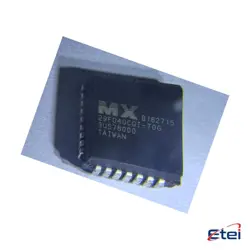
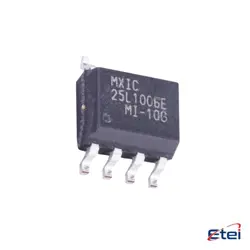
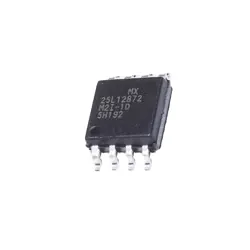
Imagens apenas para referência
ENC28J60T/SS
+Lista de MateriaisIC ETHERNET CTRLR W/SPI 28SSOP
-
FabricanteTecnologia Microchip
-
Peça do Fabricante #ENC28J60T/SS
-
Em Estoque7112
365 Garantia de Qualidade em 1 dia
7*24 Garantia de serviço em 24 horas
90-Garantia de pós-venda em 1 dia
Garantia de Produto Genuíno
Especificações
| Atributo | Valor |
| PartStatus | Active |
| DigiKeyProgrammable | Not Verified |
| Protocol | Ethernet |
| Function | Controller |
| Interface | SPI |
| Standards | 10 Base-T PHY |
| Voltage-Supply | 3.1V ~ 3.6V |
| Current-Supply | 160mA |
| OperatingTemperature | 0°C ~ 70°C |
| Package/Case | 28-SSOP (0.209", 5.30mm Width) |
| SupplierDevicePackage | 28-SSOP |
| BaseProductNumber | ENC28J60 |
Visão Geral
Description
The ENC28J60T/SS is an Ethernet controller chip designed for embedded systems, enabling connectivity to Ethernet networks. This chip provides a simple interface for microcontrollers to send and receive data packets over a network, facilitating Internet of Things (IoT) applications.
Key features include:
1. SPI Interface: The ENC28J60 communicates with microcontrollers using a Serial Peripheral Interface (SPI), making integration straightforward with various microcontrollers.
2. Network Protocols: It supports various protocols such as TCP/IP, allowing for efficient communication over the Internet.
3. Memory Management: The chip includes built-in packet buffers to manage incoming and outgoing data effectively.
4. Low Power Consumption: The ENC28J60 is designed to be power-efficient, making it suitable for battery-operated devices.
5. Wide Operating Voltage: It operates within a voltage range of 3.3V to 5V, enhancing compatibility with different systems.
Overall, the ENC28J60T/SS is a versatile solution for adding Ethernet connectivity to microcontroller-based applications.
Key features include:
1. SPI Interface: The ENC28J60 communicates with microcontrollers using a Serial Peripheral Interface (SPI), making integration straightforward with various microcontrollers.
2. Network Protocols: It supports various protocols such as TCP/IP, allowing for efficient communication over the Internet.
3. Memory Management: The chip includes built-in packet buffers to manage incoming and outgoing data effectively.
4. Low Power Consumption: The ENC28J60 is designed to be power-efficient, making it suitable for battery-operated devices.
5. Wide Operating Voltage: It operates within a voltage range of 3.3V to 5V, enhancing compatibility with different systems.
Overall, the ENC28J60T/SS is a versatile solution for adding Ethernet connectivity to microcontroller-based applications.
Equivalent
Equivalent products to the ENC28J60T/SS chip include the Microchip ENC424J600, which offers similar Ethernet connectivity features. Other alternatives are the Wiznet W5100 and W5500 chips, which also provide Ethernet functionality with integrated TCP/IP stacks. Additionally, the ASIX AX88796 and AX88765 are viable options for Ethernet interface applications. When selecting an alternative, ensure compatibility with your specific project requirements.
Features
The ENC28J60T/SS is a low-cost Ethernet controller with the following key features:
1. Protocol Support: Implements the Ethernet 802.3 protocol for reliable network communication.
2. SPI Interface: Utilizes a Serial Peripheral Interface (SPI) for easy integration with microcontrollers.
3. Memory: Contains 8KB of internal transmit/receive packet memory for efficient data handling.
4. Flexible Addressing: Supports both MAC and IP addressing for network configuration.
5. Integrated PHY: Features an integrated physical layer (PHY) for direct connection to an Ethernet network.
6. Low Power Consumption: Operates with low power, making it suitable for battery-powered applications.
7. Configurable: Offers multiple configuration options for customization based on project requirements.
8. Small Package: Available in a compact SSOP package, facilitating space-efficient designs.
These features make the ENC28J60T/SS suitable for a variety of embedded applications requiring Ethernet connectivity.
1. Protocol Support: Implements the Ethernet 802.3 protocol for reliable network communication.
2. SPI Interface: Utilizes a Serial Peripheral Interface (SPI) for easy integration with microcontrollers.
3. Memory: Contains 8KB of internal transmit/receive packet memory for efficient data handling.
4. Flexible Addressing: Supports both MAC and IP addressing for network configuration.
5. Integrated PHY: Features an integrated physical layer (PHY) for direct connection to an Ethernet network.
6. Low Power Consumption: Operates with low power, making it suitable for battery-powered applications.
7. Configurable: Offers multiple configuration options for customization based on project requirements.
8. Small Package: Available in a compact SSOP package, facilitating space-efficient designs.
These features make the ENC28J60T/SS suitable for a variety of embedded applications requiring Ethernet connectivity.
Pinout
The ENC28J60T/SS is an Ethernet controller with a 28-pin SSOP (Shrink Small Outline Package) configuration.
Pin Count: 28 pins
Functions of Key Pins:
1. VDD (Pins 1, 2): Power supply (3.3V).
2. VSS (Pins 3, 24): Ground.
3. NCS (Pin 4): Chip Select for SPI communication.
4. SCK (Pin 5): SPI Clock input.
5. SI (Pin 6): SPI Data input.
6. SO (Pin 7): SPI Data output.
7. INT (Pin 8): Interrupt pin for signaling events.
8. RST (Pin 9): Reset pin to initialize the chip.
9. TXEN (Pin 10): Transmit Enable for the Ethernet interface.
10. RXD (Pins 11-12): Receive Data pins for Ethernet.
11. COL (Pin 13): Collision detection output.
12. CRS (Pin 14): Carrier sense input.
13. LED (Pins 15-19): Various LED indicators for status.
14. MDC (Pin 20) & MDIO (Pin 21): Management Data Interface for PHY configuration.
This chip enables network communication in embedded applications.
Pin Count: 28 pins
Functions of Key Pins:
1. VDD (Pins 1, 2): Power supply (3.3V).
2. VSS (Pins 3, 24): Ground.
3. NCS (Pin 4): Chip Select for SPI communication.
4. SCK (Pin 5): SPI Clock input.
5. SI (Pin 6): SPI Data input.
6. SO (Pin 7): SPI Data output.
7. INT (Pin 8): Interrupt pin for signaling events.
8. RST (Pin 9): Reset pin to initialize the chip.
9. TXEN (Pin 10): Transmit Enable for the Ethernet interface.
10. RXD (Pins 11-12): Receive Data pins for Ethernet.
11. COL (Pin 13): Collision detection output.
12. CRS (Pin 14): Carrier sense input.
13. LED (Pins 15-19): Various LED indicators for status.
14. MDC (Pin 20) & MDIO (Pin 21): Management Data Interface for PHY configuration.
This chip enables network communication in embedded applications.
Manufacturer
The ENC28J60T/SS is manufactured by Microchip Technology Inc., an American company that specializes in microcontroller and memory products. Founded in 1989, Microchip is known for producing a wide range of integrated circuits, including microcontrollers, digital signal controllers, and analog semiconductors, as well as development tools and software for embedded systems.
The ENC28J60T/SS is an Ethernet controller that provides a reliable interface for connecting microcontrollers to an Ethernet network, making it ideal for a variety of applications in the Internet of Things (IoT), industrial automation, and consumer electronics.
Microchip is recognized for its high-quality products and extensive support for developers, including comprehensive documentation and community resources. The company serves diverse markets and focuses on providing solutions that enhance connectivity and functionality in embedded applications.
The ENC28J60T/SS is an Ethernet controller that provides a reliable interface for connecting microcontrollers to an Ethernet network, making it ideal for a variety of applications in the Internet of Things (IoT), industrial automation, and consumer electronics.
Microchip is recognized for its high-quality products and extensive support for developers, including comprehensive documentation and community resources. The company serves diverse markets and focuses on providing solutions that enhance connectivity and functionality in embedded applications.
Application
The ENC28J60T/SS is an Ethernet controller primarily used in embedded systems for network connectivity. Its application areas include:
1. IoT Devices: Enabling internet connectivity for smart devices.
2. Industrial Automation: Facilitating communication in automated systems and equipment.
3. Embedded Systems: Providing networking capabilities for microcontrollers and microprocessors.
4. Home Automation: Supporting smart home applications and devices.
5. Data Logging: Sending data to remote servers or cloud services.
6. Web-based Applications: Allowing devices to host web servers for control and monitoring.
7. Telecommunication: Used in network interfaces for various telecom equipment.
1. IoT Devices: Enabling internet connectivity for smart devices.
2. Industrial Automation: Facilitating communication in automated systems and equipment.
3. Embedded Systems: Providing networking capabilities for microcontrollers and microprocessors.
4. Home Automation: Supporting smart home applications and devices.
5. Data Logging: Sending data to remote servers or cloud services.
6. Web-based Applications: Allowing devices to host web servers for control and monitoring.
7. Telecommunication: Used in network interfaces for various telecom equipment.
Package
The ENC28J60T/SS is packaged in a 28-pin SSOP (Shrink Small Outline Package) format. This compact package design allows for efficient integration into various electronic circuits, suitable for applications requiring Ethernet connectivity.