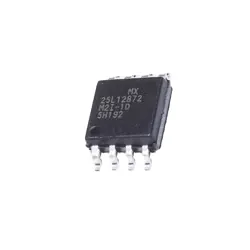
Imagens apenas para referência
EP1K100QI208-2
+Lista de MateriaisIC FPGA 147 I/O 208QFP
-
FabricanteIntel
-
Peça do Fabricante #EP1K100QI208-2
-
Pacote BFQFP-208
-
Em Estoque3939
365 Garantia de Qualidade em 1 dia
7*24 Garantia de serviço em 24 horas
90-Garantia de pós-venda em 1 dia
Garantia de Produto Genuíno
Especificações
| Atributo | Valor |
| Package | Tray |
| Series | ACEX-1K® |
| ProductStatus | Obsolete |
| NumberofLABs/CLBs | 624 |
| NumberofLogicElements/Cells | 4992 |
| TotalRAMBits | 49152 |
| NumberofI/O | 147 |
| NumberofGates | 257000 |
| Voltage-Supply | 2.375V ~ 2.625V |
| MountingType | Surface Mount |
| OperatingTemperature | -40°C ~ 85°C (TA) |
| Package/Case | 208-BFQFP |
Visão Geral
Description
Key features include embedded array blocks (EABs) for efficient memory implementation, high-speed global and regional clock networks, and support for a variety of I/O standards. The device is suitable for complex digital designs, offering in-system programmability and reconfigurability, which makes it ideal for prototyping and iterative design processes. The "-2" suffix indicates the specific speed grade of the device, highlighting its performance characteristics.
Overall, the EP1K100QI208-2 is suitable for applications requiring moderate logic density and reconfigurable logic, providing a balance between performance, flexibility, and power consumption.
Equivalent
Features
1. Logic Elements: The device comprises 100,000 logic elements (LEs), providing ample resources for implementing complex digital designs.
2. Package and Pins: It is housed in a 208-pin Plastic Quad Flat Package (PQFP), allowing for moderate pin density and connectivity.
3. Speed Grade: The "-2" denotes its speed grade, indicating its operational speed and performance capabilities.
4. I/O Capabilities: It offers a variety of general-purpose I/O pins, capable of supporting many I/O standards and interfacing options.
5. Memory: Integrated memory blocks are available to support embedded memory functions, crucial for buffering and temporary data storage.
6. Power Consumption: Designed for low power consumption, making it suitable for applications where energy efficiency is critical.
7. Design Tools: Supported by Altera's Quartus II software, ensuring a robust environment for design, simulation, and optimization.
This combination of features makes the EP1K100QI208-2 ideal for a wide range of applications, including consumer electronics, communications, and industrial automation.
Pinout
Key functions and features include:
1. Logic Elements (LEs): The FPGA consists of approximately 100,000 gates or 4,992 logic elements.
2. Embedded Memory: It includes embedded memory blocks for temporary data storage or buffering.
3. I/O Pins: The device supports a wide range of I/O standards and features numerous general-purpose I/O pins for interfacing with other digital components.
4. In-System Programmability: The device allows for in-system programming, making it possible to update the device without removing it from the circuit board.
5. Clock Management: It supports multiple clock signals and offers dedicated resources for clock management, such as phase-locked loops (PLLs).
6. Application Flexibility: Suitable for applications like digital signal processing, communications, and embedded systems.
This configuration provides designers with a robust platform for implementing complex digital systems.
Manufacturer
Intel Corporation is a multinational technology company headquartered in Santa Clara, California. It is one of the world's largest and most well-known semiconductor companies, playing a significant role in the development and advancement of computing technology. Post-acquisition, Altera's FPGA products, including the EP1K100QI208-2, became part of Intel's Programmable Solutions Group. The acquisition allowed Intel to expand its portfolio in the data center and Internet of Things (IoT) markets by integrating Altera's programmable solutions with its own products and technologies.
Application
1. Embedded Systems: Used for customizing embedded system operations.
2. Telecommunications: Supports signal processing and protocol implementation.
3. Industrial Automation: Facilitates control systems and custom interface solutions.
4. Consumer Electronics: Enables feature-rich, flexible design for devices.
5. Data Processing: Assists in acceleration of computational tasks.
6. Prototyping and Development: Offers a platform for testing and development of digital designs.
Its adaptability makes it suitable for many custom hardware solutions across these sectors.