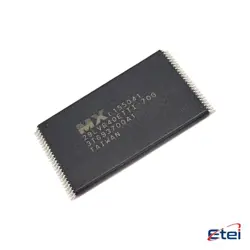
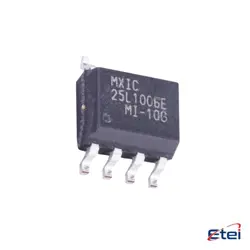
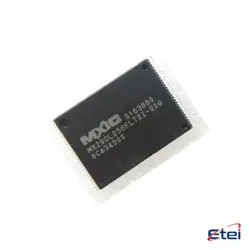
Imagens apenas para referência
EP2C5T144I8N
+Lista de MateriaisIC FPGA 89 I/O 144TQFP
-
FabricanteIntel
-
Peça do Fabricante #EP2C5T144I8N
-
Pacote TQFP-144
-
Em Estoque3765
365 Garantia de Qualidade em 1 dia
7*24 Garantia de serviço em 24 horas
90-Garantia de pós-venda em 1 dia
Garantia de Produto Genuíno
Especificações
| Atributo | Valor |
| Package | Tray |
| Series | Cyclone® II |
| ProductStatus | Active |
| NumberofLABs/CLBs | 288 |
| NumberofLogicElements/Cells | 4608 |
| TotalRAMBits | 119808 |
| NumberofI/O | 89 |
| Voltage-Supply | 1.15V ~ 1.25V |
| MountingType | Surface Mount |
| OperatingTemperature | -40°C ~ 100°C (TJ) |
| Package/Case | 144-LQFP |
Visão Geral
Description
The Cyclone II family, known for low power consumption and efficient performance, is suitable for various applications like communications, automotive, industrial, and consumer electronics. The EP2C5T144I8N supports a range of I/O standards, including LVTTL, LVCMOS, and PCI, making it adaptable to different design requirements. Additionally, it offers embedded multipliers and embedded memory blocks, enhancing the capability to handle complex computations and data storage. The device is supported by Altera’s Quartus II development software, facilitating design simulation, synthesis, and implementation.
Equivalent
Features
1. Logic Elements (LEs): It contains 4,608 logic elements, which are the basic building blocks of the FPGA for implementing combinational and sequential logic.
2. Embedded Memory: The FPGA offers 119,808 bits of embedded memory, organized in M4K RAM blocks for efficient data storage and retrieval.
3. I/O Pins: With 89 user I/O pins, it supports a range of interface standards for versatile connectivity.
4. PLL: It includes two phase-locked loops (PLLs) for clock management, allowing for flexible clock generation and distribution.
5. Package: The device comes in a TQFP-144 package, which is compact and suitable for space-constrained applications.
6. Voltage and Power: Operates at a core voltage of 1.2V with a low power consumption, ideal for energy-efficient designs.
7. Temperature Range: The 'I8' in its part number indicates it is suited for industrial temperature ranges, ensuring reliability in harsh environments.
These features make the EP2C5T144I8N suitable for applications requiring a balance of cost-effectiveness and performance.
Pinout
The primary functions of the EP2C5T144I8N include digital signal processing, control logic, and interfacing tasks. It is used in a variety of applications that require programmable logic solutions. The device features include logic elements, embedded multipliers, phase-locked loops (PLLs), and memory blocks, which are configured through a hardware description language such as VHDL or Verilog.
The FPGA's pins are used for multiple purposes, including power supply, ground connections, input/output interfaces, and configuration. Specific pins are designated for JTAG configuration, clock inputs, and dedicated I/O functions. The exact pin assignments and functionalities can be found in the device's datasheet or pinout documentation provided by Intel, the company that acquired Altera.
Manufacturer
Intel Corporation, headquartered in Santa Clara, California, is a multinational corporation and technology company. It is one of the world’s largest and highest-valued semiconductor chip manufacturers, and it supplies processors for computer system manufacturers such as Lenovo, HP, and Dell. Intel is well-known for its innovations in semiconductor design and manufacturing, and it has a significant presence in the markets for central processing units (CPUs), graphics processing units (GPUs), and other silicon solutions. The acquisition of Altera in 2015 expanded Intel's offerings in the programmable logic device market, allowing it to provide more versatile and customizable solutions for a wide range of computing applications.
Application
1. Embedded Systems: Acts as the main processing unit in custom-designed embedded solutions.
2. Telecommunications: Facilitates high-speed data processing and signal handling.
3. Consumer Electronics: Used in devices requiring flexible logic control and signal processing.
4. Automotive Systems: Assists in developing advanced driver assistance systems (ADAS).
5. Industrial Automation: Controls machinery and automation processes with high precision.
6. Prototyping and Development: Enables rapid prototyping of digital circuits and systems.
Its applications benefit from the FPGA’s cost-effectiveness, low power consumption, and reconfigurability.