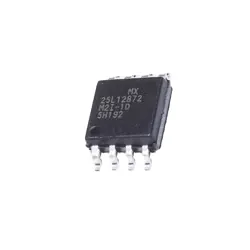
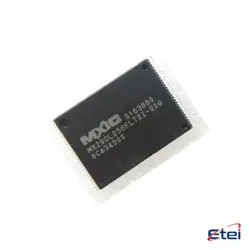
Imagens apenas para referência
EP3C16E144I7N
+Lista de MateriaisIC FPGA 84 I/O 144EQFP
-
FabricanteIntel
-
Peça do Fabricante #EP3C16E144I7N
-
Pacote EQFP-144
-
Em Estoque6682
365 Garantia de Qualidade em 1 dia
7*24 Garantia de serviço em 24 horas
90-Garantia de pós-venda em 1 dia
Garantia de Produto Genuíno
Especificações
| Atributo | Valor |
| Package | Tray |
| Series | Cyclone® III |
| ProductStatus | Active |
| NumberofLABs/CLBs | 963 |
| NumberofLogicElements/Cells | 15408 |
| TotalRAMBits | 516096 |
| NumberofI/O | 84 |
| Voltage-Supply | 1.15V ~ 1.25V |
| MountingType | Surface Mount |
| OperatingTemperature | -40°C ~ 100°C (TJ) |
| Package/Case | 144-LQFP Exposed Pad |
Visão Geral
Description
Cyclone III FPGAs, including the EP3C16E144I7N, are used in diverse applications such as communications, automotive, consumer electronics, and industrial systems. They provide features like embedded memory blocks, high-speed transceivers, and support for various interfaces and protocols. These devices are programmable, allowing customization for specific tasks and flexibility in design, which is beneficial in rapidly changing technology environments. Key advantages include cost-effectiveness, low power consumption, and adaptability to different system requirements.
Equivalent
1. Xilinx Spartan-3 series, such as the XC3S1600E, which offers similar logic capacity and performance.
2. Lattice Semiconductor's ECP3 family, like the LFE3-17EA, which provides comparable features and power efficiency.
3. Microchip's IGLOO or ProASIC3 families, as lower-power alternatives with similar capabilities.
When selecting an equivalent, consider factors like pin count, power consumption, and specific application requirements.
Features
1. Logic Elements (LEs): It contains 15,408 LEs, facilitating complex logic designs.
2. Embedded Memory: It has 516 kilobits of embedded memory, useful for data storage within the FPGA.
3. I/O Pins: Offers 92 user I/O pins for interfacing with other hardware components.
4. Clock Management: Includes PLLs (Phase-Locked Loops) for clock management to ensure precise timing.
5. Power Consumption: Designed for low power consumption, making it suitable for power-sensitive applications.
6. Operating Temperature Range: The "I7N" denotes industrial-grade with a temperature range of -40°C to +100°C.
7. Package: Available in a 144-pin EQFP package, which is compact and suitable for various applications.
8. Voltage Levels: Supports multiple voltage levels for I/O pins, offering flexibility in interfacing with different devices.
These features make the EP3C16E144I7N a versatile choice for applications requiring a balance of performance and power efficiency.
Pinout
Key functions and features include:
1. Logic Elements: It has around 15,408 logic elements which are used to implement digital logic.
2. I/O Pins: The FPGA provides a variety of input/output pins for interfacing with other devices, with support for numerous I/O standards.
3. Embedded Memory: It includes embedded memory blocks for data storage.
4. Phase-Locked Loops (PLLs): It features PLLs for clock management and signal conditioning.
5. DSP Blocks: It is equipped with DSP blocks for signal processing tasks.
For detailed specifications and pin configuration, consult the device's datasheet or technical reference manual from the manufacturer's website or authorized distributors.
Manufacturer
Intel Corporation is a leading multinational corporation and technology company headquartered in Santa Clara, California, in the United States. It is renowned for designing and manufacturing semiconductor chips, including microprocessors and FPGAs, which are crucial components in computer systems and various electronic devices. Intel is one of the world's largest and highest-valued semiconductor chip makers and has been instrumental in advancing computing technology. The company operates in various sectors, providing products and solutions for personal computers, data centers, the Internet of Things (IoT), and other technological fields.
Application
1. Consumer Electronics: Used in devices requiring efficient processing, such as smart TVs or gaming consoles.
2. Industrial Automation: Suitable for control systems, data acquisition, and industrial networking.
3. Communication Systems: Employed in signal processing, data routing, and network interfaces.
4. Automotive: Used in infotainment systems, advanced driver-assistance systems (ADAS), and in-vehicle networking.
5. Medical Devices: Supports imaging systems, diagnostic equipment, and patient monitoring devices.
6. Aerospace and Defense: Applied in avionics, radar systems, and secure communications.
These applications leverage the FPGA's flexibility, performance, and power efficiency.