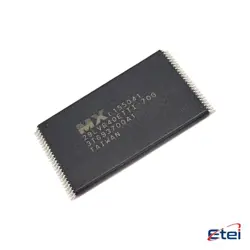
Imagens apenas para referência
EP4CE22E22C8N
+Lista de MateriaisIC FPGA 79 I/O 144EQFP
-
FabricanteIntel
-
Peça do Fabricante #EP4CE22E22C8N
-
Pacote QFP-144
-
Em Estoque2827
365 Garantia de Qualidade em 1 dia
7*24 Garantia de serviço em 24 horas
90-Garantia de pós-venda em 1 dia
Garantia de Produto Genuíno
Especificações
| Atributo | Valor |
| Package / Case | Tray |
| Series | Cyclone® IV E |
| Part Status | Active |
| Number of LABs/CLBs | 1395 |
| Number of Logic Elements/Cells | 22320 |
| Total RAM Bits | 608256 |
| Number of I/O | 79 |
| Voltage - Supply | 1.15V ~ 1.25V |
| Mounting Type | Surface Mount |
| Operating Temperature | 0°C ~ 85°C (TJ) |
Visão Geral
Description
Key features of the EP4CE22E22C8N include:
- Logic Elements: Approximately 22,320, offering substantial logic capacity for complex digital designs.
- Embedded Memory: Includes embedded memory blocks for efficient data storage and retrieval, critical for high-throughput applications.
- PLL (Phase-Locked Loops): Multiple PLLs provide flexible clock management and synthesis capabilities.
- I/O Pins: Offers numerous programmable I/O pins, supporting various voltage standards and interfacing requirements.
- Package: Comes in a convenient 144-pin EQFP package, facilitating integration into hardware designs.
The Cyclone IV series, including the EP4CE22E22C8N, is known for its low power consumption while maintaining robust performance, making it a popular choice for cost-sensitive and mobile applications.
Equivalent
Features
1. Logic Elements (LEs): It contains 22,320 LEs, which are the basic building blocks for implementing digital circuits.
2. Embedded Memory: The chip includes 594 Kbits of embedded memory for data storage.
3. Phase-Locked Loops (PLLs): It has 4 PLLs for clock management, offering flexibility in frequency synthesis.
4. I/O Pins: The device provides 153 general-purpose I/O pins, allowing for extensive interfacing capabilities.
5. Package: The FPGA comes in a 144-pin EQFP package, which is compact and suitable for space-constrained applications.
6. Operating Voltage: It operates at a core voltage of 1.15V to 1.25V, with I/O voltages supporting 1.2V to 3.3V standards.
7. Power Consumption: Designed for low power consumption, making it suitable for energy-efficient applications.
8. Temperature Range: It supports an industrial temperature range, suitable for various environmental conditions.
9. Cost-Effectiveness: Offers a balance of performance and low cost, ideal for high-volume applications needing moderate logic density and performance.
These features make the EP4CE22E22C8N suitable for a wide range of applications in areas like industrial automation, consumer electronics, and communication systems.
Pinout
Key features include:
- 22,320 Logic Elements (LEs): These are used for implementing custom logic functions and are a fundamental part of the FPGA's capability.
- 594 Kbits of Embedded Memory: This is used for data storage, which can be efficiently accessed by the logic circuits.
- 66 Multipliers: Useful for applications that require intensive mathematical computations, such as DSP.
- 4 Phase-Locked Loops (PLLs): These are used for clock management, allowing for precise control over internal and external clocks.
The pin assignment includes various I/O functionalities, power supply connections, configuration pins, and dedicated pins for special functions like clock inputs. The specific functions of each pin are detailed in the device's datasheet, which provides further guidance on how to implement the FPGA in a circuit design.
Manufacturer
Intel Corporation is a multinational corporation and technology company headquartered in Santa Clara, California, in the United States. It is one of the world's largest semiconductor chip manufacturers. Intel is recognized for its development of microprocessors, integrated graphics chips, memory modules, and a range of other technology solutions. The company plays a crucial role in the computing industry, providing components for personal computers, servers, and data centers, among other applications. Intel's acquisition of Altera expanded its portfolio to include programmable semiconductors, enabling them to cater to diverse market needs in data processing, automotive, telecommunications, industrial, and consumer electronics sectors.