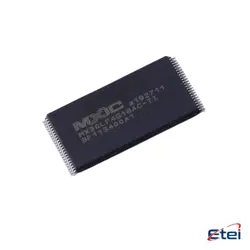
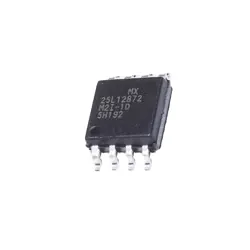
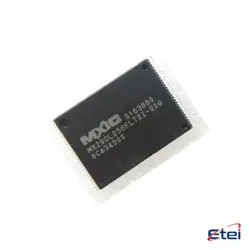
Imagens apenas para referência
FM24C64B-G
+Lista de MateriaisFRAM (FERROELECTRIC RAM) MEMORY
-
FabricanteCypress Semiconductor Corp
-
Peça do Fabricante #FM24C64B-G
-
Ficha Técnica FM24C64B-G DataSheet
-
Em Estoque6715
365 Garantia de Qualidade em 1 dia
7*24 Garantia de serviço em 24 horas
90-Garantia de pós-venda em 1 dia
Garantia de Produto Genuíno
Especificações
| Atributo | Valor |
| Series | F-RAM™ |
| Part Status | Active |
| Digi Key Programmable | Not Verified |
| Memory Type | Non-Volatile |
| Memory Format | FRAM |
| Technology | FRAM (Ferroelectric RAM) |
| Memory Size | 64Kbit |
| Memory Organization | 8K x 8 |
| Memory Interface | I2C |
| Clock Frequency | 1 MHz |
| Access Time | 550 ns |
| Voltage - Supply | 4.5V ~ 5.5V |
| Operating Temperature | -40°C ~ 85°C (TA) |
| Mounting Type | Surface Mount |
| Package / Case | 8-SOIC (0.154", 3.90mm Width) |
| Supplier Device Package | 8-SOIC |
| Base Product Number | FM24C64 |
Visão Geral
Description
The FM24C64B-G operates over a wide voltage range (2.7V to 3.6V) and communicates via an I2C interface, which allows for easy integration into various microcontroller systems. It features a low power consumption profile, making it ideal for battery-powered devices. Additionally, the chip supports multiple device addressing, enabling connection of multiple FM24C64B-G devices on a single bus. Its robust performance, combined with non-volatility, makes it an excellent choice for data logging, real-time clock applications, and other critical memory storage needs.
Equivalent
1. 24LC64 (Microchip)
2. M24C64 (STMicroelectronics)
3. AT24C64 (Microchip)
4. CAT24C64 (ON Semiconductor)
5. W25X64 (Winbond)
These chips share similar specifications, including memory size, I2C interface, and voltage range. Always verify pin compatibility and electrical characteristics before substitution.
Features
1. Memory Type: Ferroelectric RAM, offering fast read and write capabilities with virtually unlimited write endurance.
2. Interface: I2C compatible interface for easy integration with microcontrollers.
3. Operating Voltage: Typically operates at 2.7V to 3.6V.
4. Data Retention: Data retention exceeds 10 years at 85°C.
5. Speed: Fast read and write speeds, typically around 10 MHz for I2C operations.
6. Low Power Consumption: Operates with low power, making it suitable for battery-powered devices.
7. Endurance: Supports over 10 trillion write/erase cycles, significantly superior to traditional EEPROM.
8. Package Options: Available in various packages, including SOIC and TSSOP, enhancing design flexibility.
These features make the FM24C64B-G ideal for applications requiring reliable and high-speed data storage.
Pinout
1. VCC: Power supply (typically 2.7V to 5.5V).
2. GND: Ground.
3. SDA: Serial Data Line, used for data input/output.
4. SCL: Serial Clock Line, used for synchronizing data transfer.
5. WP: Write Protect, used to prevent writing to the memory (active low).
6. A0: Address line for device selection (used in multi-device configurations).
7. A1: Address line for device selection (used in multi-device configurations).
8. A2: Address line for device selection (used in multi-device configurations).
The FM24C64B-G supports a variety of I2C communication speeds and is suitable for applications that require non-volatile memory storage. It features a page write capability and has a maximum write cycle endurance.
Manufacturer
Fujitsu has a strong presence in the global market, focusing on innovation and development in computing and communication technology. The company emphasizes sustainability and social responsibility in its operations and has expanded its offerings to include cloud services, AI solutions, and IoT technologies, catering to both consumer and enterprise needs. Overall, Fujitsu is recognized for its commitment to quality and cutting-edge technology in the electronics and IT industry.
Application
1. Data Logging: Ideal for applications that require frequent write cycles without wear-out issues, such as environmental monitoring.
2. Industrial Automation: Used in control systems to store configuration settings and parameters.
3. Consumer Electronics: Suitable for storing user settings and preferences in devices like cameras and home appliances.
4. Automotive: Employed in automotive systems for logging critical data and settings due to its durability and low power consumption.
5. Medical Devices: Utilized in devices needing reliable data retention in harsh conditions.
Its fast access times and non-volatility make it versatile for various applications.