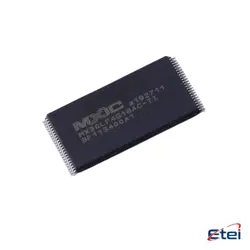
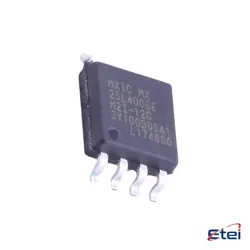
Imagens apenas para referência
FXLS8471QR1
+Lista de MateriaisACCELEROMETER 2-8G I2C/SPI 16QFN
-
FabricanteNXP USA Inc.
-
Peça do Fabricante #FXLS8471QR1
-
Ficha Técnica FXLS8471QR1 DataSheet
-
Pacote QFN-16
-
Em Estoque4546
365 Garantia de Qualidade em 1 dia
7*24 Garantia de serviço em 24 horas
90-Garantia de pós-venda em 1 dia
Garantia de Produto Genuíno
Especificações
| Atributo | Valor |
| Package | Tape & Reel (TR),Cut Tape (CT) |
| ProductStatus | Obsolete |
| Type | Digital |
| Axis | X, Y, Z |
| AccelerationRange | ±2g, 4g, 8g |
| Sensitivity(LSB/g) | 4096 (±2g) ~ 1024 (±8g) |
| Bandwidth | 0.78Hz ~ 400Hz |
| OutputType | I²C, SPI |
| Voltage-Supply | 1.95V ~ 3.6V |
| Features | Adjustable Bandwidth, Selectable Low Pass Filter, Selectable Scale |
| OperatingTemperature | -40°C ~ 85°C (TA) |
| MountingType | Surface Mount |
| Package/Case | 16-VFQFN |
Visão Geral
Description
This accelerometer features a digital interface with I2C or SPI communication protocols, facilitating seamless integration with microcontrollers and other digital systems. It is capable of generating free-fall detection, motion detection, and pulse detection as part of its embedded functionality, which aids in reducing processing overhead on the host processor.
The FXLS8471QR1 comes in a small, surface-mount package and offers robust performance with a high resolution of up to 12 bits. It is well-suited for a variety of applications, including mobile devices, gaming controllers, and industrial equipment, where precise motion sensing is crucial. Overall, it provides reliable performance in a compact form factor, catering to modern electronic designs that require efficient motion detection.
Equivalent
1. ADXL345 by Analog Devices: A digital 3-axis accelerometer with similar functionality.
2. MMA8451Q by NXP: Another 3-axis accelerometer with comparable features.
3. LSM303 series by STMicroelectronics: Combines an accelerometer and magnetometer.
4. BMA253 by Bosch: A versatile 3-axis accelerometer.
These alternatives offer similar performance and features for motion-sensing applications.
Features
1. 3-Axis Sensing: Provides precise measurement of acceleration in three perpendicular axes.
2. High Resolution: Offers up to 14-bit digital output for accurate measurement.
3. Selectable Ranges: Configurable full-scale ranges of ±2g, ±4g, and ±8g for versatility in different applications.
4. Low Power Consumption: Designed for battery efficiency, making it suitable for mobile and portable devices.
5. Embedded FIFO: Features a 32-sample FIFO buffer to reduce host processor load and minimize power consumption.
6. I2C and SPI Interfaces: Supports both I2C and SPI digital interfaces for easy integration with microcontrollers.
7. Advanced Features: Includes freefall detection, motion detection, and orientation detection.
8. Sleep Mode: Offers a low-power sleep mode for energy conservation when the device is inactive.
9. Compact Package: Comes in a small, surface-mount package for space-constrained designs.
These features make the FXLS8471QR1 suitable for use in consumer electronics, automotive, and industrial applications.
Pinout
1. VDD: Power supply pin.
2. VSS: Ground reference.
3. SDA: I2C data line.
4. SCL: I2C clock line.
5. INT1: Interrupt pin 1, used to signal various events.
6. INT2: Interrupt pin 2, also used for signaling.
7. SA0: I2C address selection pin.
8. NC: No connection.
9. NC: No connection.
10. NC: No connection.
11. NC: No connection.
12. NC: No connection.
13. NC: No connection.
14. NC: No connection.
15. NC: No connection.
16. NC: No connection.
The FXLS8471QR1 is used in applications that require motion sensing, acceleration measurement, and orientation detection. Its I2C interface makes it easy to integrate into various systems.
Manufacturer
Application
1. Consumer Electronics: Enhancing user interface experiences in smartphones, tablets, and wearable devices by detecting motion and orientation.
2. Automotive: Supporting advanced driver-assistance systems (ADAS) with features like collision detection, rollover detection, and navigation assistance.
3. Industrial: Monitoring machinery and equipment for vibration and motion to improve predictive maintenance and operational efficiency.
4. Healthcare: Tracking patient movement and activity in medical devices and fitness trackers.
5. Gaming: Enabling motion-sensing capabilities for immersive gaming experiences.
Its versatility and reliability make it suitable for numerous motion-sensing tasks across different industries.