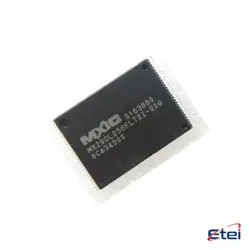
Imagens apenas para referência
KS8081
+Lista de MateriaisIC 10/100 INTEG SWITCH 128PQFP
-
FabricanteTecnologia Microchip
-
Peça do Fabricante #KS8081
-
Pacote 128-BFQFP
-
Em Estoque9233
365 Garantia de Qualidade em 1 dia
7*24 Garantia de serviço em 24 horas
90-Garantia de pós-venda em 1 dia
Garantia de Produto Genuíno
Especificações
| Atributo | Valor |
| Package | Tray |
| ProductStatus | Discontinued at Digi-Key |
| Type | 10/100 Integrated Switch |
| Applications | Port Switch/Network Interface |
| MountingType | Surface Mount |
| Package/Case | 128-BFQFP |
Visão Geral
Description
The course "Introduction to KS8081" is designed to provide students with foundational knowledge and skills in the subject area denoted by the code KS8081. This introductory course covers the basic principles, theories, and applications relevant to the field, setting the stage for more advanced study. Students will engage with key concepts through lectures, hands-on projects, and collaborative assignments. The goal is to equip learners with a comprehensive understanding of the subject's core elements, enabling them to apply this knowledge effectively in practical scenarios or further academic pursuits. Assessment may include a mix of exams, quizzes, and project work to evaluate understanding and practical application. Participants can expect to develop critical thinking and problem-solving skills pertinent to the field of study associated with KS8081. For specific content, prerequisites, and learning outcomes, students should refer to the course syllabus or contact the instructor.
Equivalent
1. DP83848 by Texas Instruments
2. LAN8720 by Microchip
3. RTL8201 by Realtek
4. STE100P by STMicroelectronics
These are similar Ethernet PHY chips used for 10/100 Mbps Ethernet applications and can usually be interchanged in designs with minor adjustments. Always check the datasheets for pin compatibility and features.
Features
1. IEEE 802.3 Compliance: Supports 10BASE-T and 100BASE-TX standards, ensuring reliable wired Ethernet connectivity.
2. MII/RMII Interface: Offers a flexible connection to Media Access Control (MAC) devices using MII (Media Independent Interface) or RMII (Reduced Media Independent Interface) modes.
3. Low Power Consumption: Energy-efficient operation with power-saving modes, making it suitable for battery-operated or energy-conscious devices.
4. Auto-Negotiation: Automatically detects and configures connection speed and duplex mode with the connected device for optimal performance.
5. HP Auto MDI/MDIX: Supports automatic crossover correction, eliminating the need for crossover cables.
6. Robust Link Quality: Provides high link quality with advanced diagnostics for reliable data transmission.
7. Small Form Factor: Comes in a compact package suitable for space-constrained applications.
8. Crossover Detection and Correction: Simplifies network setup by automatically detecting and correcting crossover issues.
Overall, the KS8081 is a versatile and efficient solution for integrating Ethernet connectivity into various electronic devices.
Pinout
The KS8081's main function is to interface between the Ethernet MAC (Media Access Control) layer and the physical Ethernet cable interface, performing tasks such as data encoding, decoding, clock recovery, and MII (Media Independent Interface) management. It supports both MII and RMII (Reduced Media Independent Interface) for flexible system integration and includes features like auto-negotiation, which allows it to automatically configure its connection speed and duplex settings to match the connected network device. The device is designed to be low-power and cost-effective, suitable for various networking applications including embedded systems, routers, and switches.
Manufacturer
Application
1. Embedded Systems: Used in microcontroller-based designs that require Ethernet connectivity.
2. Consumer Electronics: Integrated into devices like smart TVs, gaming consoles, and media players for internet access.
3. Industrial Automation: Facilitates machine-to-machine communication in industrial control systems.
4. Telecommunications: Employed in routers, switches, and modems for reliable data transmission.
5. IoT Devices: Provides network connectivity for various Internet of Things applications.
Its low power consumption and compact design make it ideal for space-constrained and energy-sensitive applications.