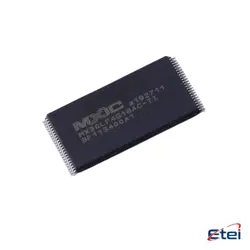
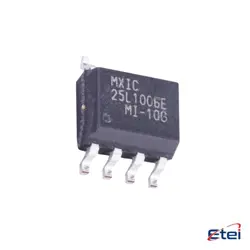
Imagens apenas para referência
LFE3-35EA-6FTN256C
+Lista de MateriaisIC FPGA 133 I/O 256FTBGA
-
FabricanteLattice Semiconductor Corporation
-
Peça do Fabricante #LFE3-35EA-6FTN256C
-
Em Estoque9344
365 Garantia de Qualidade em 1 dia
7*24 Garantia de serviço em 24 horas
90-Garantia de pós-venda em 1 dia
Garantia de Produto Genuíno
Especificações
| Atributo | Valor |
| Series | ECP3 |
| Part Status | Active |
| Digi Key Programmable | Not Verified |
| Total RAM Bits | 1358848 |
| Number of I/O | 133 |
| Voltage - Supply | 1.14V ~ 1.26V |
| Mounting Type | Surface Mount |
| Operating Temperature | 0°C ~ 85°C (TJ) |
| Package / Case | 256-BGA |
| Supplier Device Package | 256-FTBGA (17x17) |
| Base Product Number | LFE3-35 |
| Number of Logic Elements / Cells | 33000 |
| Number of LA Bs / CL Bs | 4125 |
Visão Geral
Description
The LFE3-35EA-6FTN256C is a low-power FPGA (Field-Programmable Gate Array) from Lattice Semiconductor's ECP3 family. It features 35,000 LUTs (Look-Up Tables) and is designed for cost-sensitive, low-power applications. The device comes in a 256-pin FTN package and supports various I/O standards, making it versatile for different interfacing needs.
Key characteristics include a maximum operating frequency of up to 400 MHz, a wide range of programmable logic resources, and built-in DSP blocks for efficient signal processing. It also supports multiple power-saving modes, which enhance its suitability for battery-operated devices.
The FPGA is ideal for applications such as consumer electronics, automotive systems, and industrial automation. It is compatible with Lattice's design tools, allowing for easy implementation of custom logic designs. Overall, the LFE3-35EA-6FTN256C balances performance, power efficiency, and flexibility, making it a popular choice for various embedded system designs.
Key characteristics include a maximum operating frequency of up to 400 MHz, a wide range of programmable logic resources, and built-in DSP blocks for efficient signal processing. It also supports multiple power-saving modes, which enhance its suitability for battery-operated devices.
The FPGA is ideal for applications such as consumer electronics, automotive systems, and industrial automation. It is compatible with Lattice's design tools, allowing for easy implementation of custom logic designs. Overall, the LFE3-35EA-6FTN256C balances performance, power efficiency, and flexibility, making it a popular choice for various embedded system designs.
Equivalent
The LFE3-35EA-6FTN256C is a low-power FPGA from Lattice Semiconductor. Equivalent products include:
1. Xilinx Spartan-7: Specifically, the XC7S25.
2. Altera Cyclone V: Such as the 5CEBA4F23C7.
3. Microsemi SmartFusion2: Like the M2S050.
4. QuickLogic PolarPro 3: Models such as p3Q-50.
These alternatives provide similar features and performance for low-power FPGA applications. Always verify specific requirements before substitution.
1. Xilinx Spartan-7: Specifically, the XC7S25.
2. Altera Cyclone V: Such as the 5CEBA4F23C7.
3. Microsemi SmartFusion2: Like the M2S050.
4. QuickLogic PolarPro 3: Models such as p3Q-50.
These alternatives provide similar features and performance for low-power FPGA applications. Always verify specific requirements before substitution.
Features
The LFE3-35EA-6FTN256C is part of Lattice Semiconductor's LatticeECP3 FPGA family. Key features include:
- Logic Elements: 35,000 look-up tables (LUTs) for implementing complex logic functions.
- Embedded Memory: Supports up to 1.5 Mbits of embedded memory, allowing efficient data storage.
- DSP Blocks: Contains 36 DSP blocks, each capable of performing high-speed arithmetic operations.
- I/O Capabilities: Offers flexible I/O options with up to 256 I/O pins, supporting various voltage levels and standards.
- Power Efficiency: Designed for low power consumption, making it suitable for battery-operated and portable applications.
- Performance: Achieves high performance with a maximum operating frequency of up to 300 MHz.
- Configuration: Supports multiple configuration modes, including JTAG, SPI, and parallel programming.
This FPGA is well-suited for applications in communications, video processing, industrial automation, and more.
- Logic Elements: 35,000 look-up tables (LUTs) for implementing complex logic functions.
- Embedded Memory: Supports up to 1.5 Mbits of embedded memory, allowing efficient data storage.
- DSP Blocks: Contains 36 DSP blocks, each capable of performing high-speed arithmetic operations.
- I/O Capabilities: Offers flexible I/O options with up to 256 I/O pins, supporting various voltage levels and standards.
- Power Efficiency: Designed for low power consumption, making it suitable for battery-operated and portable applications.
- Performance: Achieves high performance with a maximum operating frequency of up to 300 MHz.
- Configuration: Supports multiple configuration modes, including JTAG, SPI, and parallel programming.
This FPGA is well-suited for applications in communications, video processing, industrial automation, and more.
Pinout
The LFE3-35EA-6FTN256C is a FPGA (Field Programmable Gate Array) from Lattice Semiconductor's ECP3 family. It features a total of 256 pins.
The primary functions of these pins include:
1. I/O Pins: Configurable input/output pins that can be used for various digital signal connections.
2. Power Supply Pins: Pins for VCC and GND to power the FPGA.
3. Configuration Pins: Used for programming the device during initialization.
4. Clock Inputs: Dedicated pins for clock signals, facilitating synchronous operation.
5. Dedicated High-Speed I/O: Certain pins support high-speed interfaces like LVDS, PCIe, etc.
6. Signal Integrity Features: Includes pins for termination and other signal integrity enhancements.
This flexibility allows the LFE3-35EA-6FTN256C to be utilized in diverse applications such as communications, industrial, and automotive designs.
The primary functions of these pins include:
1. I/O Pins: Configurable input/output pins that can be used for various digital signal connections.
2. Power Supply Pins: Pins for VCC and GND to power the FPGA.
3. Configuration Pins: Used for programming the device during initialization.
4. Clock Inputs: Dedicated pins for clock signals, facilitating synchronous operation.
5. Dedicated High-Speed I/O: Certain pins support high-speed interfaces like LVDS, PCIe, etc.
6. Signal Integrity Features: Includes pins for termination and other signal integrity enhancements.
This flexibility allows the LFE3-35EA-6FTN256C to be utilized in diverse applications such as communications, industrial, and automotive designs.
Manufacturer
The manufacturer of the LFE3-35EA-6FTN256C is Lattice Semiconductor Corporation. Founded in 1983 and headquartered in Hillsboro, Oregon, Lattice Semiconductor is a publicly traded company that specializes in low-power, small form-factor Field Programmable Gate Arrays (FPGAs), as well as other programmable logic devices, including Complex Programmable Logic Devices (CPLDs) and system-on-chip (SoC) solutions.
Lattice's products are widely used in various applications, such as communications, consumer electronics, automotive, industrial automation, and IoT (Internet of Things) devices. The company focuses on providing solutions that enable design flexibility, power efficiency, and cost-effectiveness, catering primarily to markets that require rapid prototyping and custom hardware functionalities. With a strong emphasis on innovation, Lattice aims to empower engineers and designers to create advanced electronic systems.
Lattice's products are widely used in various applications, such as communications, consumer electronics, automotive, industrial automation, and IoT (Internet of Things) devices. The company focuses on providing solutions that enable design flexibility, power efficiency, and cost-effectiveness, catering primarily to markets that require rapid prototyping and custom hardware functionalities. With a strong emphasis on innovation, Lattice aims to empower engineers and designers to create advanced electronic systems.
Application
The LFE3-35EA-6FTN256C is a low-power FPGA from Lattice Semiconductor, widely used in various application areas, including:
1. Consumer Electronics: For signal processing in devices like TVs and smart home appliances.
2. Communications: In networking equipment for data routing and protocol bridging.
3. Automotive: For advanced driver-assistance systems (ADAS) and infotainment systems.
4. Industrial Automation: In robotics and control systems for manufacturing processes.
5. Medical Devices: For imaging and diagnostic equipment.
6. Aerospace and Defense: In radar systems and secure communications.
Its versatility and low power consumption make it suitable for diverse applications.
1. Consumer Electronics: For signal processing in devices like TVs and smart home appliances.
2. Communications: In networking equipment for data routing and protocol bridging.
3. Automotive: For advanced driver-assistance systems (ADAS) and infotainment systems.
4. Industrial Automation: In robotics and control systems for manufacturing processes.
5. Medical Devices: For imaging and diagnostic equipment.
6. Aerospace and Defense: In radar systems and secure communications.
Its versatility and low power consumption make it suitable for diverse applications.
Package
The LFE3-35EA-6FTN256C is packaged in a TQFP (Thin Quad Flat Package) with 256 pins. This type of package features a flat, rectangular shape with pins on all four sides, facilitating easy mounting on PCBs.