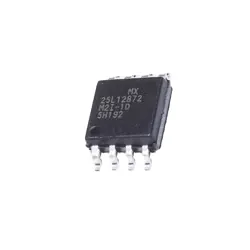
Imagens apenas para referência
LNK564DG
+Lista de MateriaisIC OFFLINE SWITCH FLYBACK 8SO
-
FabricanteIntegrações de Potência
-
Peça do Fabricante #LNK564DG
-
Pacote SOIC-8
-
Em Estoque4041
365 Garantia de Qualidade em 1 dia
7*24 Garantia de serviço em 24 horas
90-Garantia de pós-venda em 1 dia
Garantia de Produto Genuíno
Especificações
| Atributo | Valor |
| Package / Case | Tube |
| Series | LinkSwitch®-LP |
| Part Status | Discontinued at Digi-Key |
| Output Isolation | Isolated |
| Internal Switch(s) | Yes |
| Voltage - Breakdown | 700V |
| Topology | Flyback |
| Duty Cycle | 70% |
| Frequency - Switching | 100kHz |
| Power (Watts) | 3 W |
| Fault Protection | Current Limiting, Open Loop, Over Temperature, Short Circuit |
| Operating Temperature | -40°C ~ 150°C (TJ) |
| Supplier Device Package | SO-8C |
Visão Geral
Description
The primary advantage of using the LNK564DG is its ability to simplify power supply designs by reducing component count and enhancing efficiency, thus lowering overall system cost. Its on/off control scheme provides high efficiency across the entire load range, and the built-in frequency jittering helps in achieving lower electromagnetic interference (EMI) compliance. The thermal shutdown feature ensures protection against overheating, while the cycle-by-cycle current limit safeguards the circuit from overcurrent conditions.
Overall, the LNK564DG is suited for applications needing compact, efficient, and reliable power conversion solutions.
Equivalent
1. TinySwitch series (Power Integrations)
2. VIPer12A/22A (STMicroelectronics)
3. TOPSwitch series (Power Integrations)
4. NCP101X series (ON Semiconductor)
Ensure compatibility in terms of specifications and pin configuration before substituting.
Features
1. Integrated PWM Controller: Incorporates a pulse width modulation controller for precise power regulation.
2. EcoSmart Technology: Offers reduced energy consumption during no-load and standby conditions.
3. High Efficiency: Delivers high energy efficiency across a wide range of load conditions.
4. Primary Side Regulation (PSR): Eliminates the need for an optocoupler, simplifying circuit design.
5. Current Limiting and Protection Features: Includes over-temperature protection, overcurrent protection, and automatic restart for enhanced safety.
6. Wide Input Voltage Range: Supports a broad input voltage range, making it versatile for global applications.
7. Low Total Cost: Minimizes external components, reducing overall system cost.
8. Package: Available in a compact SMD package (SOT-223), suitable for space-constrained designs.
These features make the LNK564DG ideal for applications such as chargers, adapters, and appliances where efficiency and compactness are crucial.
Pinout
Here is a brief overview of its pin functions:
1. ENABLE/UV: This pin is used for enabling the IC. It also allows for an undervoltage lockout function.
2. FEEDBACK (FB): This pin is used for feedback control, which helps in regulating the output voltage.
3. BYPASS (BP): A capacitor is connected to this pin to provide decoupling, and it also sets the current limit.
4. SOURCE (S): This pin serves as the ground reference and is internally connected.
5. SOURCE (S): Another ground reference pin, often connected internally together.
6. SOURCE (S): A third ground reference pin.
7. DRAIN (D): This pin is connected to the drain of the internal power MOSFET, linking to the high-voltage input.
The LNK564DG is primarily used in applications such as chargers, adapters, and standby power supplies where energy efficiency is a critical consideration.
Manufacturer
Application
1. Consumer Electronics: Power adapters for devices like smartphones, tablets, and other portable electronics.
2. LED Drivers: Suitable for driving LED lighting solutions, offering high efficiency and reliability.
3. Home Appliances: Used in power supplies for small domestic appliances such as coffee makers and electric shavers.
4. Standby Power Supplies: Ideal for low-power standby applications due to its low power consumption.
5. Industrial Controls: Used in powering control circuits in industrial applications.
Its benefits include reduced component count and improved efficiency in power supply designs.