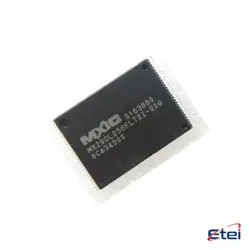
Imagens apenas para referência
LP2950CDT-5.0RKG
+Lista de MateriaisIC REG LINEAR 5V 100MA DPAK
-
Fabricanteonsemi
-
Peça do Fabricante #LP2950CDT-5.0RKG
-
Pacote DPAK-3
-
Em Estoque5022
365 Garantia de Qualidade em 1 dia
7*24 Garantia de serviço em 24 horas
90-Garantia de pós-venda em 1 dia
Garantia de Produto Genuíno
Especificações
| Atributo | Valor |
| Package / Case | Tape & Reel (TR),Cut Tape (CT) |
| Part Status | Active |
| Output Configuration | Positive |
| Output Type | Fixed |
| Number of Regulators | 1 |
| Voltage - Input (Max) | 30V |
| Voltage - Output (Min/Fixed) | 5V |
| Voltage Dropout (Max) | 0.45V @ 100mA |
| Current - Output | 100mA |
| Current - Quiescent (Iq) | 120 µA |
| Current - Supply (Max) | 12 mA |
| Protection Features | Over Current, Over Temperature |
| Operating Temperature | -40°C ~ 125°C |
| Mounting Type | Surface Mount |
Visão Geral
Description
Key features of the LP2950CDT-5.0RKG include:
1. Low Dropout Voltage: It ensures efficient regulation with minimal voltage drop between input and output, making it ideal for low-voltage applications.
2. Output Current: It can supply up to 100 mA of output current, sufficient for many low-power devices.
3. Thermal and Current Limiting: Built-in features protect the device and connected circuits from overheating and overcurrent conditions.
4. Package: Often available in a TO-252 (DPAK) package, which facilitates heat dissipation.
This regulator is widely used in portable electronics, microcontroller applications, and other scenarios where a stable 5V supply is essential.
Equivalent
Features
1. Output Voltage: Fixed at 5.0V, suitable for a range of electronic applications.
2. Low Dropout Voltage: Allows the regulator to provide a stable output voltage with a minimal difference between input and output voltages, improving efficiency.
3. Output Current: Supports up to 100 mA, sufficient for powering small to medium-sized circuits.
4. Low Quiescent Current: Consumes minimal current when not driving a load, which is beneficial for battery-powered devices.
5. High Accuracy: Offers precise voltage regulation, typically within ±0.5% of the specified value.
6. Thermal Overload Protection: Safeguards the device from overheating, ensuring reliability.
7. Short Circuit Protection: Protects against output short circuits.
8. Package Type: Available in a surface-mount TO-252-3 package, suitable for compact designs.
9. Wide Operating Temperature Range: Functions effectively in temperatures ranging from -40°C to 125°C, making it versatile for various environments.
These features make the LP2950CDT-5.0RKG ideal for applications requiring reliable and efficient voltage regulation.
Pinout
Here is a brief overview of the pin functions:
1. Input (Vin): This pin is where the unregulated input voltage is supplied. The LP2950 can accept a higher voltage input and regulate it down to the fixed output voltage.
2. Ground (GND): This pin is the ground reference for the regulator. It is connected to the negative side of the input voltage and the load.
3. Output (Vout): This pin provides the regulated output voltage. In this specific model, the output is fixed at 5.0 volts. The output should be connected to the load that requires regulation.
These voltage regulators are typically used in applications where a stable and specific output voltage is required, such as in microcontrollers and other digital circuits.
Manufacturer
Application
1. Consumer Electronics: Used in devices like smartphones, tablets, and cameras for efficient power management.
2. Industrial Equipment: Provides reliable voltage regulation in control systems and instrumentation.
3. Automotive Systems: Powers microcontrollers and sensors within vehicles.
4. Networking Devices: Ensures stable operation in routers, switches, and modems.
5. Communications Equipment: Supports consistent performance in radios and transmitters.
6. Battery-Powered Devices: Extends battery life in portable gadgets by minimizing power consumption.
These applications benefit from its low dropout voltage, thermal stability, and low quiescent current.