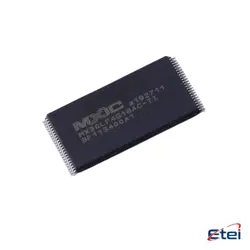
Imagens apenas para referência
MC145151P2
+Lista de Materiais-
FabricanteSemiconductores NXP
-
Peça do Fabricante #MC145151P2
-
Em Estoque5892
365 Garantia de Qualidade em 1 dia
7*24 Garantia de serviço em 24 horas
90-Garantia de pós-venda em 1 dia
Garantia de Produto Genuíno
Especificações
| Atributo | Valor |
| Package / Case | PDIP-28 |
| Brand | NXP Semiconductors |
| Mounting Type | Through Hole |
| Product Type | PLLs - Phase Locked Loops |
| Subcategory | Wireless & RF Integrated Circuits |
| Type | PLL Frequency Synthesizer |
| Number of Circuits | 1 Circuit |
| Supply Voltage - Max | 9 V |
| Supply Voltage - Min | 3 V |
| Technology | Si |
| Minimum Operating Temperature | - 40 C |
| Maximum Operating Temperature | + 85 C |
| Height | 4.06 mm |
| Length | 37.21 mm |
| Operating Supply Voltage | 3.3 V, 5 V |
| Width | 14.22 mm |
| Unit Weight | 0.147798 oz |
| Maximum Input Frequency | 25 MHz |
| Minimum Input Frequency | 6 MHz |
Visão Geral
Description
The MC145151P2 is a digital telephone processor designed by Motorola, primarily used in telecommunication applications. It integrates various functions necessary for managing telephone calls, including signaling, voice encoding/decoding, and call processing. This integrated circuit supports features such as caller ID, call waiting, and other advanced telephony functions.
The MC145151P2 operates with a low power consumption, making it suitable for both residential and commercial telephone systems. It typically interfaces with other components like analog-to-digital converters and microcontrollers to facilitate its operations. The chip is part of a broader family of telecommunications devices, ensuring compatibility with various telephony standards.
Applications of the MC145151P2 include digital telephones, VoIP (Voice over Internet Protocol) systems, and hybrid telephone systems that combine traditional and digital technologies. Its architecture allows for efficient processing of voice signals, ensuring clear communication and reliable performance in any telecommunication setup.
The MC145151P2 operates with a low power consumption, making it suitable for both residential and commercial telephone systems. It typically interfaces with other components like analog-to-digital converters and microcontrollers to facilitate its operations. The chip is part of a broader family of telecommunications devices, ensuring compatibility with various telephony standards.
Applications of the MC145151P2 include digital telephones, VoIP (Voice over Internet Protocol) systems, and hybrid telephone systems that combine traditional and digital technologies. Its architecture allows for efficient processing of voice signals, ensuring clear communication and reliable performance in any telecommunication setup.
Equivalent
The MC145151P2 is a dual-channel analog switch IC. Equivalent products include the MAX4617, TSN2525, and ADG884. Other alternatives may include the CD4066 and the 74HC4066, depending on specific requirements like voltage levels and package type. Always verify specifications and compatibility for your application before substitution.
Features
The MC145151P2 is a dual-tone multi-frequency (DTMF) generation and decoding integrated circuit. Key features include:
1. DTMF Generation: It generates standard DTMF tones, which are used in telephone signaling.
2. Decoding Capability: It can decode incoming DTMF signals, providing output for each key pressed.
3. Low Power Consumption: Designed for battery-operated devices, it operates efficiently to extend battery life.
4. Wide Supply Voltage Range: Typically operates from 3V to 15V, making it versatile for various applications.
5. Built-in Oscillator: Features an internal oscillator for tone generation, reducing the need for external components.
6. Programmable Output: Allows customization of output tones and includes a mute function.
7. Easy Interface: Compatible with microcontrollers and other digital systems for straightforward integration.
8. Compact Package: Available in a small package, suitable for space-constrained applications.
Overall, the MC145151P2 is ideal for use in telecommunications, remote controls, and interactive voice response systems.
1. DTMF Generation: It generates standard DTMF tones, which are used in telephone signaling.
2. Decoding Capability: It can decode incoming DTMF signals, providing output for each key pressed.
3. Low Power Consumption: Designed for battery-operated devices, it operates efficiently to extend battery life.
4. Wide Supply Voltage Range: Typically operates from 3V to 15V, making it versatile for various applications.
5. Built-in Oscillator: Features an internal oscillator for tone generation, reducing the need for external components.
6. Programmable Output: Allows customization of output tones and includes a mute function.
7. Easy Interface: Compatible with microcontrollers and other digital systems for straightforward integration.
8. Compact Package: Available in a small package, suitable for space-constrained applications.
Overall, the MC145151P2 is ideal for use in telecommunications, remote controls, and interactive voice response systems.
Pinout
The MC145151P2 is a dual-channel, programmable frequency synthesizer integrated circuit. It features a 24-pin dual in-line package (DIP).
### Pin Count:
- 24 Pins
### Key Functions:
1. Phase Frequency Detector (PFD): Compares the frequency of input signals.
2. Charge Pump: Generates an output voltage proportional to the phase difference between the input frequencies.
3. Dividers: Provides frequency division to facilitate various output frequencies.
4. Programmable Divider: Allows setting of specific division ratios for frequency synthesis.
5. Lock Detection: Monitors the output to ensure the synthesizer is locked onto the desired frequency.
6. Control Signals: Inputs for programming and controlling the operation of the synthesizer.
The MC145151P2 is commonly used in applications such as radio communications, signal generation, and other frequency synthesis applications.
### Pin Count:
- 24 Pins
### Key Functions:
1. Phase Frequency Detector (PFD): Compares the frequency of input signals.
2. Charge Pump: Generates an output voltage proportional to the phase difference between the input frequencies.
3. Dividers: Provides frequency division to facilitate various output frequencies.
4. Programmable Divider: Allows setting of specific division ratios for frequency synthesis.
5. Lock Detection: Monitors the output to ensure the synthesizer is locked onto the desired frequency.
6. Control Signals: Inputs for programming and controlling the operation of the synthesizer.
The MC145151P2 is commonly used in applications such as radio communications, signal generation, and other frequency synthesis applications.
Manufacturer
The MC145151P2 is manufactured by ON Semiconductor, a prominent semiconductor company that specializes in a wide range of electronic components and systems. Founded in 1999, ON Semiconductor focuses on providing energy-efficient solutions and is known for its extensive portfolio that includes analog, logic, power management, and other semiconductor devices.
ON Semiconductor serves various markets, including automotive, communications, computing, consumer electronics, and industrial applications. The company emphasizes innovation and sustainability, aiming to deliver high-performance products while minimizing environmental impact. Its global reach includes manufacturing facilities, design centers, and sales offices across multiple continents, making it a key player in the semiconductor industry.
ON Semiconductor serves various markets, including automotive, communications, computing, consumer electronics, and industrial applications. The company emphasizes innovation and sustainability, aiming to deliver high-performance products while minimizing environmental impact. Its global reach includes manufacturing facilities, design centers, and sales offices across multiple continents, making it a key player in the semiconductor industry.
Application
The MC145151P2 is primarily used in telecommunications and signal processing applications. Its key areas include:
1. Digital Signal Processing: For filtering and modulation tasks.
2. Voice Coding: Used in speech compression and encoding systems, especially in low-bitrate applications.
3. Telephony: Integrated into voice recognition systems and voice-over-IP (VoIP) technologies.
4. Data Communication: In modems for efficient data transmission.
5. Consumer Electronics: In devices requiring audio processing, such as digital recorders and communication devices.
Its versatility makes it suitable for various applications requiring high-quality audio processing and transmission.
1. Digital Signal Processing: For filtering and modulation tasks.
2. Voice Coding: Used in speech compression and encoding systems, especially in low-bitrate applications.
3. Telephony: Integrated into voice recognition systems and voice-over-IP (VoIP) technologies.
4. Data Communication: In modems for efficient data transmission.
5. Consumer Electronics: In devices requiring audio processing, such as digital recorders and communication devices.
Its versatility makes it suitable for various applications requiring high-quality audio processing and transmission.
Package
The MC145151P2 is packaged in a 28-pin Dual In-line Package (DIP).