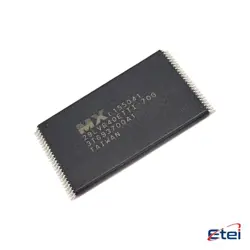
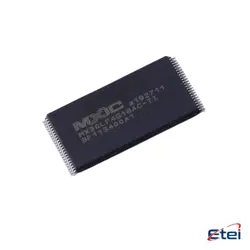
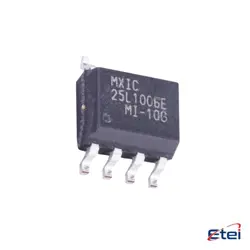
Imagens apenas para referência
MK20DN512VLL10
+Lista de MateriaisIC MCU 32BIT 512KB FLASH 100LQFP
-
FabricanteNXP USA Inc.
-
Peça do Fabricante #MK20DN512VLL10
-
Ficha Técnica MK20DN512VLL10 DataSheet
-
Pacote LQFP-100
-
Em Estoque7397
365 Garantia de Qualidade em 1 dia
7*24 Garantia de serviço em 24 horas
90-Garantia de pós-venda em 1 dia
Garantia de Produto Genuíno
Especificações
| Atributo | Valor |
| Package | Tray |
| Series | Kinetis K20 |
| ProductStatus | Active |
| CoreProcessor | ARM® Cortex®-M4 |
| CoreSize | 32-Bit Single-Core |
| Speed | 100MHz |
| Connectivity | CANbus, EBI/EMI, I²C, IrDA, SD, SPI, UART/USART, USB, USB OTG |
| Peripherals | DMA, I²S, LVD, POR, PWM, WDT |
| NumberofI/O | 66 |
| ProgramMemorySize | 512KB (512K x 8) |
| ProgramMemoryType | FLASH |
| RAMSize | 128K x 8 |
| Voltage-Supply(Vcc/Vdd) | 1.71V ~ 3.6V |
| DataConverters | A/D 33x16b; D/A 1x12b |
| OscillatorType | Internal |
| OperatingTemperature | -40°C ~ 105°C (TA) |
| MountingType | Surface Mount |
| Package/Case | 100-LQFP |
Visão Geral
Description
Key features of the MK20DN512VLL10 include multiple communication interfaces such as UART, I2C, and SPI, along with USB connectivity. It also supports various timers, ADC, DAC, PWM, and other peripherals, making it versatile for embedded system applications. The device offers advanced low-power modes to extend battery life in portable applications.
This microcontroller is commonly used in consumer electronics, industrial control systems, and health care devices, offering a balance between performance, power efficiency, and cost. Its 100-pin LQFP package allows for a robust set of features while maintaining a compact footprint suitable for modern electronic designs.
Equivalent
1. STM32F407VGT6 from STMicroelectronics – 32-bit ARM Cortex-M4.
2. ATSAM4E8C-AU from Microchip – 32-bit ARM Cortex-M4.
3. LPC1768FBD100 from NXP – 32-bit ARM Cortex-M3 (similar performance, less DSP capability).
4. TM4C123GH6PZ from Texas Instruments – 32-bit ARM Cortex-M4.
Each alternative may have slight variations in peripherals or memory configuration.
Features
Pinout
Some key features and functionalities include:
- Core and Performance: ARM Cortex-M4 core, operating at up to 100 MHz.
- Memory: 512 KB of Flash memory and 128 KB of SRAM.
- GPIO: Multiple general-purpose input/output pins for interfacing with external devices.
- Communication Interfaces: Includes UART, I2C, SPI, and CAN, allowing for various types of serial communication.
- Timers: Offers multiple timers, including PWM, for precise timing and control operations.
- Analog: Features ADC and DAC for converting between analog and digital signals.
- Security: Integrated security features such as hardware encryption and CRC.
- Additional Features: USB connectivity, low-power capabilities, and a flexible clocking system.
These features make it suitable for a wide range of applications, including industrial control, consumer electronics, and portable devices.
Manufacturer
NXP Semiconductors is known for its focus on producing chips for the automotive, industrial, mobile, and communication infrastructure markets. The company provides solutions that enhance connectivity, security, and efficiency across various applications. NXP is particularly prominent in the automotive industry, offering advanced solutions for vehicles, including those related to autonomous driving, connectivity, and in-vehicle networking.
Founded in 2006 and headquartered in Eindhoven, Netherlands, NXP has established itself as a leader in the semiconductor industry through innovation and strategic acquisitions. It continues to be at the forefront of technological advancements, contributing to the development of smart, connected, and secure devices and systems globally.
Application
1. Industrial Control Systems: Used for automation, motor control, and monitoring equipment.
2. Consumer Electronics: Implemented in smart home devices, appliances, and wearables.
3. Automotive: Employed in infotainment systems, instrument clusters, and body electronics.
4. Healthcare: Used in medical devices like patient monitors and portable diagnostic equipment.
5. IoT Devices: Facilitates connectivity and control for smart devices and sensor networks.
6. Embedded Systems: Serves as a core processor in a variety of embedded applications.
Its versatility and performance make it suitable for applications requiring efficient processing, connectivity, and real-time operations.