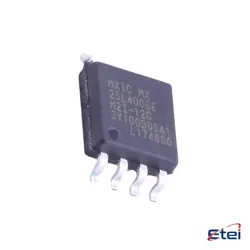
Imagens apenas para referência
MSP430G2230IDR
+Lista de MateriaisIC MCU 16BIT 2KB FLASH 8SOIC
-
FabricanteTexas Instruments
-
Peça do Fabricante #MSP430G2230IDR
-
Pacote SOIC-8
-
Em Estoque7066
365 Garantia de Qualidade em 1 dia
7*24 Garantia de serviço em 24 horas
90-Garantia de pós-venda em 1 dia
Garantia de Produto Genuíno
Especificações
| Atributo | Valor |
| Package | Tape & Reel (TR),Cut Tape (CT) |
| Series | MSP430G2xx |
| ProductStatus | Active |
| CoreProcessor | MSP430 CPU16 |
| CoreSize | 16-Bit |
| Speed | 16MHz |
| Connectivity | I²C, SPI, USI |
| Peripherals | Brown-out Detect/Reset, DMA, PWM, WDT |
| NumberofI/O | 4 |
| ProgramMemorySize | 2KB (2K x 8 + 256B) |
| ProgramMemoryType | FLASH |
| RAMSize | 128 x 8 |
| Voltage-Supply(Vcc/Vdd) | 1.8V ~ 3.6V |
| DataConverters | A/D 4x10b |
| OscillatorType | Internal |
| OperatingTemperature | -40°C ~ 85°C (TA) |
| MountingType | Surface Mount |
| Package/Case | 8-SOIC (0.154, 3.90mm Width) |
Visão Geral
Description
The microcontroller operates at a maximum frequency of 16 MHz and includes various peripherals such as an 8-channel, 10-bit ADC (Analog-to-Digital Converter), a Watchdog Timer, and multiple timers which are useful for time-sensitive applications. It also supports serial communication through USI (Universal Serial Interface), accommodating I2C and SPI communication protocols.
The MSP430G2230IDR is designed with low power applications in mind, featuring several low power modes to extend battery life in portable devices. It is available in a small VSSOP package, making it suitable for compact designs. This microcontroller is ideal for applications in home automation, handheld meters, and low-power medical devices.
Equivalent
1. Microchip Technology: PIC16F series, such as PIC16F690.
2. STMicroelectronics: STM8S series, like STM8S003F3.
3. NXP Semiconductors: LPC800 series, such as LPC810.
4. Silicon Labs: EFM8 series, like EFM8BB10F2G.
These alternatives may vary in features and specifications, so verify compatibility based on your specific application requirements.
Features
1. CPU and Performance:
- 16-bit RISC architecture
- Up to 16 MHz clock speed
2. Memory:
- 2KB Flash memory
- 128B RAM
3. Low-Power Modes:
- Multiple low-power modes to extend battery life
- Ultra-low power consumption for energy-efficient applications
4. Peripherals:
- 8-channel 10-bit ADC (Analog-to-Digital Converter)
- Timer_A with three capture/compare registers
- Watchdog timer
5. I/O and Communication:
- Up to 10 I/O pins
- Serial communication via USI (Universal Serial Interface) for I2C and SPI
6. Operating Parameters:
- Supply voltage range: 1.8V to 3.6V
- Temperature range: -40°C to 85°C
7. Package:
- Available in 14-pin TSSOP (Thin Shrink Small Outline Package)
This microcontroller is ideal for applications requiring low power and efficient operation, such as battery-powered devices.
Pinout
Key functions and features include:
- CPU: 16-bit RISC CPU for efficient processing.
- Clock System: Flexible clocking with internal clocks.
- Memory: Flash memory for program storage and RAM for data handling.
- Timers: Integrated timers for time-based operations.
- I/O Ports: General-purpose digital I/O pins.
- ADC: 10-bit Analog-to-Digital Converter for interfacing with analog sensors.
- Serial Communication: Basic serial communication capability.
This microcontroller is ideal for applications requiring low power, such as battery-operated devices and simple control applications. It is designed to offer a balance of performance and power efficiency, making it suitable for embedded systems projects. For detailed technical specifications, you should refer to the official datasheet provided by Texas Instruments.
Manufacturer
Application
1. Embedded Systems: Used in small-scale, power-sensitive embedded applications.
2. Consumer Electronics: Applied in devices requiring low power and simple controls.
3. Sensor Networks: Ideal for battery-operated sensor nodes due to its low power consumption.
4. Industrial Automation: Utilized in control systems and data acquisition.
5. Portable Medical Devices: Supports functions in battery-operated health monitoring devices.
6. Home Automation: Powers smart home devices and controls.
7. Wearable Technology: Suitable for small, energy-efficient wearable gadgets.
These applications leverage its low power consumption, compact design, and efficient processing capabilities.