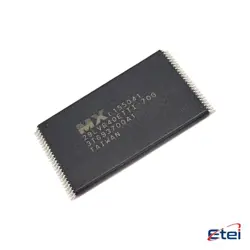
Imagens apenas para referência
MXP7205VW
+Lista de MateriaisACCELEROMETER 5G SPI 8LCC
-
FabricanteMemsic Inc.
-
Peça do Fabricante #MXP7205VW
-
Pacote LCC-8
-
Em Estoque6760
365 Garantia de Qualidade em 1 dia
7*24 Garantia de serviço em 24 horas
90-Garantia de pós-venda em 1 dia
Garantia de Produto Genuíno
Especificações
| Atributo | Valor |
| Package / Case | Tape & Reel (TR),Cut Tape (CT) |
| Series | Automotive, AEC-Q100 |
| Part Status | Active |
| Type | Digital |
| Axis | X, Y or X, Z |
| Acceleration Range | ±5g |
| Sensitivity(LSB / g) | 800 |
| Bandwidth | 29Hz |
| Output Type | SPI |
| Voltage - Supply | 4.5V ~ 5.25V |
| Operating Temperature | -40°C ~ 105°C (TA) |
| Mounting Type | Surface Mount |
Visão Geral
Description
Key features might include:
1. Architecture: Often based on ARM or proprietary architectures, focusing on efficient instruction sets.
2. Clock Speed: Typically moderate to ensure low power consumption while maintaining adequate processing capability.
3. I/O Interfaces: Multiple interfaces for connecting peripherals, possibly including GPIO, UART, SPI, and I2C.
4. Memory: On-chip RAM/ROM and support for external memory interfaces.
5. Power Management: Designed to operate at low power levels, suitable for battery-operated devices.
6. Development Support: Tools and resources for firmware development, such as SDKs or development boards.
It's essential to refer to the official datasheet or technical documentation for detailed specifications and capabilities specific to the MXP7205VW model.
Equivalent
1. Texas Instruments TPS62125: A high-efficiency synchronous step-down converter.
2. Microchip MCP16331: A compact, high-efficiency buck converter.
3. Analog Devices ADP2301: A 1.2A, 20 V buck regulator.
4. STMicroelectronics L6981: A step-down monolithic switching regulator capable of delivering up to 1.5 A.
These alternatives should be reviewed for specific electrical characteristics and pin compatibility.
Features
1. Capacity: Often offers a spacious interior to accommodate different dish sizes.
2. Power Levels: Multiple power settings for precise cooking control, allowing customization for different food types.
3. Pre-programmed Settings: Commonly includes settings for popular tasks like popcorn, defrosting, and reheating, simplifying operation.
4. Control Panel: User-friendly interfaces with touch controls or dials for easy operation and navigation.
5. Interior Lighting: Illuminates the interior to monitor the cooking process without opening the door.
6. Turntable: A rotating mechanism to ensure even cooking of food items.
7. Safety Features: Child lock functions to prevent accidental operation.
8. Design: Often features a sleek, modern design to fit into contemporary kitchen aesthetics.
9. Efficiency: Energy-efficient options may be available to reduce power consumption.
For specific details, it's important to refer to the manufacturer's documentation, as features can vary by model.
Manufacturer
Application
1. Automotive Systems: For monitoring and controlling air and fluid pressure, such as in tire pressure monitoring systems (TPMS) and engine management systems.
2. Industrial Automation: Used in process control systems to ensure accurate pressure measurements in manufacturing and production lines.
3. Medical Devices: Incorporated in devices like ventilators and blood pressure monitors for precise pressure monitoring.
4. Consumer Electronics: Utilized in gadgets where pressure measurement is essential, such as smartphones and wearable devices for altitude and weather forecasting.
5. Aerospace: For monitoring cabin pressure and environmental control systems.
These applications leverage the sensor’s accuracy, durability, and compact design.