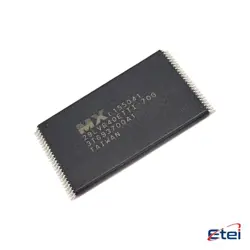
Imagens apenas para referência
NCP160AMX280TBG
+Lista de MateriaisIC REG LINEAR 2.8V 250MA 4XDFN
-
Fabricanteonsemi
-
Peça do Fabricante #NCP160AMX280TBG
-
Pacote XDFN-4
-
Em Estoque3207
365 Garantia de Qualidade em 1 dia
7*24 Garantia de serviço em 24 horas
90-Garantia de pós-venda em 1 dia
Garantia de Produto Genuíno
Especificações
| Atributo | Valor |
| Package / Case | Tape & Reel (TR),Cut Tape (CT) |
| Part Status | Active |
| Output Configuration | Positive |
| Output Type | Fixed |
| Number of Regulators | 1 |
| Voltage - Input (Max) | 5.5V |
| Voltage - Output (Min/Fixed) | 2.8V |
| Voltage Dropout (Max) | 0.16V @ 250mA |
| Current - Output | 250mA |
| Current - Quiescent (Iq) | 23 µA |
| PSRR | 91dB ~ 48dB (100Hz ~ 100kHz) |
| Control Features | Enable |
| Protection Features | Over Current, Over Temperature, Soft Start |
| Operating Temperature | -40°C ~ 125°C (TA) |
| Mounting Type | Surface Mount |
Visão Geral
Description
Key features of the NCP160AMX280TBG include a wide operating voltage range, improved transient response, and high efficiency across varying load conditions. It incorporates several protection mechanisms such as over-voltage protection, over-current protection, and thermal shutdown to enhance reliability and safeguard the circuit against potential faults.
The NCP160AMX280TBG is typically used in applications like adapters, flat panel displays, lighting systems, and any other electronic systems where maximizing energy efficiency and minimizing power losses are crucial. Its compact size and robust feature set make it a popular choice among engineers designing power supply solutions.
Equivalent
1. Texas Instruments LP2985 series
2. Microchip MCP1700 series
3. Analog Devices ADP3330 series
4. STMicroelectronics LD1117 series
Always compare specific electrical characteristics to ensure compatibility with your application.
Features
1. Wide Input Voltage Range: It supports a broad range of input voltages, making it versatile for various applications.
2. High Efficiency: Designed to maximize energy efficiency, minimizing power loss and heat generation.
3. High Power Density: Offers a compact solution with high power output relative to its size.
4. Protection Features: Includes overvoltage, overcurrent, and thermal protection to ensure reliable operation and safeguard connected components.
5. Built-in Control Features: Incorporates advanced control mechanisms for stable performance across different load conditions.
6. Operating Temperature Range: Designed to function effectively across a wide temperature range, providing reliability in diverse environments.
7. Compact Package: Comes in a small form factor, suitable for space-constrained applications.
These features make the NCP160AMX280TBG ideal for use in power management applications where efficiency and reliability are crucial.
Pinout
1. Input (VIN): This pin receives the input voltage that the regulator will manage and reduce to a stable output voltage.
2. Ground (GND): This is the common ground reference for the input and output voltages.
3. Output (VOUT): This pin provides the regulated output voltage.
4. Enable (EN) or Feedback (FB): Depending on the specific variant of the LDO, this pin may be used to enable or disable the regulator or to provide feedback for adjusting the output voltage.
These descriptions are typical for LDO regulators, but always refer to the specific datasheet for the NCP160AMX280TBG to confirm exact pin configurations and functions.
Manufacturer
Application
1. Consumer Electronics: Used in devices like TVs, set-top boxes, and gaming consoles for efficient power conversion and regulation.
2. Industrial Equipment: Employed in control systems and automation devices for stable power supply.
3. Computing & Networking: Utilized in servers, routers, and data storage solutions to ensure reliable power management.
4. Telecommunications: Integral in base stations and communication infrastructure for power efficiency.
5. Automotive Electronics: Supports in-vehicle infotainment systems and advanced driver-assistance systems (ADAS) by providing regulated power.
These applications benefit from its ability to deliver efficient power regulation, enhance system reliability, and reduce energy consumption.