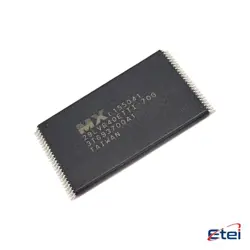
Imagens apenas para referência
NCT75DR2G
+Lista de MateriaisSENSOR DIGITAL -55C-125C 8SOIC
-
Fabricanteonsemi
-
Peça do Fabricante #NCT75DR2G
-
Pacote SOIC-8
-
Em Estoque7062
365 Garantia de Qualidade em 1 dia
7*24 Garantia de serviço em 24 horas
90-Garantia de pós-venda em 1 dia
Garantia de Produto Genuíno
Especificações
| Atributo | Valor |
| Package / Case | Tape & Reel (TR),Cut Tape (CT),Bulk |
| Part Status | Active |
| Sensor Type | Digital, Local |
| Sensing Temperature - Local | -55°C ~ 125°C |
| Output Type | I²C/SMBus |
| Voltage - Supply | 3V ~ 5.5V |
| Resolution | 12 b |
| Features | One-Shot, Output Switch, Programmable Limit, Shutdown Mode |
| Accuracy - Highest(Lowest) | ±1°C (±3°C) |
| Test Condition | 0°C ~ 70°C (-55°C ~ 125°C) |
| Operating Temperature | -55°C ~ 125°C |
| Mounting Type | Surface Mount |
Visão Geral
Description
Key features include a wide operating temperature range, low power consumption, and a compact design, making it suitable for various environments and applications. The NCT75DR2G can often operate in both one-shot and continuous modes, offering flexibility depending on the system requirements. It is typically used in environments where monitoring temperature fluctuations are critical for performance or safety.
Overall, the NCT75DR2G is valued for its accuracy, ease of integration into existing systems, and capability to prevent overheating and ensure system stability, making it a reliable choice for temperature sensing in modern electronic systems.
Equivalent
1. LM75 series from Texas Instruments.
2. TMP75 from Texas Instruments.
3. MCP9808 from Microchip Technology.
4. ADT75 from Analog Devices.
5. MAX6625 or MAX6626 from Maxim Integrated.
These alternatives offer similar functionality, such as I²C interface and comparable temperature sensing ranges and accuracy. Always check specific datasheets for detailed compatibility.
Features
1. Temperature Range: Measures temperatures from -40°C to +125°C.
2. Accuracy: High accuracy with a typical error of ±1°C.
3. Digital Output: Provides temperature readings via a 2-wire SMBus/I2C-compatible interface.
4. Resolution: Offers an 11-bit resolution, ensuring precise temperature readings.
5. Low Power Consumption: Optimized for low power usage, suitable for battery-powered applications.
6. Programmable Features: Includes programmable temperature limits and hysteresis for alert functions.
7. Alert Functionality: Features an ALERT pin that signals when temperature thresholds are exceeded.
8. Supply Voltage: Operates with a supply voltage range from 3V to 3.6V.
9. Package Options: Available in compact packages, making it suitable for space-constrained applications.
10. Applications: Ideal for use in computers, battery management systems, and other electronic devices requiring reliable temperature monitoring.
These features make the NCT75DR2G a versatile choice for implementing precise and efficient thermal management in various electronic systems.
Pinout
The pin functions generally include:
1. VDD: Power supply pin.
2. GND: Ground pin.
3. SDA: Serial Data Line for I²C/SMBus communication.
4. SCL: Serial Clock Line for I²C/SMBus communication.
5. ALERT/THERM: Interrupt output pin, which can be used to signal a temperature alert.
6. A0, A1, A2: Address pins used to set the I²C address of the device.
These functions allow the NCT75DR2G to integrate easily into systems requiring precise temperature monitoring and control. It's typically used in applications such as computers, servers, and industrial equipment.
Manufacturer
Application
1. Consumer Electronics: For temperature monitoring in devices like laptops and smartphones.
2. Industrial Controls: Used in systems requiring accurate temperature regulation.
3. Automotive Systems: Monitoring temperature in engine and battery management systems.
4. Telecommunications: Ensuring optimal temperatures in networking equipment.
5. Medical Devices: Maintaining precise temperature control in sensitive equipment.
6. Data Centers: Temperature monitoring for efficient cooling and energy management.
These applications benefit from the sensor's reliability and digital output, facilitating easy integration into existing systems.