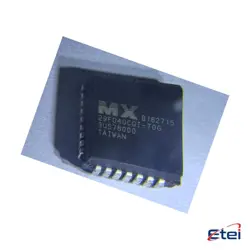
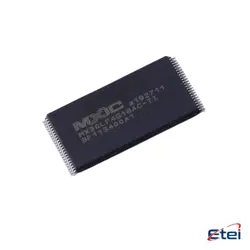
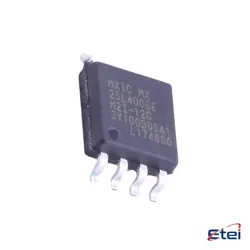
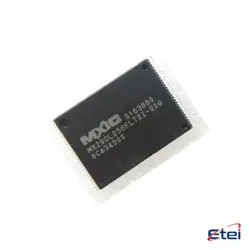
Imagens apenas para referência
P89V51RD2FN
+Lista de Materiais-
FabricanteSemiconductores NXP
-
Peça do Fabricante #P89V51RD2FN
-
Em Estoque3849
365 Garantia de Qualidade em 1 dia
7*24 Garantia de serviço em 24 horas
90-Garantia de pós-venda em 1 dia
Garantia de Produto Genuíno
Especificações
| Atributo | Valor |
| Core | 80C51 |
| Program Memory Size | 64 kB |
| Data RAM Size | 1 kB |
| Maximum Clock Frequency | 40 MHz |
| ADC Resolution | No ADC |
| Number of I/Os | 32 I/O |
| Supply Voltage - Min | 4.5 V |
| Supply Voltage - Max | 5.5 V |
| Mounting Style | Through Hole |
| Data Bus Width | 8 bit |
| Minimum Operating Temperature | - 40 C |
| Maximum Operating Temperature | + 85 C |
| Series | 89V |
| Packaging | Tube |
| Brand | NXP Semiconductors |
| Height | 4 mm |
| Length | 52.5 mm |
| Number of Timers/Counters | 3 Timer |
| Product Type | 8-bit Microcontrollers - MCU |
| Program Memory Type | Flash |
| Factory Pack Quantity:Factory Pack Quantity | 9 |
| Subcategory | Microcontrollers - MCU |
| Width | 14.1 mm |
| Part # Aliases | P89V51RD2FN,112 |
| Unit Weight | 0.210004 oz |
| Package / Case | PDIP-40 |
| Interface Type | SPI, UART |
Visão Geral
Description
The P89V51RD2FN is a microcontroller from NXP's 8051 family, designed for embedded applications. It features a 8-bit CPU with a 16-bit timer, 32 I/O pins, and built-in EEPROM, which allows for non-volatile data storage. Operating at a maximum frequency of 40 MHz, it provides efficient performance for various applications.
Key features include:
- 64 KB of program memory and 256 bytes of RAM.
- Enhanced instruction set for improved processing capabilities.
- Multiple communication interfaces including UART, SPI, and I²C.
- Integrated watchdog timer for system reliability.
- Power-saving modes to extend battery life in portable devices.
The P89V51RD2FN is suitable for tasks ranging from simple control systems to more complex data acquisition and processing applications, making it a versatile choice for designers in the embedded systems field.
Key features include:
- 64 KB of program memory and 256 bytes of RAM.
- Enhanced instruction set for improved processing capabilities.
- Multiple communication interfaces including UART, SPI, and I²C.
- Integrated watchdog timer for system reliability.
- Power-saving modes to extend battery life in portable devices.
The P89V51RD2FN is suitable for tasks ranging from simple control systems to more complex data acquisition and processing applications, making it a versatile choice for designers in the embedded systems field.
Equivalent
The P89V51RD2FN chip is a member of the 8051 microcontroller family. Equivalent products include the AT89S52, NXP's P89V51RD2, and the Microchip PIC16F84A (though it uses a different architecture). Other alternatives may include the Silicon Labs C8051F series and the NXP (Philips) 89C51 series. Ensure to check specific features and compatibility for your application.
Features
The P89V51RD2FN is a high-performance 8-bit microcontroller from NXP (formerly Philips). Key features include:
1. Architecture: Based on the 8051 core, it provides an enhanced instruction set for improved performance.
2. Memory: It has 64 KB of on-chip Flash memory, allowing for program storage and easy updates. It also features 1024 bytes of RAM.
3. I/O Ports: Offers up to 32 I/O pins, which can be configured for various functions.
4. Timers/Counters: Includes three 16-bit timers/counters for precise timing operations.
5. Communication: Supports UART for serial communication and I²C for inter-device communication.
6. ADC/DAC: Integrated 10-bit ADC, allowing for analog signal processing.
7. Low Power Modes: Multiple low-power modes help in energy-efficient applications.
8. Operating Voltage: Typically operates between 2.7V to 5.5V.
9. Development: Compatible with various development tools for easy programming and debugging.
This microcontroller is ideal for embedded systems, automation, and control applications.
1. Architecture: Based on the 8051 core, it provides an enhanced instruction set for improved performance.
2. Memory: It has 64 KB of on-chip Flash memory, allowing for program storage and easy updates. It also features 1024 bytes of RAM.
3. I/O Ports: Offers up to 32 I/O pins, which can be configured for various functions.
4. Timers/Counters: Includes three 16-bit timers/counters for precise timing operations.
5. Communication: Supports UART for serial communication and I²C for inter-device communication.
6. ADC/DAC: Integrated 10-bit ADC, allowing for analog signal processing.
7. Low Power Modes: Multiple low-power modes help in energy-efficient applications.
8. Operating Voltage: Typically operates between 2.7V to 5.5V.
9. Development: Compatible with various development tools for easy programming and debugging.
This microcontroller is ideal for embedded systems, automation, and control applications.
Pinout
The P89V51RD2FN is an 8-bit microcontroller from NXP Semiconductors, based on the 8051 architecture. It features a 40-pin Dual In-line Package (DIP).
Key pin functions include:
- Pins 1-8: Port 1 (P1.0 to P1.7) – General-purpose I/O.
- Pins 9-16: Port 3 (P3.0 to P3.7) – General-purpose I/O and special functions (e.g., RXD, TXD, INT0, INT1, etc.).
- Pins 17-24: Port 0 (P0.0 to P0.7) – General-purpose I/O and external memory interface.
- Pin 25: Reset (RST) – Resets the microcontroller.
- Pin 26: Vcc – Power supply.
- Pin 27: Ground (GND) – Ground connection.
- Pins 28-40: Additional I/O and memory control functions, including ALE (Address Latch Enable), PSEN (Program Store Enable), and external memory connections.
The P89V51RD2FN is versatile for embedded applications, offering features like in-system programming and a wide range of I/O capabilities.
Key pin functions include:
- Pins 1-8: Port 1 (P1.0 to P1.7) – General-purpose I/O.
- Pins 9-16: Port 3 (P3.0 to P3.7) – General-purpose I/O and special functions (e.g., RXD, TXD, INT0, INT1, etc.).
- Pins 17-24: Port 0 (P0.0 to P0.7) – General-purpose I/O and external memory interface.
- Pin 25: Reset (RST) – Resets the microcontroller.
- Pin 26: Vcc – Power supply.
- Pin 27: Ground (GND) – Ground connection.
- Pins 28-40: Additional I/O and memory control functions, including ALE (Address Latch Enable), PSEN (Program Store Enable), and external memory connections.
The P89V51RD2FN is versatile for embedded applications, offering features like in-system programming and a wide range of I/O capabilities.
Manufacturer
The P89V51RD2FN is manufactured by NXP Semiconductors, a global semiconductor company based in the Netherlands. NXP specializes in the design and development of a wide range of semiconductor products, including microcontrollers, processors, and integrated circuits. The company primarily serves various sectors, including automotive, industrial, IoT (Internet of Things), and mobile applications.
NXP Semiconductors was formed in 2006 as a spin-off from Philips, and over the years, it has grown to be a significant player in the semiconductor industry, focusing on innovation and technology solutions that enable connectivity and smart applications. The P89V51RD2FN itself is an 8-bit microcontroller based on the 8051 architecture, commonly used in embedded systems for various applications due to its versatility and ease of integration.
NXP Semiconductors was formed in 2006 as a spin-off from Philips, and over the years, it has grown to be a significant player in the semiconductor industry, focusing on innovation and technology solutions that enable connectivity and smart applications. The P89V51RD2FN itself is an 8-bit microcontroller based on the 8051 architecture, commonly used in embedded systems for various applications due to its versatility and ease of integration.
Application
The P89V51RD2FN is an 8-bit microcontroller based on the 8051 architecture, widely used in various applications due to its versatility. Key application areas include:
1. Embedded Systems: Used in consumer electronics, automation, and control systems.
2. Industrial Control: Ideal for process control, robotics, and monitoring applications.
3. Automotive: Employed in vehicle control and dashboard instrumentation.
4. Home Appliances: Utilized in smart home devices and appliances for automation.
5. Communication Devices: Found in modems, data loggers, and wireless communication systems.
6. Educational Tools: Common in academic projects and learning environments for teaching microcontroller programming.
Its features support a wide range of functionalities, making it suitable for many embedded applications.
1. Embedded Systems: Used in consumer electronics, automation, and control systems.
2. Industrial Control: Ideal for process control, robotics, and monitoring applications.
3. Automotive: Employed in vehicle control and dashboard instrumentation.
4. Home Appliances: Utilized in smart home devices and appliances for automation.
5. Communication Devices: Found in modems, data loggers, and wireless communication systems.
6. Educational Tools: Common in academic projects and learning environments for teaching microcontroller programming.
Its features support a wide range of functionalities, making it suitable for many embedded applications.
Package
The P89V51RD2FN is available in a 40-pin dual in-line package (DIP). This type of packaging allows for easy insertion into a circuit board and is commonly used for microcontrollers.