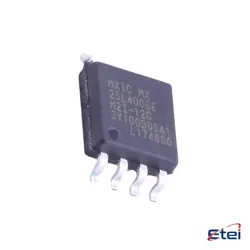
Imagens apenas para referência
PDZ15B,115
+Lista de MateriaisDIODE ZENER 15V 400MW SOD323
-
FabricanteNexperia USA Inc.
-
Peça do Fabricante #PDZ15B,115
-
Pacote SOD-323
-
Em Estoque2232
365 Garantia de Qualidade em 1 dia
7*24 Garantia de serviço em 24 horas
90-Garantia de pós-venda em 1 dia
Garantia de Produto Genuíno
Especificações
| Atributo | Valor |
| Supplier | Nexperia USA Inc. |
| Package / Case | Tape & Reel (TR),Cut Tape (CT) |
| Part Status | Active |
| Voltage - Zener(Nom)(Vz) | 15 V |
| Tolerance | ±2% |
| Power - Max | 400 mW |
| Impedance(Max)(Zzt) | 15 Ohms |
| Current - Reverse Leakage @ Vr | 50 nA @ 11 V |
| Voltage - Forward (Vf) (Max) @ If | 1.1 V @ 100 mA |
| Operating Temperature | 150°C (TJ) |
| Mounting Type | Surface Mount |
Visão Geral
Description
- What is a PDZ domain? A modular protein interaction domain (~80–90 aa) found in scaffolding proteins such as PSD-95, SAP, Dlg, and ZO-1. It folds as a beta-sandwich with an N-terminal and a C-terminal binding groove that recognizes short C-terminal peptide motifs of partner proteins.
- Binding motifs (classical): Class I (S/T-X-Φ-COOH), Class II (Φ-X-Φ-COOH), Class III (D/E-X-Φ-COOH), where Φ is a hydrophobic residue. The GLGF loop is a hallmark that helps form the peptide-binding pocket.
- Roles: Assemble signaling complexes at membranes (e.g., synapses, tight junctions); can function as scaffolds, determine subcellular localization, and regulate signaling through post-translational modifications or alternative splicing.
- If you can share the specific protein name, UniProt ID, or organism for PDZ15B,115, I can tailor a focused intro with structure, partners, and relevance.
Equivalent
Application
- Research tools for mapping protein–protein interactions and signaling networks (PPI assays, pull-downs, colocalization)
- Drug discovery: designing inhibitors/peptidomimetics to block PDZ-mediated interactions
- Neuroscience: studying synaptic receptor clustering, trafficking, plasticity, learning and memory
- Disease research: cancer and cardiovascular signaling where PDZ interactions regulate receptor trafficking and pathways
- Diagnostics/biomarkers: PDZ-interaction signatures as disease indicators
- Synthetic biology: engineered PDZ scaffolds for modular signaling and biosensors