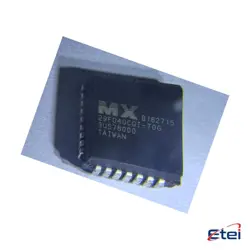
Imagens apenas para referência
PIC16F1939-I/PT
+Lista de MateriaisIC MCU 8BIT 28KB FLASH 44TQFP
-
FabricanteTecnologia Microchip
-
Peça do Fabricante #PIC16F1939-I/PT
-
Ficha Técnica PIC16F1939-I/PT DataSheet
-
Pacote TQFP-44
-
Em Estoque5742
365 Garantia de Qualidade em 1 dia
7*24 Garantia de serviço em 24 horas
90-Garantia de pós-venda em 1 dia
Garantia de Produto Genuíno
Especificações
| Atributo | Valor |
| Package / Case | Tray |
| Series | PIC® XLP™ 16F |
| Part Status | Active |
| Core Processor | PIC |
| Core Size | 8-Bit |
| Speed | 32MHz |
| Connectivity | I²C, LINbus, SPI, UART/USART |
| Peripherals | Brown-out Detect/Reset, LCD, POR, PWM, WDT |
| Number of I/O | 36 |
| Program Memory Size | 28KB (16K x 14) |
| Program Memory Type | FLASH |
| EEPROM Size | 256 x 8 |
| RAM Size | 1K x 8 |
| Voltage - Supply (Vcc/Vdd) | 1.8V ~ 5.5V |
| Data Converters | A/D 14x10b |
| Oscillator Type | Internal |
| Operating Temperature | -40°C ~ 85°C (TA) |
| Mounting Type | Surface Mount |
Visão Geral
Description
Key features include 14 KB of Flash program memory, 512 bytes of RAM, and 256 bytes of EEPROM for data storage. It also supports multiple I/O ports and has built-in peripherals such as timers, comparators, and an analog-to-digital converter (ADC). The device includes a hardware PWM module, making it ideal for motor control applications.
The PIC16F1939-I/PT supports communication interfaces such as I2C, SPI, and EUSART, providing flexibility for integration with other devices. It operates within a voltage range of 1.8V to 5.5V, making it suitable for battery-powered applications. Additional features, like the Peripheral Pin Select (PPS) and XLP (eXtreme Low Power) technology, facilitate efficient power management and peripheral configuration.
Equivalent
Features
1. CPU and Architecture: It is based on the PIC® architecture, featuring a 14-bit instruction set.
2. Memory: Includes 28KB of Flash memory, 1024 bytes of RAM, and 256 bytes of EEPROM.
3. I/O Ports: Equipped with up to 35 I/O pins, supporting multifunctional capabilities.
4. Timers: Provides multiple 8-bit and 16-bit timer modules.
5. Analog Features: Comes with a 10-bit ADC with up to 14 channels.
6. Communication Interfaces: Supports EUSART (Enhanced Universal Synchronous Asynchronous Receiver Transmitter), SPI (Serial Peripheral Interface), and I2C™ (Inter-Integrated Circuit).
7. PWM: Features PWM (Pulse Width Modulation) outputs for motor control and other applications.
8. Oscillator: Includes an internal oscillator with frequency selections.
9. Power: Operates in a wide voltage range (2.3V - 5.5V) and features power-saving modes.
10. Packaging: Available in a 40-pin TQFP (Thin Quad Flat Pack).
These features make it suitable for a variety of embedded applications, including consumer electronics, automation, and control systems.
Pinout
- Digital I/O: The microcontroller has multiple digital input/output pins that can be configured for various functions.
- Analog Inputs: It includes ADC (Analog-to-Digital Converter) channels for interfacing with analog sensors.
- Timers: It houses multiple timers that can be used for various timing and counting applications.
- USART, SPI, I²C: These communication protocols are supported, allowing for connectivity with other devices and peripherals.
- PWM Outputs: Used for generating Pulse Width Modulation signals.
- Internal Oscillator: Provides clocking options without the need for an external oscillator.
- EEPROM & Flash Memory: For data storage and program code.
This microcontroller is often used in embedded systems and applications that require moderate processing power with efficient I/O capability.
Manufacturer
Application
1. Consumer Electronics: Used in remote controls, home appliances, and personal gadgets for automation and control.
2. Automotive: Employed in car dashboard systems, sensor monitoring, and control operations.
3. Industrial Automation: Powers control systems, operational panels, and data logging devices.
4. IoT Devices: Facilitates connectivity and control in smart home and industrial IoT solutions.
5. Lighting Controls: Manages LED drivers and smart lighting systems for energy efficiency.
6. Healthcare Devices: Integrates into portable medical equipment for monitoring and diagnostics.
7. Communication Equipment: Supports interfacing and data transmission in communication devices.
Its enhanced features and low power consumption make it ideal for embedded systems across these fields.