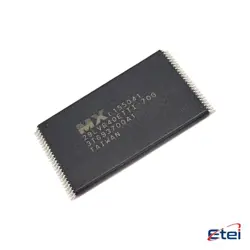
Imagens apenas para referência
PIC16F886-E/SS
+Lista de MateriaisIC MCU 8BIT 14KB FLASH 28SSOP
-
FabricanteTecnologia Microchip
-
Peça do Fabricante #PIC16F886-E/SS
-
Ficha Técnica PIC16F886-E/SS DataSheet
-
Pacote SSOP-28
-
Em Estoque4610
365 Garantia de Qualidade em 1 dia
7*24 Garantia de serviço em 24 horas
90-Garantia de pós-venda em 1 dia
Garantia de Produto Genuíno
Especificações
| Atributo | Valor |
| Package / Case | Tube |
| Series | PIC® 16F |
| Part Status | Active |
| Core Processor | PIC |
| Core Size | 8-Bit |
| Speed | 20MHz |
| Connectivity | I²C, SPI, UART/USART |
| Peripherals | Brown-out Detect/Reset, POR, PWM, WDT |
| Number of I/O | 24 |
| Program Memory Size | 14KB (8K x 14) |
| Program Memory Type | FLASH |
| EEPROM Size | 256 x 8 |
| RAM Size | 368 x 8 |
| Voltage - Supply (Vcc/Vdd) | 2V ~ 5.5V |
| Data Converters | A/D 11x10b |
| Oscillator Type | Internal |
| Operating Temperature | -40°C ~ 125°C (TA) |
| Mounting Type | Surface Mount |
Visão Geral
Description
Key features include 256 bytes of EEPROM, 368 bytes of RAM, and 14 KB of Flash memory, which facilitate various data storage and program needs. It supports 35 I/O pins, enhancing flexibility for interfacing with other components. The microcontroller offers a range of integrated peripherals such as Analog-to-Digital Converter (ADC), comparators, and serial communication interfaces like SPI, I2C, and USART, making it suitable for diverse applications.
Low-power consumption modes, nanoWatt technology, and a wide operating voltage range of 2.0V to 5.5V make it ideal for battery-operated devices. The PIC16F886-E/SS is commonly used in consumer electronics, industrial automation, and automotive applications due to its reliability and extensive support ecosystem.
Equivalent
1. Microchip PIC16F887 - Offers similar features with more I/O pins.
2. Microchip PIC16F877A - Provides similar functionality, commonly used in similar applications.
3. Atmel ATmega328P - Comparable 8-bit microcontroller used in various embedded applications.
4. NXP LPC11U24 - ARM Cortex-M0 based, offering more processing power.
5. STMicroelectronics STM32F030 - ARM Cortex-M0, suitable for low-power applications.
Always verify pin compatibility and specifications for precise replacements.
Features
1. Core and Performance:
- 8-bit, running at up to 20 MHz.
- RISC architecture with 35 single-word instructions.
2. Memory:
- 14 KB of Flash memory.
- 368 bytes of RAM.
- 256 bytes of EEPROM.
3. I/O and Peripherals:
- 24 I/O pins.
- Enhanced Capture/Compare/PWM (CCP) modules.
- 10-bit Analog-to-Digital Converter (ADC) with 11 channels.
- Synchronous Serial Port module supporting SPI and I2C.
- Universal Synchronous Asynchronous Receiver Transmitter (USART).
4. Timers:
- Three timers: Timer0 (8-bit), Timer1 (16-bit), Timer2 (8-bit).
5. Additional Features:
- In-Circuit Debugging (ICD) support.
- Operating voltage range: 2.0V to 5.5V.
- Low-power features, including multiple sleep modes and Watchdog Timer.
These features make it suitable for a wide range of applications, including consumer electronics, industrial control, and embedded systems.
Pinout
Key features include:
1. Core Features:
- Operating speed up to 20 MHz.
- Flash Program Memory of 14KB.
- RAM of 368 Bytes.
- EEPROM of 256 Bytes.
2. I/O Ports:
- 25 general-purpose I/O pins.
3. Peripherals:
- 2 Comparators.
- 11-channel 10-bit ADC.
- Enhanced Universal Synchronous Asynchronous Receiver Transmitter (EUSART).
- Master Synchronous Serial Port (MSSP) with SPI and I²C.
- Capture/Compare/PWM (CCP) modules.
4. Timers:
- Three timers (Timer0, Timer1, Timer2).
5. Power Features:
- Operating voltage range from 2.0V to 5.5V.
- Enhanced Low-Power Sleep mode.
These features make it suitable for embedded control applications and small-scale automation projects.
Manufacturer
Application
1. Automotive: Used in control systems and sensors due to its reliability and robustness.
2. Consumer Electronics: Powers devices like remote controls, small appliances, and gaming peripherals.
3. Industrial Automation: Deployed in process control, monitoring systems, and motor control.
4. Home Automation: Integrates into smart home devices for automation and control.
5. Lighting: Manages LED drivers and lighting control systems.
6. Medical Devices: Utilized in portable medical instruments and diagnostic tools.
7. Communication: Supports RF applications and wireless communication modules.
These applications leverage its features like low power consumption, rich peripheral set, and ease of programming.