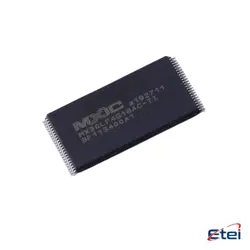
Imagens apenas para referência
PIC18F6722-I/PT
+Lista de MateriaisIC MCU 8BIT 128KB FLASH 64TQFP
-
FabricanteTecnologia Microchip
-
Peça do Fabricante #PIC18F6722-I/PT
-
Ficha Técnica PIC18F6722-I/PT DataSheet
-
Pacote TQFP-64
-
Em Estoque1204
365 Garantia de Qualidade em 1 dia
7*24 Garantia de serviço em 24 horas
90-Garantia de pós-venda em 1 dia
Garantia de Produto Genuíno
Especificações
| Atributo | Valor |
| Package | Tray |
| Series | PIC® 18F |
| ProductStatus | Active |
| CoreProcessor | PIC |
| CoreSize | 8-Bit |
| Speed | 40MHz |
| Connectivity | I²C, SPI, UART/USART |
| Peripherals | Brown-out Detect/Reset, HLVD, POR, PWM, WDT |
| NumberofI/O | 54 |
| ProgramMemorySize | 128KB (64K x 16) |
| ProgramMemoryType | FLASH |
| EEPROMSize | 1K x 8 |
| RAMSize | 3.8K x 8 |
| Voltage-Supply(Vcc/Vdd) | 4.2V ~ 5.5V |
| DataConverters | A/D 12x10b |
| OscillatorType | Internal |
| OperatingTemperature | -40°C ~ 85°C (TA) |
| MountingType | Surface Mount |
| Package/Case | 64-TQFP |
Visão Geral
Description
Key features include an enhanced instruction set, a 10-bit A/D converter, multiple timers, PWM modules, and a rich set of I/O ports, making it suitable for applications requiring precise control and interfacing. The microcontroller supports C and assembly language programming, facilitating straightforward coding and debugging using Microchip’s MPLAB X IDE and XC8 compiler.
Its power management features include nanoWatt technology, which ensures efficient energy usage, making it ideal for battery-powered applications. The device is packaged in a 64-pin TQFP (Thin Quad Flat Package), suitable for compact design requirements.
Overall, the PIC18F6722-I/PT is a versatile choice for developers seeking robust performance, extensive interfaces, and low power consumption in their embedded systems projects.
Equivalent
Features
1. CPU Architecture: 8-bit PIC18 microcontroller.
2. Operating Frequency: Up to 40 MHz.
3. Program Memory: 128 KB of Flash memory for code storage.
4. Data Memory: 3,936 bytes of SRAM.
5. EEPROM: 1 KB for non-volatile data storage.
6. I/O Ports: 53 programmable I/O pins for versatile connectivity.
7. Timers: Four 8-bit and three 16-bit timers for accurate event timing.
8. A/D Converter: 10-bit with up to 16 channels for analog signal conversion.
9. Communication Interfaces: Includes EUSART, I2C, and SPI for serial communication.
10. Enhanced Flash Memory: Allows for self-reprogrammable operation.
11. Power Management: Features power-saving modes like Idle and Sleep.
12. Operating Voltage: 2.0V to 5.5V, suitable for a wide range of applications.
13. Package: Offered in TQFP (Thin Quad Flat Package) with 64 pins.
These features make it suitable for complex applications requiring robust processing capabilities and versatile interfacing.
Pinout
Key functions and features include:
- Core Features: 8-bit CPU, operating speed of up to 40 MHz.
- Memory: 128 KB of flash program memory, 3936 bytes of RAM, and 1024 bytes of EEPROM.
- I/O Ports: Multiple I/O ports offering flexible digital and analog input/output options.
- Timers: Various 8-bit and 16-bit timers for precise control and timing applications.
- Communication Interfaces: Includes SPI, I²C, and USART for robust communication options.
- Analog Features: 10-bit A/D Converter with multiple channels for analog signal processing.
- PWM: Supports Pulse Width Modulation for controlling motors and other applications.
- Enhanced Power Management: Various power-saving modes and wake-up options.
This microcontroller is suitable for a wide range of applications including industrial automation, consumer electronics, and automotive systems, offering comprehensive peripheral features coupled with high processing efficiency.
Manufacturer
Application
1. Industrial Automation: Control systems, motor control, and industrial device interfaces.
2. Consumer Electronics: Home appliances and personal gadgets requiring reliable embedded control.
3. Automotive Systems: Engine control units, lighting systems, and infotainment management.
4. Medical Devices: Portable medical instruments and health monitoring systems.
5. Communication Equipment: Wireless communication modules and protocol converters.
6. Data Acquisition Systems: Sensors and data logging for environmental and laboratory purposes.
Its robust feature set supports complex control tasks, making it versatile for various embedded system applications.