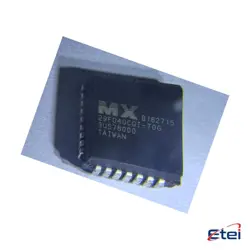
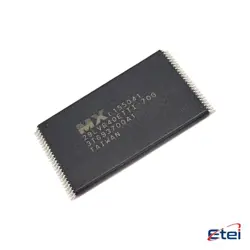
Imagens apenas para referência
S29GL256S90TFI020
+Lista de MateriaisIC FLASH 256MBIT PARALLEL 56TSOP
-
FabricanteCypress Semiconductor Corp
-
Peça do Fabricante #S29GL256S90TFI020
-
Pacote TSOP-56
-
Em Estoque2555
365 Garantia de Qualidade em 1 dia
7*24 Garantia de serviço em 24 horas
90-Garantia de pós-venda em 1 dia
Garantia de Produto Genuíno
Especificações
| Atributo | Valor |
| Package / Case | Bulk,Tray,Tray |
| Series | GL-S |
| Part Status | Active |
| Memory Type | Non-Volatile |
| Memory Format | FLASH |
| Technology | FLASH - NOR |
| Memory Size | 256Mb (16M x 16) |
| Memory Interface | Parallel |
| Write Cycle Time - Word Page | 60ns |
| Access Time | 90 ns |
| Voltage - Supply | 2.7V ~ 3.6V |
| Operating Temperature | -40°C ~ 85°C (TA) |
| Mounting Type | Surface Mount |
Visão Geral
Description
Key features of the S29GL256S90TFI020 include a density of 256 megabits, organized as 16 megabytes or 16M x 16 bits, and a 90 ns access time, which facilitates quick read operations. The "TFI020" in the part number indicates its package type and temperature range, whereas "S90" denotes the 90 ns speed grade. It operates on a single 3-volt power supply, making it suitable for low-power applications.
The device supports various interfaces, including Common Flash Interface (CFI) and provides data protection features like hardware reset, write protection, and sector locking. It's commonly used in applications like embedded systems, automotive electronics, and industrial equipment due to its robust performance and non-volatile storage capabilities.
Equivalent
1. Micron MT28EW256ABA: A 256 Mbit NOR Flash with similar voltage and interface.
2. Winbond W29GL256S: Offers similar features and specifications.
3. Macronix MX29GL256: Another comparable 256 Mbit NOR Flash option.
4. Adesto AT25F512B: Provides similar functionalities in NOR Flash memory.
Always verify detailed specifications for compatibility.
Features
1. Density: 256 Megabits (32 Megabytes).
2. Architecture: Features a uniform 64-KB sector architecture, allowing for efficient memory storage and management.
3. Interface: Supports a parallel NOR interface, ensuring fast data access and retrieval.
4. Voltage Range: Operates at a single 3.0-volt power supply for read, erase, and program operations, optimizing power efficiency.
5. Performance: Offers a 90 ns access time, enabling quick data access.
6. Erase/Program Cycles: Provides reliable endurance with a minimum of 100,000 program/erase cycles per sector.
7. Data Retention: Guarantees data retention for at least 20 years.
8. Security: Includes a hardware reset pin, WP#/ACC, and SecSi Sector for secure operations.
9. Temperature Range: Designed to operate within an industrial temperature range of -40°C to 85°C.
10. Packaging: Available in a 48-ball Fine-pitch BGA package for compact applications.
These features make it suitable for embedded systems, networking, and automotive applications where reliable non-volatile storage is essential.
Pinout
The primary functions of the pins include:
1. Address Pins: Used for selecting the memory address. Typically, these are denoted as A0-A23.
2. Data Pins: Used for input and output data operations, usually labeled DQ0-DQ15.
3. Control Pins: These include Chip Enable (CE#), Output Enable (OE#), Write Enable (WE#), and Reset (RESET#) which manage read, write, and reset operations.
4. Power and Ground Pins: VCC and VSS are used for power supply and grounding.
5. Special Function Pins: Includes pins for WP# (Write Protect), RY/BY# (Ready/Busy), and other advanced operations.
These pins work together to perform read, write, and erase operations on the memory, making it suitable for applications requiring reliable, non-volatile storage.
Manufacturer
Application
1. Embedded Systems: Used in microcontrollers for firmware storage and real-time data processing.
2. Consumer Electronics: Employed in devices like TVs, cameras, and gaming consoles for software updates and boot code.
3. Automotive: Utilized in infotainment systems and various electronic control units for storing code and data.
4. Industrial: Applied in control systems and automation equipment for robust data storage.
5. Networking Equipment: Used in routers and switches for configuration and system software storage.
These applications benefit from the chip's high-speed read/write capabilities and data retention features.