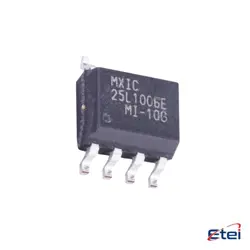
Imagens apenas para referência
SI4432-B1-FMR
+Lista de MateriaisIC RF TXRX ISM<1GHZ 20VFQFN
-
FabricanteLaboratórios de Silício
-
Peça do Fabricante #SI4432-B1-FMR
-
Pacote VFQFN-20
-
Em Estoque3251
365 Garantia de Qualidade em 1 dia
7*24 Garantia de serviço em 24 horas
90-Garantia de pós-venda em 1 dia
Garantia de Produto Genuíno
Especificações
| Atributo | Valor |
| Package / Case | Tape & Reel (TR) |
| Part Status | Not For New Designs |
| Type | TxRx Only |
| RF Family / Standard | General ISM < 1GHz |
| Modulation | FSK, GFSK, OOK |
| Frequency | 240MHz ~ 930MHz |
| Data Rate (Max) | 256kbps |
| Power - Output | 20dBm (Max) |
| Sensitivity | -121dBm |
| Serial Interfaces | SPI |
| GPIO | 3 |
| Voltage - Supply | 1.8V ~ 3.6V |
| Current - Receiving | 18.5mA |
| Current - Transmitting | 85mA |
| Operating Temperature | -40°C ~ 85°C |
| Mounting Type | Surface Mount |
Visão Geral
Description
Key features include a high receiver sensitivity of up to -121 dBm, output power up to +20 dBm, and a low current consumption, which makes it ideal for battery-powered devices. The SI4432-B1-FMR supports data rates from 0.1 to 256 kbps and includes built-in features like automatic packet handling, preamble detection, and CRC checking, enhancing communication reliability.
Additionally, the module offers frequency hopping, automatic frequency control, and a wake-up timer to further optimize power usage. The SI4432-B1-FMR is typically used in applications where reliable long-range RF communication is essential, and its compact design allows for easy integration into existing systems.
Equivalent
1. CC1101 by Texas Instruments - A low-cost, sub-1 GHz transceiver.
2. nRF905 by Nordic Semiconductor - A multi-frequency transceiver.
3. RFM69 by HopeRF - A versatile RF transceiver in the sub-GHz range.
4. SX1231 by Semtech - A low-power, sub-GHz transceiver.
These alternatives offer similar functionalities and can be used for wireless communication applications. Always check the specific frequency, modulation, and power requirements for compatibility.
Features
1. Frequency Range: Operates on a wide frequency range from 240 MHz to 930 MHz, covering multiple ISM bands.
2. Modulation Techniques: Supports FSK, GFSK, and OOK modulation schemes for flexible communication options.
3. Data Rates: Capable of data rates from 0.123 to 256 kbps, accommodating various data throughput requirements.
4. Output Power: Provides a programmable output power range from -20 dBm to +20 dBm, allowing for effective range management.
5. Sensitivity: Features excellent receiver sensitivity down to -121 dBm, enhancing long-range communication capabilities.
6. Low Power Consumption: Designed with low power operation in mind, offering extended battery life in portable applications.
7. Built-in Features: Includes a 64-byte FIFO, automatic packet handling, preamble detection, and CRC computation for robust data integrity.
8. Interfaces: Communicates via a standard SPI interface for seamless integration with microcontrollers.
These features make the SI4432-B1-FMR suitable for various wireless applications, including remote controls, security systems, and sensor networks.
Pinout
The SI4432-B1-FMR is housed in a compact 20-pin QFN (Quad Flat No-leads) package. Here is a concise breakdown of its pin functions:
1. GND (Ground): Multiple pins for ground connection.
2. VDD (Supply Voltage): Pins for power supply.
3. RFIO (RF Input/Output): Pins for RF signal input/output.
4. GPIO (General Purpose I/O): Configurable pins for various input/output functions.
5. SCLK (Serial Clock): Used for clock input for SPI communication.
6. SDI (Serial Data In): Data input line for SPI.
7. SDO (Serial Data Out): Data output line for SPI.
8. nSEL (Chip Select): Used to select the device for SPI communication.
9. nIRQ (Interrupt Request): Provides interrupt from the device to the host.
10. ANT (Antenna): Connection for the antenna.
These pins facilitate various communication and control functionalities, making the SI4432-B1-FMR suitable for diverse wireless applications.
Manufacturer
Application
1. Industrial Automation: Facilitates wireless communication for remote control and monitoring systems.
2. Home Automation: Powers smart home devices by enabling wireless connectivity.
3. Remote Keyless Entry (RKE): Used in automotive systems for keyless entry and remote start features.
4. Security Systems: Enhances wireless communication in alarm and security monitoring systems.
5. Telemetry Systems: Supports data transmission in remote monitoring and control applications.
6. Wireless Sensor Networks: Ideal for connecting various sensor devices in a network.
These applications benefit from its long-range communication capabilities, low power consumption, and high data rate features.