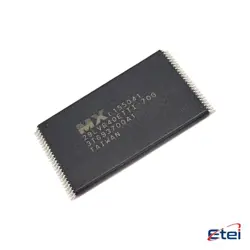
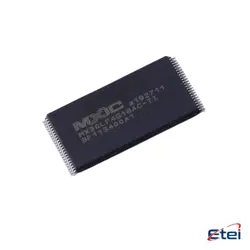
Imagens apenas para referência
SI4455-C2A-GMR
+Lista de MateriaisIC RF TXRX ISM<1GHZ 20VFQFN
-
FabricanteLaboratórios de Silício
-
Peça do Fabricante #SI4455-C2A-GMR
-
Ficha Técnica SI4455-C2A-GMR DataSheet
-
Pacote QFN-20
-
Em Estoque4391
365 Garantia de Qualidade em 1 dia
7*24 Garantia de serviço em 24 horas
90-Garantia de pós-venda em 1 dia
Garantia de Produto Genuíno
Especificações
| Atributo | Valor |
| Package / Case | Tape & Reel (TR),Cut Tape (CT) |
| Part Status | Active |
| Type | TxRx Only |
| RF Family / Standard | General ISM < 1GHz |
| Modulation | FSK, GFSK, OOK |
| Frequency | 284MHz ~ 960MHz |
| Data Rate (Max) | 500kbps |
| Power - Output | 13dBm |
| Sensitivity | -115dBm |
| Serial Interfaces | SPI |
| GPIO | 4 |
| Voltage - Supply | 1.8V ~ 3.6V |
| Current - Receiving | 10.9mA |
| Current - Transmitting | 19mA ~ 24mA |
| Operating Temperature | -40°C ~ 85°C |
| Mounting Type | Surface Mount |
Visão Geral
Description
Key features of the SI4455-C2A-GMR include high sensitivity, which enhances signal reception, and a high level of selectivity, which minimizes interference from other channels. The transceiver supports a wide range of modulation formats, facilitating versatile application integration. It also includes advanced features such as a built-in packet handling engine, a low-power sleep mode, and a wake-up timer to optimize power management.
The device is often used in applications like remote control systems, home automation, industrial monitoring, and security systems, where reliable, long-range communication is necessary. Its compact design and robust performance make it a popular choice for developers looking to implement efficient and effective wireless communication solutions.
Equivalent
Features
1. Frequency Range: Supports operation in the 119–1050 MHz range, making it suitable for various regional ISM bands.
2. Output Power: Offers configurable output power up to +13 dBm, enabling robust communication over longer distances.
3. Sensitivity: High receiver sensitivity down to -126 dBm, ensuring reliable data reception in challenging environments.
4. Low Power Consumption: Optimized for low-energy operation, suitable for battery-powered applications like remote sensors and IoT devices.
5. Modulation: Supports multiple modulation schemes, including FSK, GFSK, and OOK, providing flexibility for different communication needs.
6. Data Rate: Capable of data rates from 100 bps to 1 Mbps, accommodating various throughput requirements.
7. Packet Handling: Integrated packet handling and preamble detection for streamlined communication and reduced microcontroller overhead.
8. Interface: Utilizes a simple SPI interface for easy integration with host microcontrollers.
9. Temperature Range: Operates within -40°C to +85°C, suitable for diverse applications and environmental conditions.
These features make the SI4455-C2A-GMR a versatile choice for a wide range of wireless communication applications.
Pinout
The SI4455-C2A-GMR comes in a 20-pin QFN (Quad Flat No-leads) package. Key functions of the device include:
1. Transmitter and Receiver Functions: It can operate as both a transmitter and receiver, supporting bidirectional communication.
2. Frequency Range: It supports a frequency range from 119 MHz to 1050 MHz, covering various sub-GHz bands.
3. Modulation Techniques: The device supports multiple modulation schemes such as FSK, GFSK, and OOK.
4. Low Power Consumption: It is optimized for low power usage, which is ideal for battery-operated devices.
5. Flexible Data Rate: It offers a configurable data rate up to 1 Mbps.
6. Enhanced Range and Performance: Features like PA (Power Amplifier) and LNA (Low Noise Amplifier) enhance signal range and performance.
The SI4455-C2A-GMR is widely used in wireless sensor networks, home automation, and industrial control applications.
Manufacturer
Application
1. Remote Controls: Utilized in consumer electronics for wireless control systems.
2. Home Automation: Used in smart home devices for wireless communication.
3. Security Systems: Employed in wireless alarms and monitoring systems.
4. Sensor Networks: Ideal for data transmission in environmental monitoring.
5. Industrial Automation: Facilitates wireless communication in control systems.
6. Health Monitoring: Used in wearable devices for transmitting health data.
7. Telemetry Systems: Employed in remote data collection applications.
These applications benefit from the transceiver’s robust communication capabilities and efficient energy usage.