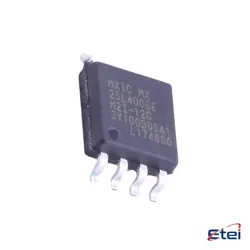
Imagens apenas para referência
SN65HVD230QDR
+Lista de MateriaisIC TRANSCEIVER HALF 1/1 8SOIC
-
FabricanteTexas Instruments
-
Peça do Fabricante #SN65HVD230QDR
-
Pacote SOIC-8
-
Em Estoque5316
365 Garantia de Qualidade em 1 dia
7*24 Garantia de serviço em 24 horas
90-Garantia de pós-venda em 1 dia
Garantia de Produto Genuíno
Especificações
| Atributo | Valor |
| Package | Tape & Reel (TR),Cut Tape (CT),Bulk |
| ProductStatus | Active |
| Type | Transceiver |
| Protocol | CANbus |
| NumberofDrivers/Receivers | 1/1 |
| Duplex | Half |
| ReceiverHysteresis | 100 mV |
| DataRate | 1Mbps |
| Voltage-Supply | 3V ~ 3.6V |
| OperatingTemperature | -40°C ~ 85°C |
| MountingType | Surface Mount |
| Package/Case | 8-SOIC (0.154, 3.90mm Width) |
Visão Geral
Description
Key features of the SN65HVD230QDR include a wide operational voltage range from 3.3V to 5V, thermal shutdown protection, and short circuit protection. It also offers low power consumption with a low-current standby mode, making it suitable for battery-powered applications. The device is compliant with the ISO 11898 standard, ensuring reliable performance in demanding conditions.
The SN65HVD230QDR comes in an SOIC (Small Outline Integrated Circuit) package, making it easy to integrate into existing designs. Its high level of electrostatic discharge (ESD) protection makes it resilient against electrical transients, further enhancing its reliability for critical communication tasks in various systems.
Equivalent
1. TJA1040 by NXP
2. MCP2551 by Microchip
3. MAX3051 by Maxim Integrated
4. ADM3053 by Analog Devices
5. PCA82C250 by NXP
These alternatives vary in features like data rate, operating voltage, and packaging, so it's essential to verify compatibility with your specific application requirements.
Features
1. Voltage Range: Operates over a wide supply voltage range from 3.3V to 5V, making it flexible for various systems.
2. High Speed: Supports data rates up to 1 Mbps, suitable for high-speed network requirements.
3. Low Power Consumption: Features low current standby and sleep modes to conserve power.
4. Robustness: Exhibits high electromagnetic compatibility and interference protection, ensuring reliable communication in harsh environments.
5. Thermal Protection: Includes thermal shutdown protection to prevent damage from overheating.
6. Bus Fault Protection: Provides protection against bus shorts and faults up to ±36V.
7. Wide Temperature Range: Operates efficiently over an extended temperature range, making it suitable for both industrial and automotive environments.
8. Pin Compatibility: Compatible with other industry-standard CAN transceivers, facilitating easy integration into existing systems.
9. ESD Protection: Features high Electrostatic Discharge (ESD) protection on all pins for increased durability.
Overall, the SN65HVD230QDR is designed for reliable performance in demanding applications.
Pinout
1. VCC (Pin 1): Power supply input, typically 3.3V.
2. GND (Pin 2): Ground reference for the device.
3. D (Pin 3): Data input from the microcontroller, used to send data to the CAN bus.
4. R (Pin 4): Data output to the microcontroller, used to receive data from the CAN bus.
5. Vref (Pin 5): Reference voltage output, typically half of VCC, used for setting logic thresholds.
6. CANL (Pin 6): Low-level CAN bus line, used for differential signaling on the CAN bus.
7. CANH (Pin 7): High-level CAN bus line, used for differential signaling on the CAN bus.
8. RS (Pin 8): Slope control and standby mode input, used to control the slew rate and power consumption.
This transceiver supports data rates up to 1 Mbps and provides differential signaling for robust communication.
Manufacturer
Application
1. Automotive Systems: Facilitates communication in automotive networks such as powertrain, body electronics, and infotainment systems.
2. Industrial Automation: Used in factory automation and control systems for reliable communication between sensors, actuators, and controllers.
3. Building Automation: Implements communication in building management systems for HVAC, lighting, and security controls.
4. Medical Equipment: Ensures robust data communication in medical devices and equipment.
5. Embedded Systems: Used in embedded applications requiring CAN bus communication for efficient data transfer.
These applications leverage the transceiver's high-speed communication, robustness, and noise immunity.