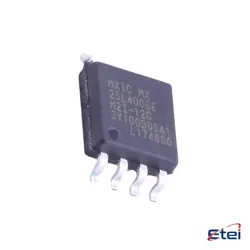
Imagens apenas para referência
SN74HC153PWR
+Lista de MateriaisIC MULTIPLEXER 2 X 4:1 16TSSOP
-
FabricanteTexas Instruments
-
Peça do Fabricante #SN74HC153PWR
-
Pacote TSSOP-16
-
Em Estoque1866
365 Garantia de Qualidade em 1 dia
7*24 Garantia de serviço em 24 horas
90-Garantia de pós-venda em 1 dia
Garantia de Produto Genuíno
Especificações
| Atributo | Valor |
| Package / Case | Tape & Reel (TR),Cut Tape (CT) |
| Series | 74HC |
| Part Status | Active |
| Type | Multiplexer |
| Circuit | 2 x 4:1 |
| Independent Circuits | 1 |
| Current - Output High Low | 7.8mA, 7.8mA |
| Voltage Supply Source | Single Supply |
| Voltage - Supply | 2V ~ 6V |
| Operating Temperature | -40°C ~ 85°C |
| Mounting Type | Surface Mount |
Visão Geral
Description
Key features include:
1. Dual Multiplexers: Two independent 4-to-1 multiplexers in a single package.
2. Wide Voltage Range: Compatible with 2V to 6V power supplies.
3. Fast Switching: Offers fast transition times suitable for high-speed applications.
4. Low Power Consumption: Optimized for minimal power usage.
5. Compact Package: Available in a TSSOP-16 package, which is suitable for space-constrained applications.
This IC is commonly used in applications involving data routing, signal selection, and logic function implementation. It is ideal for both industrial and consumer electronics due to its versatility and efficiency.
Equivalent
1. NXP 74HC153 - Similar function and pin configuration.
2. ON Semiconductor MC74HC153 - Matches functionality and performance.
3. Microchip Technology 74HC153 - Offers comparable features.
4. Fairchild Semiconductor 74HC153 - Similar specifications.
These alternatives provide the same basic functionality and are usually available in various package types. Always check specific datasheets for compatibility in your application.
Features
1. Logic Configuration: Dual 4-input multiplexers, allowing the selection of one of four data inputs per channel.
2. Voltage Range: Operates with a voltage supply range from 2V to 6V.
3. High-Speed Operation: Capable of high-speed signal processing, making it suitable for fast data routing applications.
4. Low Power Consumption: Features low power dissipation, which is typical of CMOS technology.
5. TTL Compatibility: Input levels are compatible with standard TTL logic levels, enhancing its versatility in mixed-signal environments.
6. Output Drive: Can drive up to 10 LSTTL loads, allowing for sufficient output driving capability.
7. Package Type: Available in TSSOP (Thin Shrink Small Outline Package) which is compact for space-constrained designs.
8. Temperature Range: Operates in the standard temperature range of -40°C to 85°C, suitable for both industrial and commercial applications.
These features make the SN74HC153PWR a versatile and efficient choice for digital applications requiring high-speed data selection and routing.
Pinout
1. Pin 1 (1C3): Data input for multiplexer 1.
2. Pin 2 (1C2): Data input for multiplexer 1.
3. Pin 3 (1C1): Data input for multiplexer 1.
4. Pin 4 (1C0): Data input for multiplexer 1.
5. Pin 5 (1Y): Multiplexer 1 output.
6. Pin 6 (1G): Active low enable input for multiplexer 1.
7. Pin 7 (B): Select input for both multiplexers.
8. Pin 8 (GND): Ground.
9. Pin 9 (A): Select input for both multiplexers.
10. Pin 10 (2G): Active low enable input for multiplexer 2.
11. Pin 11 (2Y): Multiplexer 2 output.
12. Pin 12 (2C0): Data input for multiplexer 2.
13. Pin 13 (2C1): Data input for multiplexer 2.
14. Pin 14 (2C2): Data input for multiplexer 2.
15. Pin 15 (2C3): Data input for multiplexer 2.
16. Pin 16 (VCC): Supply voltage.
This chip allows selection of one of four data inputs for each of the two multiplexers, controlled by common select lines A and B.
Manufacturer
Application
1. Data Routing: Used in digital circuits for directing data from multiple sources to a single output line.
2. Signal Multiplexing: Combines multiple signals into one for efficient data management in communication systems and data acquisition.
3. Logic Design: Aids in implementing complex logic functions by selecting between different input variables.
4. Microcontroller Interfacing: Interfaces with microcontrollers to expand I/O capabilities or manage peripheral devices.
5. Embedded Systems: Utilized in embedded systems for resource optimization and complex signal control.
6. Control Systems: Facilitates decision-making processes by selecting control signals based on input conditions.
These applications leverage the IC's ability to efficiently manage multiple data inputs with minimal external components.