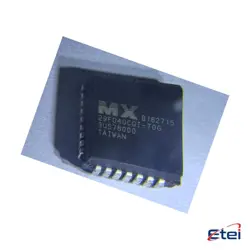
Imagens apenas para referência
ST25R3920-AQWT
+Lista de MateriaisNFC / HF RFID READER IC
-
FabricanteSTMicroeletrônica
-
Peça do Fabricante #ST25R3920-AQWT
-
Pacote VFQFPN-32
-
Em Estoque5522
365 Garantia de Qualidade em 1 dia
7*24 Garantia de serviço em 24 horas
90-Garantia de pós-venda em 1 dia
Garantia de Produto Genuíno
Especificações
| Atributo | Valor |
| Package / Case | Tape & Reel (TR),Cut Tape (CT) |
| Series | Automotive, AEC-Q100, ST25R |
| Part Status | Active |
| Type | RFID Reader/Transponder |
| Frequency | 13.56MHz |
| Standards | FeliCa, ISO 14443, ISO 15693, MIFARE, NFC |
| Interface | I²C, SPI |
| Voltage - Supply | 1.65V ~ 5.5V |
| Operating Temperature | -40°C ~ 105°C |
| Mounting Type | Surface Mount, Wettable Flank |
Visão Geral
Description
The ST25R3920-AQWT includes an integrated power amplifier, which enables high output power for extended reading range, and offers low power operation modes to conserve energy. Its fast RF response time and advanced demodulation and decoding capabilities make it suitable for applications requiring rapid and accurate data processing.
Typical use cases for the ST25R3920-AQWT include point-of-sale terminals, access control systems, industrial automation, and other contactless identification systems. With its robust design and comprehensive feature set, it provides developers with a reliable solution for implementing NFC and RFID functionalities in a range of devices and systems.
Equivalent
1. NXP PN5180: A full NFC front-end IC with high RF performance.
2. TI TRF7970A: A multi-standard fully integrated 13.56-MHz RFID/NFC transceiver IC.
3. NXP PN532: An NFC controller with integrated firmware.
4. Broadcom BCM20795: NFC controller supporting multiple NFC standards.
These alternatives offer similar functionality for NFC applications, but specific features and compatibility should be verified based on project requirements.
Features
1. High Sensitivity and Output Power: It offers high sensitivity and strong output power, enabling reliable communication even in challenging environments.
2. Automatic Antenna Tuning: The device features automatic antenna tuning (AAT) for optimal performance without manual adjustments, enhancing ease of use and flexibility.
3. Dynamic Power Output: Its dynamic power output control ensures efficient energy usage and prolonged battery life in portable applications.
4. Low Power Modes: It supports low power modes, including a low power card detection mode, to reduce energy consumption when the device is not actively communicating.
5. Multiple Protocols: The IC supports multiple NFC protocols, including ISO/IEC 14443 A/B, ISO/IEC 15693, and FeliCa™, ensuring compatibility with a wide range of NFC tags and devices.
6. EMVCo and NFC Forum Compliance: It complies with EMVCo and NFC Forum standards, ensuring interoperability with payment and identification systems.
These features make the ST25R3920-AQWT ideal for applications ranging from payment terminals to industrial and consumer electronics.
Pinout
Key functions of the ST25R3920 include:
1. NFC Reader Functionality: It supports various NFC protocols, including ISO14443A/B, ISO15693, FeliCa, and NFC Forum Type 1 to 5 tags.
2. High Output Power: Capable of delivering up to 1.4W to the antenna, making it suitable for applications needing a strong RF field.
3. Dynamic Power Output: Adapts power based on the distance to the NFC target, optimizing power consumption and performance.
4. Low-Power Capacitive Wake-Up: Detects the presence of NFC cards or devices while consuming minimal power.
5. Automatic Antenna Tuning: Ensures optimal performance by adjusting to changes in the antenna environment.
6. SPI/I2C Interfaces: Facilitates easy integration with microcontrollers or processors for data communication.
These features make the ST25R3920-AQWT ideal for applications like payment terminals, access control systems, and other NFC-enabled devices.
Manufacturer
Application
1. Payment Systems: Used in point-of-sale terminals for contactless payments.
2. Access Control: Employed in secure entry systems for buildings or transport.
3. Industrial Automation: Facilitates communication between devices in automated systems.
4. Consumer Electronics: Integrated into devices for NFC-based pairing and data exchange.
5. Medical Equipment: Supports secure data transfer and equipment identification.
6. IoT Devices: Enables connectivity and data exchange in Internet of Things applications.
Its robust design, with EMI (Electromagnetic Interference) resistance and high output power, makes it suitable for a wide range of NFC applications.