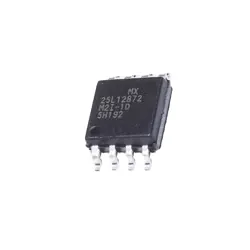
Imagens apenas para referência
STM32F410RBT6
+Lista de MateriaisIC MCU 32BIT 128KB FLASH 64LQFP
-
FabricanteSTMicroeletrônica
-
Peça do Fabricante #STM32F410RBT6
-
Ficha Técnica STM32F410RBT6 DataSheet
-
Pacote LQFP-64
-
Em Estoque2552
365 Garantia de Qualidade em 1 dia
7*24 Garantia de serviço em 24 horas
90-Garantia de pós-venda em 1 dia
Garantia de Produto Genuíno
Especificações
| Atributo | Valor |
| Package | Tray |
| Series | STM32F4 |
| ProductStatus | Active |
| CoreProcessor | ARM® Cortex®-M4 |
| CoreSize | 32-Bit Single-Core |
| Speed | 100MHz |
| Connectivity | I²C, IrDA, LINbus, SPI, UART/USART |
| Peripherals | Brown-out Detect/Reset, DMA, I²S, POR, PWM, WDT |
| NumberofI/O | 50 |
| ProgramMemorySize | 128KB (128K x 8) |
| ProgramMemoryType | FLASH |
| RAMSize | 32K x 8 |
| Voltage-Supply(Vcc/Vdd) | 1.7V ~ 3.6V |
| DataConverters | A/D 16x12b; D/A 1x12b |
| OscillatorType | Internal |
| OperatingTemperature | -40°C ~ 85°C (TA) |
| MountingType | Surface Mount |
| Package/Case | 64-LQFP |
Visão Geral
Description
Key peripherals and features include multiple communication interfaces such as USART, SPI, and I2C, and it also supports USB 2.0. The microcontroller is equipped with general-purpose timers, advanced timers, and a PWM timer, providing versatile options for timing and control applications. It includes a 12-bit ADC for analog signal processing and digital interfaces like GPIOs for connectivity.
The STM32F410RBT6 operates on a voltage range of 1.7 to 3.6 V, offering efficient power management with low-power modes to extend battery life in portable devices. Its compact LQFP-64 package makes it suitable for space-constrained designs. The device is supported by the STM32 development ecosystem, including the STM32CubeMX for configuration and STM32CubeIDE for development.
Equivalent
1. NXP MK20DX256VLH7(ARM Cortex-M4)
2. Texas Instruments TM4C123GH6PM (ARM Cortex-M4)
3. Microchip ATSAMD51J19A (ARM Cortex-M4)
4. Cypress CY8C4248LQI-BL583 (ARM Cortex-M4)
5. Renesas RA4M1 (ARM Cortex-M4)
These alternatives offer similar core performance and peripheral features, but specific requirements should be checked against datasheets for compatibility.
Features
1. Core: ARM Cortex-M4 with FPU (Floating Point Unit).
2. Clock: Up to 100 MHz.
3. Memory: 128 KB Flash, 32 KB SRAM.
4. Timers: Includes general-purpose timers, basic timers, and a PWM timer.
5. Communication Interfaces:
- SPI (Serial Peripheral Interface)
- I2C (Inter-Integrated Circuit)
- USART (Universal Synchronous/Asynchronous Receiver-Transmitter)
6. ADC: 12-bit ADC.
7. GPIO: Configurable general-purpose I/O ports.
8. Operating Voltage: 1.8V to 3.6V.
9. Low Power: Multiple low-power modes for energy efficiency.
10. Package: LQFP-64.
This microcontroller is suitable for various applications, including consumer electronics, industrial control, and data acquisition, balancing performance with power efficiency.
Pinout
Key functions and features include:
- A 32-bit ARM Cortex-M4 processor core with up to 100 MHz frequency.
- 128 KB of Flash memory and 32 KB of SRAM.
- A wide range of peripherals, including multiple timers, SPI, I2C, USART, and ADC.
- Advanced connectivity options, like USB OTG FS.
- DMA (Direct Memory Access) support for enhanced performance.
- Low-power modes and support for various power supply voltages.
The device is typically used in applications requiring moderate processing power with efficient energy management, including consumer electronics, industrial control, and communication systems.
Manufacturer
Application
1. Consumer Electronics: Devices like smart home products and wearables.
2. Industrial Automation: Control systems and sensor networks.
3. IoT Devices: Connectivity and data processing in smart devices.
4. Portable Devices: Battery-operated devices due to its power efficiency.
5. Automotive: In-vehicle infotainment and control systems.
6. Healthcare: Portable medical devices requiring precise control.
7. Communication Equipment: Base stations and network systems.
8. Embedded Systems: General applications requiring a reliable microcontroller.
These applications benefit from its ARM Cortex-M4 core, low power modes, and extensive peripheral set.