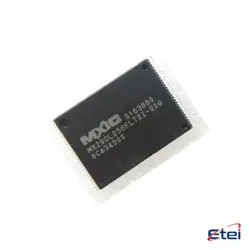
Imagens apenas para referência
STM32G0B1CBU6
+Lista de MateriaisIC MCU 32BIT 128KB FLSH 48UFQFPN
-
FabricanteSTMicroeletrônica
-
Peça do Fabricante #STM32G0B1CBU6
-
Ficha Técnica STM32G0B1CBU6 DataSheet
-
Em Estoque16675
365 Garantia de Qualidade em 1 dia
7*24 Garantia de serviço em 24 horas
90-Garantia de pós-venda em 1 dia
Garantia de Produto Genuíno
Especificações
| Atributo | Valor |
| Series | STM32G0 |
| Part Status | Active |
| Core Processor | ARM® Cortex®-M0+ |
| Core Size | 32-Bit Single-Core |
| Speed | 64MHz |
| Connectivity | CANbus, HDMI-CEC, I2C, IrDA, LINbus, SPI, UART/USART, USB2.0, USB Type-C™ (Power Delivery) |
| Peripherals | Brown-out Detect/Reset, DMA, I2S, POR, PWM, WDT |
| Number of I/O | 44 |
| Program Memory Size | 128KB (128K x 8) |
| Program Memory Type | FLASH |
| RAM Size | 144K x 8 |
| Voltage - Supply (Vcc/Vdd) | 1.7V ~ 3.6V |
| Data Converters | A/D 17x12b SAR; D/A 2x12b |
| Oscillator Type | External, Internal |
| Operating Temperature | -40°C ~ 85°C (TA) |
| Mounting Type | Surface Mount |
| Supplier Device Package | 48-UFQFPN (7x7) |
| Package / Case | 48-UFQFN Exposed Pad |
| Base Product Number | STM32G0B1 |
Visão Geral
Description
Key features include:
- Flash memory: Typically around 128 KB, providing ample space for code and data storage.
- RAM: Usually around 36 KB, supporting efficient data handling and processing tasks.
- Peripherals: Includes advanced timers, multiple UARTs, I2C, SPI, and ADCs, providing versatility for interfacing with various devices and sensors.
- Power efficiency: Designed with low-power modes, making it suitable for battery-operated applications.
- Packages: Available in compact packages, such as LQFP or UFQFPN, suitable for small form-factor designs.
The STM32G0B1CBU6 is ideal for applications like consumer electronics, home automation, and industrial control systems, where cost, size, and energy efficiency are critical factors.
Equivalent
1. NXP's LPC11U24FBD48 (similar Cortex-M0 core)
2. Microchip's ATSAMD21G18A (Cortex-M0+ core)
3. Texas Instruments' MSP430FR2355 (low-power MCU)
4. Silicon Labs' EFM32ZG222F32 (Cortex-M0 core)
These alternatives may differ in peripherals, power consumption, and performance; always check the specific requirements and datasheets.
Features
Key features include multiple I/O ports, advanced peripherals like a 12-bit ADC, DAC, comparators, and timers. It supports multiple communication interfaces, including USART, SPI, I2C, and CAN. The device also incorporates a USB 2.0 Full-Speed interface.
The STM32G0B1CBU6 focuses on low power consumption with power-saving modes such as sleep, stop, and standby. It has an embedded hardware crypto processor for secure communications and data protection. Additionally, it includes safety mechanisms like ECC on Flash and SRAM for enhanced reliability.
The microcontroller is housed in a UFQFPN-48 package, suitable for space-constrained applications, making it ideal for various industrial and consumer applications requiring cost-effective and energy-efficient solutions.
Pinout
1. Core: It is based on the ARM Cortex-M0+ core, providing efficient processing for various applications.
2. Memory: It includes 128 KB of Flash memory and 36 KB of SRAM, enabling ample storage and data handling capabilities.
3. Peripherals: The microcontroller supports numerous peripherals such as:
- Multiple I2C, USART, and SPI interfaces for serial communication.
- ADC (Analog to Digital Converter) and DAC (Digital to Analog Converter) for analog signal processing.
- Timers and PWM (Pulse Width Modulation) channels for precise control applications.
4. GPIO: Plenty of General Purpose Input/Output pins for interfacing with other components.
5. Power Management: Low-power modes and features suited for battery-powered applications.
6. Security: Integrated security features for data protection.
This microcontroller is suitable for a range of applications, including consumer electronics, industrial control, and IoT devices, due to its balance of performance, efficiency, and integration.
Manufacturer
Application
1. Industrial Automation: Used in sensors, actuators, and control systems.
2. Consumer Electronics: Powers smart devices, home appliances, and personal gadgets.
3. IoT Devices: Supports connectivity and data processing in IoT applications.
4. Automotive: Suitable for non-critical automotive applications, such as interior electronics.
5. Energy Management: Utilized in smart meters and power monitoring systems.
6. Healthcare Devices: Facilitates control in medical instrumentation and wearables.
Its low power consumption, integrated communication interfaces, and flexible memory options make it ideal for these diverse applications.