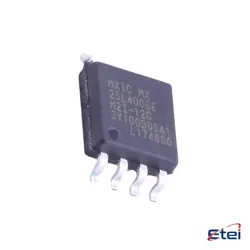
Imagens apenas para referência
STM32L476VGT6TR
+Lista de MateriaisIC MCU 32BIT 1MB FLASH 100LQFP
-
FabricanteSTMicroeletrônica
-
Peça do Fabricante #STM32L476VGT6TR
-
Ficha Técnica STM32L476VGT6TR DataSheet
-
Em Estoque2695
365 Garantia de Qualidade em 1 dia
7*24 Garantia de serviço em 24 horas
90-Garantia de pós-venda em 1 dia
Garantia de Produto Genuíno
Especificações
| Atributo | Valor |
| Series | STM32L4 |
| Part Status | Active |
| Digi Key Programmable | Not Verified |
| Core Processor | ARM® Cortex®-M4 |
| Core Size | 32-Bit Single-Core |
| Speed | 80MHz |
| Connectivity | CANbus, EBI/EMI, I2C, IrDA, LINbus, MMC/SD, QSPI, SAI, SPI, SWPMI, UART/USART, USB OTG |
| Peripherals | Brown-out Detect/Reset, DMA, LCD, PWM, WDT |
| Number of I/O | 82 |
| Program Memory Size | 1MB (1M x 8) |
| Program Memory Type | FLASH |
| RAM Size | 128K x 8 |
| Voltage - Supply (Vcc/Vdd) | 1.71V ~ 3.6V |
| Data Converters | A/D 16x12b; D/A 2x12b |
| Oscillator Type | Internal |
| Operating Temperature | -40°C ~ 85°C (TA) |
| Mounting Type | Surface Mount |
| Supplier Device Package | 100-LQFP (14x14) |
| Package / Case | 100-LQFP |
| Base Product Number | STM32L476 |
Visão Geral
Description
It is equipped with a range of peripherals, including multiple I2C, SPI, and USART interfaces, as well as USB OTG, CAN, and ADC/DAC capabilities, enabling versatile connectivity and data acquisition options. Additionally, it supports digital signal processing and floating-point operations, enhancing its computational efficiency for complex tasks.
The STM32L476VGT6TR is designed for applications requiring long battery life, such as portable medical devices, fitness trackers, and industrial sensors. It operates in various power modes to optimize energy consumption and includes features like a hardware encryption engine for secure data handling. The device is available in a LQFP100 package, making it suitable for diverse embedded applications.
Equivalent
1. NXP's Kinetis K66 series, such as MK66FX1M0VLQ18.
2. Microchip's SAM L21 series, like ATSAML21J18B.
3. Texas Instruments' MSP430 series, for instance, MSP430F5529.
These alternatives have similar low-power features and performance levels. However, exact equivalence depends on specific application needs, including pin compatibility and peripheral requirements.
Features
Key features include:
- Rich set of I/O ports and peripherals, including USB 2.0, USART, SPI, I2C, and CAN interfaces.
- Advanced analog features with a 12-bit ADC, two 12-bit DACs, and multiple timers.
- Security features like hardware AES, RNG, and true readout protection.
- LCD driver supporting up to 8x40 or 4x44 segments.
- Integrated digital filters for sigma-delta modulators.
It also supports a wide temperature range from -40°C to +85°C, making it suitable for industrial applications. The microcontroller's package is a 100-pin LQFP.
Pinout
This microcontroller is based on the ARM Cortex-M4 core with FPU (Floating Point Unit), operating up to 80 MHz. It offers a variety of functions, including:
1. Memory: It includes 1 MB of Flash memory and 128 KB of SRAM.
2. Power Efficiency: Designed for low-power applications with multiple low-power modes.
3. Peripherals: Offers a wide range of peripherals, including USART, SPI, I2C, and USB.
4. Analog Capabilities: Equipped with a 12-bit ADC, DAC, and multiple timers.
5. Connectivity: Supports communication interfaces like CAN and USB.
6. Security: Features like hardware encryption to enhance security.
These features make it suitable for applications such as wearables, medical devices, and IoT.
Manufacturer
Application
1. Wearable Devices: Due to its ultra-low-power features.
2. IoT Devices: Ideal for battery-powered IoT applications.
3. Medical Devices: Suitable for portable health monitoring systems.
4. Consumer Electronics: Used in gadgets requiring efficient power management.
5. Industrial Automation: Benefits applications needing precise control and low energy usage.
6. Home Automation: Useful in smart home devices for energy efficiency.
7. Energy Harvesting Systems: Works well in systems utilizing renewable energy sources.
These applications benefit from its ARM Cortex-M4 core, extensive peripheral set, and energy-efficient design.