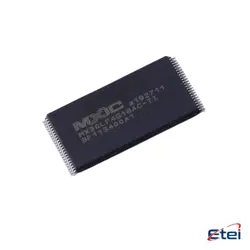
Imagens apenas para referência
THS4130IDGNR
+Lista de MateriaisIC OPAMP DIFF 1 CIRCUIT 8HVSSOP
-
FabricanteTexas Instruments
-
Peça do Fabricante #THS4130IDGNR
-
Ficha Técnica THS4130IDGNR DataSheet
-
Pacote HVSSOP-8
-
Em Estoque4825
365 Garantia de Qualidade em 1 dia
7*24 Garantia de serviço em 24 horas
90-Garantia de pós-venda em 1 dia
Garantia de Produto Genuíno
Especificações
| Atributo | Valor |
| Package / Case | Tape & Reel (TR),Cut Tape (CT),Bulk |
| Part Status | Active |
| Amplifier Type | Differential |
| Number of Circuits | 1 |
| Output Type | Differential |
| Slew Rate | 52V/µs |
| Gain Bandwidth Product | 225 MHz |
| -3 dB Bandwidth | 150 MHz |
| Current - Input Bias | 2 µA |
| Voltage - Input Offset | 200 µV |
| Supply Current | 12.3mA |
| Current - Output / Channel | 85 mA |
| Voltage - Supply Span(Min) | 4 V |
| Voltage - Supply Span(Max) | 33 V |
| Operating Temperature | -40°C ~ 85°C |
| Mounting Type | Surface Mount |
Visão Geral
Description
The amplifier operates over a wide range of supply voltages, offering flexibility in various circuit designs. It also includes features like rail-to-rail output and low offset voltage, which enhance its versatility in precision applications. The THS4130IDGNR is typically available in a small package, making it convenient for space-constrained designs.
In summary, the THS4130IDGNR is ideal for applications demanding high speed, low noise, and precision, offering a robust solution for differential signal processing in advanced electronic systems.
Equivalent
1. AD8138 from Analog Devices
2. LMH6550 from Texas Instruments
3. MAX4361 from Maxim Integrated
4. LTC6400 from Linear Technology (Analog Devices)
5. OPA1632 from Texas Instruments
These alternatives vary in specifications and features, so confirm compatibility with your specific application requirements.
Features
1. High Bandwidth: Offers a wide bandwidth of 150 MHz, making it suitable for fast signal processing tasks.
2. Slew Rate: Boasts a high slew rate of 550 V/µs, allowing for rapid changes in output voltage.
3. Low Distortion: Provides low total harmonic distortion (THD) for clearer and more accurate signal amplification.
4. Low Noise: Designed with low input voltage noise of 1.3 nV/√Hz, which is ideal for low-noise applications.
5. CMRR: Features a high common-mode rejection ratio (CMRR), enhancing its ability to reject common-mode signals and provide differential output.
6. Output: Capable of driving 100-Ω loads, suitable for various transmission line applications.
7. Power Supply: Operates over a wide supply range of ±5V to ±15V, offering flexibility in system design.
8. Package: Available in a small, thermally efficient 8-pin SOIC package, facilitating easy integration into circuit designs.
These features make the THS4130IDGNR ideal for applications in communications, medical imaging, and instrumentation.
Pinout
This device is typically available in a 16-pin package. The pins include the following key functions:
1. IN+ (Non-inverting input): Receives the non-inverting input signal.
2. IN- (Inverting input): Receives the inverting input signal.
3. OUT+ (Non-inverting output): Provides the non-inverting output of the amplifier.
4. OUT- (Inverting output): Provides the inverting output of the amplifier.
5. V+ (Positive power supply): Connects to the positive power supply voltage.
6. V- (Negative power supply): Connects to the negative power supply voltage.
7. Common-mode feedback: Used for maintaining output balance.
8. Bias connections and ground: Provide necessary biasing and grounding.
The THS4130IDGNR is known for its high-speed performance, low distortion, and wide bandwidth, making it suitable for a variety of high-speed data acquisition systems.
Manufacturer
Application
1. High-Speed Data Acquisition: Suitable for ADC drivers in communication systems.
2. Test and Measurement Equipment: Ensures accurate signal amplification and processing.
3. Medical Imaging Systems: Provides low-noise amplification for better imaging quality.
4. Wireless Communications: Used in RF and IF amplification stages.
5. Video and Imaging Equipment: Enhances the quality of video and imaging applications.
6. Optical Systems: Ensures precise signal amplification for optical communication.
These applications benefit from its low distortion, high slew rate, and wide bandwidth.