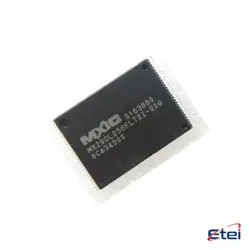
Imagens apenas para referência
TMS320C6455BCTZA
+Lista de MateriaisIC DSP FIXED-POINT 697FCBGA
-
FabricanteTexas Instruments
-
Peça do Fabricante #TMS320C6455BCTZA
-
Ficha Técnica TMS320C6455BCTZA DataSheet
-
Pacote FCBGA-697
-
Em Estoque4429
365 Garantia de Qualidade em 1 dia
7*24 Garantia de serviço em 24 horas
90-Garantia de pós-venda em 1 dia
Garantia de Produto Genuíno
Especificações
| Atributo | Valor |
| Package | Tray |
| Series | TMS320C645x |
| ProductStatus | Active |
| Type | Fixed Point |
| Interface | Host Interface, I²C, McBSP, PCI, UTOPIA |
| ClockRate | 1GHz |
| Non-VolatileMemory | ROM (32kB) |
| On-ChipRAM | 2.1MB |
| Voltage-I/O | 1.8V, 3.3V |
| Voltage-Core | 1.25V |
| OperatingTemperature | -40°C ~ 105°C (TC) |
| MountingType | Surface Mount |
| Package/Case | 697-BFBGA, FCBGA |
Visão Geral
Equivalent
- TMS320C6455BZTZ: Same DSP with different packaging.
- TMS320C6457: Higher performance variant.
- TMS320C6474: Multicore alternative.
- TMS320C6678: More advanced, multicore DSP.
For modern replacements, consider TMS320C66x or Keystone series DSPs. Check TI's website for exact compatibility.
Pinout
- Pin Count: 697 pins (FCBGA package)
- Core: 1.2 GHz C64x+ DSP
- Memory: 2 MB L2 cache, supports DDR2 SDRAM
- Interfaces:
- EMIF (External Memory Interface)
- PCI (Peripheral Component Interconnect)
- McBSP (Multichannel Buffered Serial Port)
- EMAC (Ethernet MAC)
- HPI (Host Port Interface)
- GPIO (General-Purpose I/O)
- Power: 1.2V core, 3.3V I/O
Designed for high-performance applications like telecom, imaging, and networking.
Manufacturer
Founded in 1930, TI is a Fortune 500 company headquartered in Dallas, Texas, and is a key player in the global semiconductor industry.
Application
1. Telecommunications – Base stations, VoIP, and wireless infrastructure.
2. Medical Imaging – Ultrasound, MRI, and CT scan processing.
3. Defense & Aerospace – Radar, sonar, and signal intelligence.
4. Industrial Automation – Real-time control and machine vision.
5. Video Processing – High-resolution video analytics and surveillance.
Its 1 GHz clock speed, high-speed interfaces (SRIO, EMIF), and multicore support make it ideal for compute-intensive applications.